

-
Size
1 inch (2.5 cm) -
Diet
Worms and small crustaceans -
Range
South America in the upper Orinoco and Negro River basins -
Habitat
Freshwater shoals
Physical Characteristics
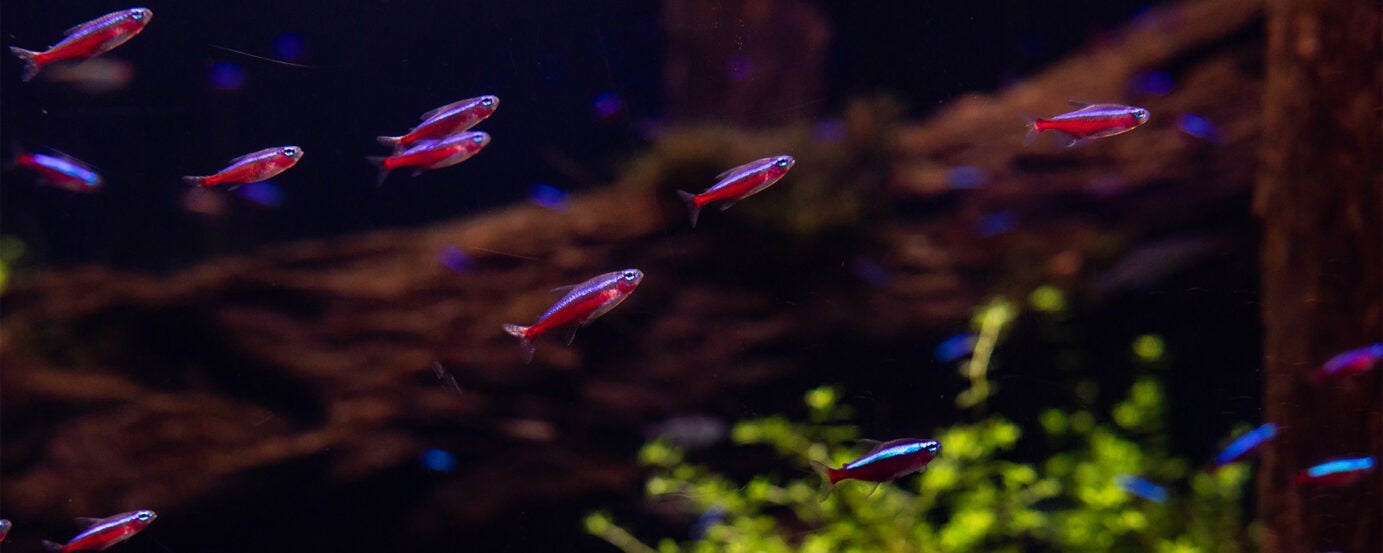
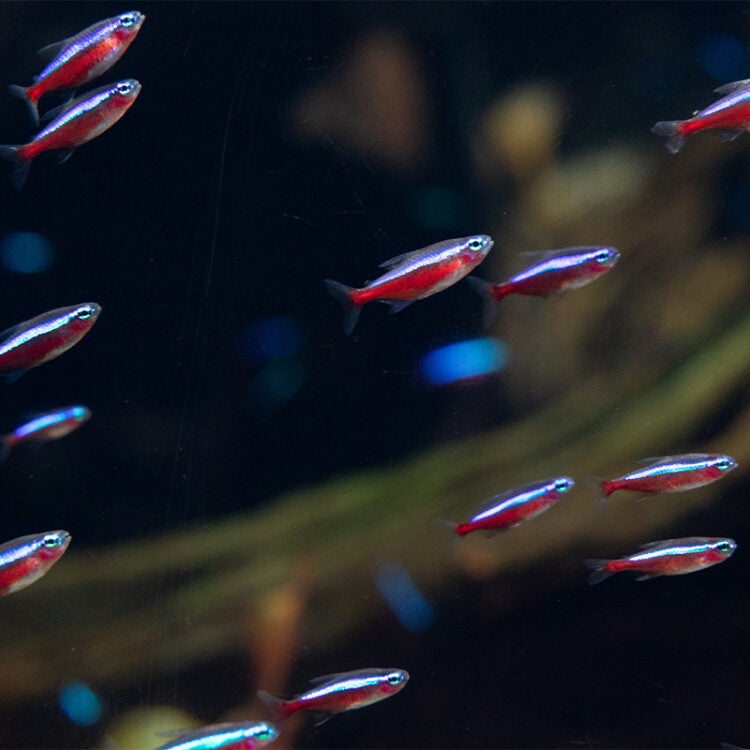
- Coloration is distinctive: most of the body is red, with a bright blue line extending laterally from the face to near the caudal fin.
- Common length is 1 inch (2.5 cm), though sizes can vary.
- Body elongated and compressed vertically, with a shorter caudal fin.
Diet / Feeding
- Diet consists mainly of worms and small crustaceans.
Range / Habitat
- Occurs in the upper Orinoco and Negro River basins in South America.
- Found mainly in shoals located in mid-water column ranges.
- Eggs and juveniles are more likely to be located lower in the water column, as eggs sink to the bottom layers of the environment after fertilization.
Reproduction & Growth
- Reproduction is broadcast, in which the female and male release gametes, and eggs are fertilized in the water.
- Once fertilized, eggs sink to the bottom layers of the water and often attach to plants or settle in rocky areas.
- Cardinal tetras are light-sensitive, and eggs need to be in a relatively shaded area during the rainy season.
- Eggs hatch within 24 to 30 hours, and fry can swim freely within 3 to 4 days after hatching.
- In the wild, they are expected to live about 1 year. In human care, the life expectancy ranges from about 5 to 10 years.
Conservation Status
- “Least Concern” on the IUCN Red List.
Additional Information
- Often mistaken for the neon tetra, as their coloration is very similar; however, the cardinal tetra has a larger red band than the neon tetra.
- Typically live in large schools and can become stressed when not kept with multiple individuals.
Sources
- iucnredlist.org
- fishbase.org
- animaldiversity.org