
-
Size
Up to 3 feet (1 m) -
Diet
Sea urchins, crabs, lobsters -
Range
Eastern Pacific Ocean -
Habitat
Rocky bottom areas and Kelp forests
Physical Characteristics
- Adults reach a maximum length of about 3 feet (1 m).
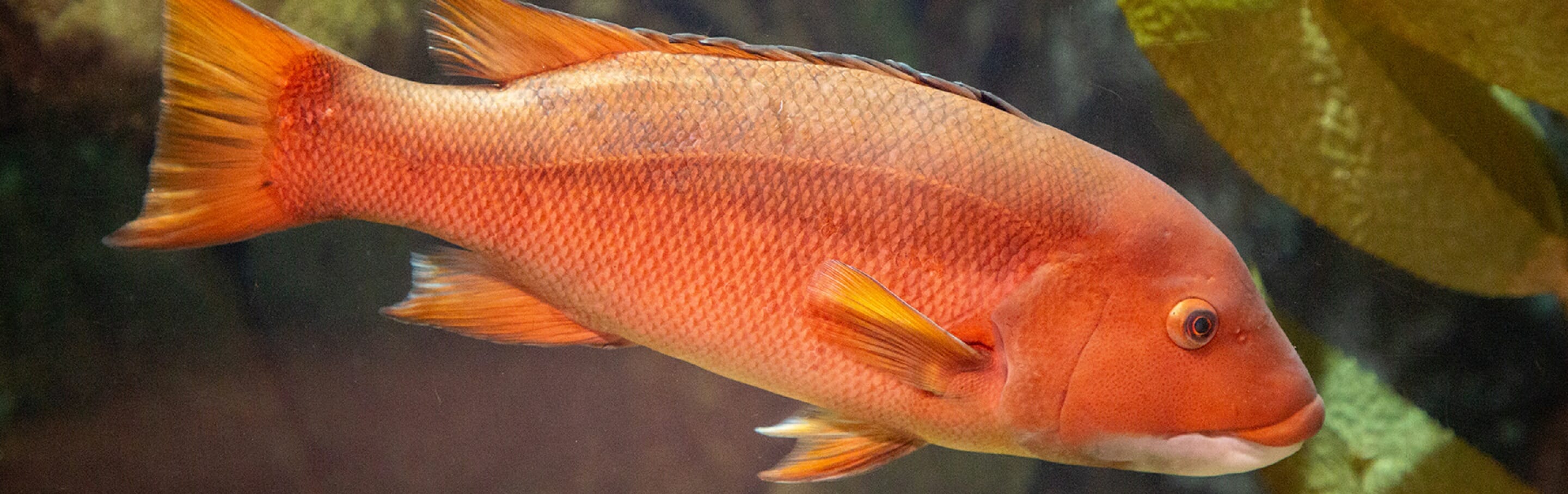
- Juveniles are bright orange in color with prominent blue dots on the fins and the base of the tail. The lower jaw is white, and most individuals have a while line running from the mouth to the caudal fin.
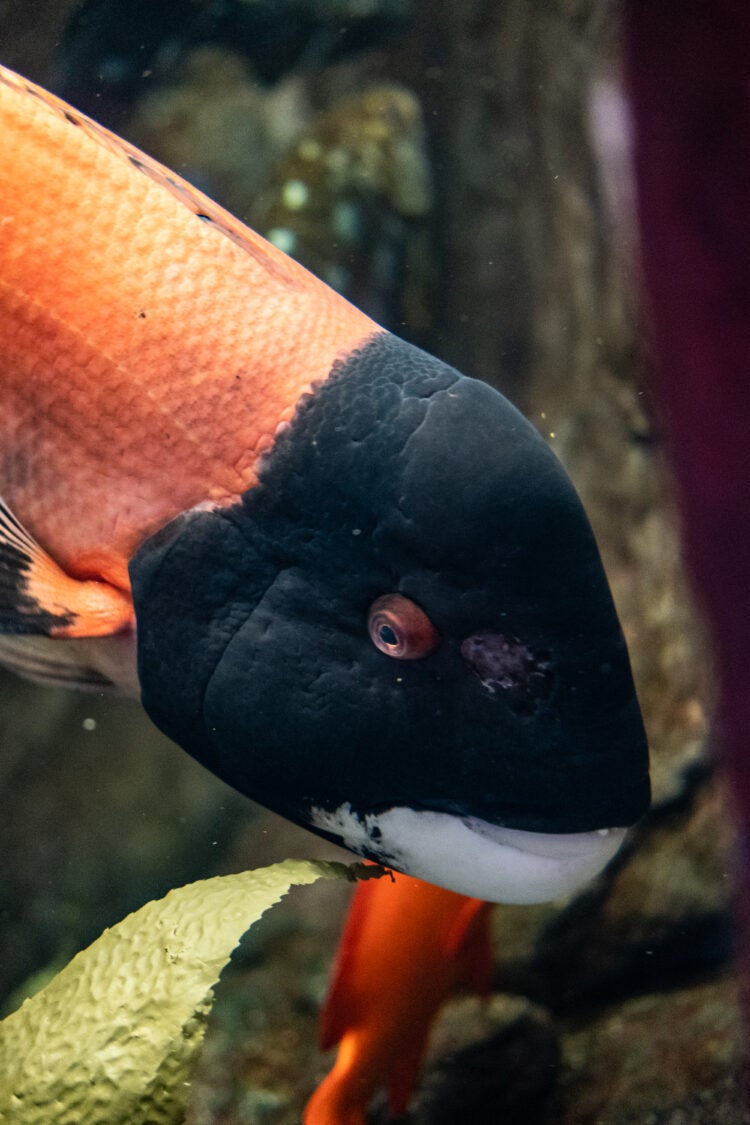
- As adults, males and females are sexually dimorphic, meaning each sex looks different.
- Females are smaller and sleeker than males, solid red-orange above and white ventrally. Lower jaw is bright white.
- Males are more robust, with significant bulging foreheads, and are black at the head and tail, with an orange midsection. Lower jaw is bright white.
Animal Fun Fact
California sheephead are sequential hermaphrodites, each individual starts life as a female and then changes to a male.
Diet / Feeding
- Diet consists primarily of sea urchins, crabs, lobsters and other hard-shelled prey.
Range / Habitat
- Occurs in the Eastern Pacific from about Monterey Bay to the Gulf of California.
- Found over rocky bottoms, particularly kelp forests, at depths of about 100 feet (30.5 m).
Reproduction & Growth
- Sequential hermaphrodite (protogynous): each individual starts life as a female and then changes to male in response to changes in gender ratios within local populations.
- During mating season (between July and September), male sheephead become territorial and defend their spawning territory. Dominant males lead the females in a circular pattern as they broadcast gametes.
Conservation Status
- “Vulnerable” on the IUCN Red List.
Additional Information
- Common predators include harbor seals, California sea lions and various seabird species.
Sources
- iucnredlist.org
- www.fishbase.net
- http://animaldiversity.org