
-
Size
Up to 5.4 inches (13.7 cm) -
Diet
Insect larvae, insects and planktonic invertebrates -
Range
Amazon River Basin -
Habitat
Areas with muddy bottoms, live plants and roots
Physical Characteristics
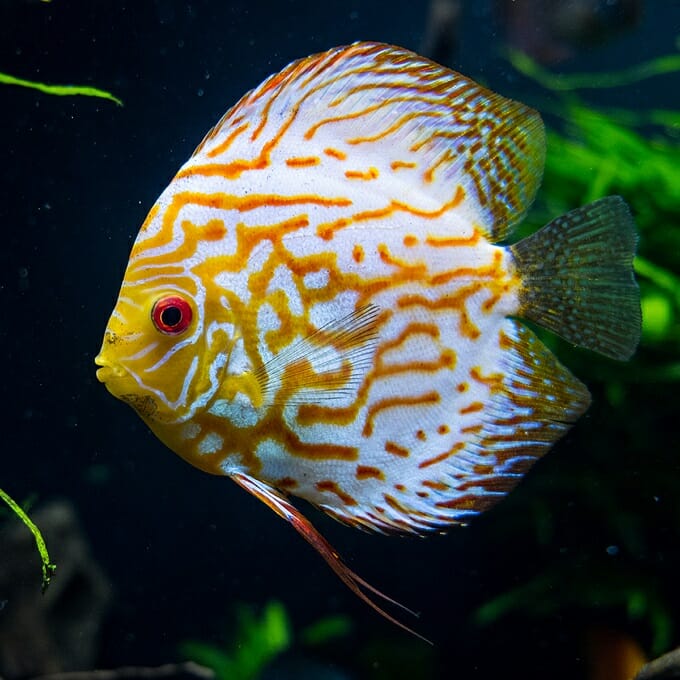
- This species acquired its name from the shape of its body which is strongly compressed laterally and nearly circular.
- Dorsal and anal fins extend along the body almost to the caudal fin, accentuating the circular profile.
- Discus may reach up to 5.4 inches (13.7 cm) in total length.
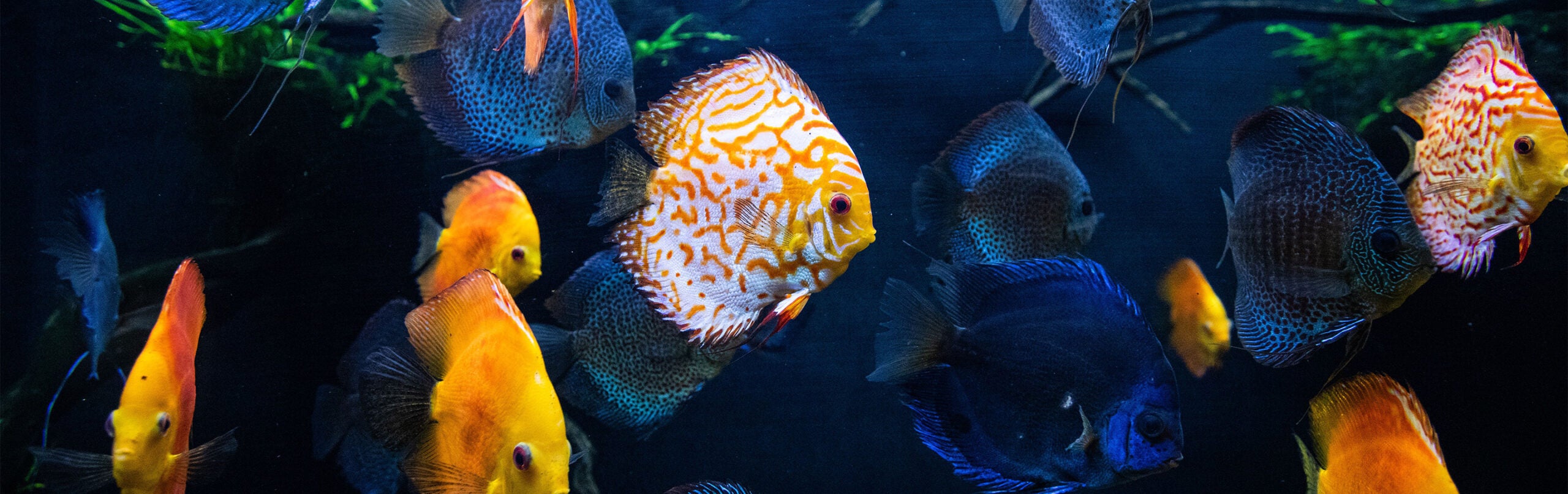
- The colors and patterns on the body are striking and varied. Background colors range from shades of brown to orange and blue. Patterns include vertical bars and wavy, closely spaced, discontinuous horizontal stripes. These markings can be black or blue and are sometimes edged with red or another color.
- The fins can carry a pattern or be a solid color, often contrasting with that of the body of the fish. The eyes are often deep red.
- Four varieties of discus color and pattern are recognized in wild populations:
- Blue discus (characterized by a blue body coloring with some red)
- Brown discus (brown to yellowish-brown coloration)
- Green discus (turquoise and blue markings)
- Heckel discus (earth tone brown with blue striping and dark vertical bars)
- Other hybrid colors and patterns have been bred between the four wild color morphs.
Diet / Feeding
- Feeds on insects, their larvae and planktonic invertebrates.
Range / Habitat
- Discus is a tropical freshwater fish occurring in the Amazon River Basin in lakes, deep streams and shallow-water areas of tributaries.
- Found in acidic habitats consisting of muddy bottoms, live plants and roots.
Reproduction & Growth
- Normally found in small schools, but are territorial during the breeding season.
- Male and female form breeding pairs that work together to prepare a nesting site on vertical surfaces such as fallen trees or roots. The female then passes over the nest several times releasing eggs with the male following closely to fertilize them.
- Both parents protect the nest and take turns fanning with their pectoral fins to circulate oxygenated water over the eggs.
- Eggs hatch in 48 to 60 hours.
- Discus fry feed on mucus secreted by the skin of both parents.
Conservation Status
- “Least Concern” on the IUCN Red List.
Additional Information
- This species is a member of the cichlid family.
- This species is popular with aquarium hobbyists because of its vibrant and varied coloration. It was first acquired for this use in the 1920s.
- Many colorful hybrids have been produced for the aquarium trade. However, it is challenging to maintain discus in a home aquarium.
- Discus coloration is influenced by what it is fed. Those that are fed brine shrimp take on a reddish or pink color.