
-
Size
Maximum length of 26 inches (67 cm) -
Diet
Mollusks, insects, crustaceans and small fish -
Range
Large rivers and lakes in Africa -
Habitat
Shallow water near bottom of rivers and lakes
Physical Characteristics
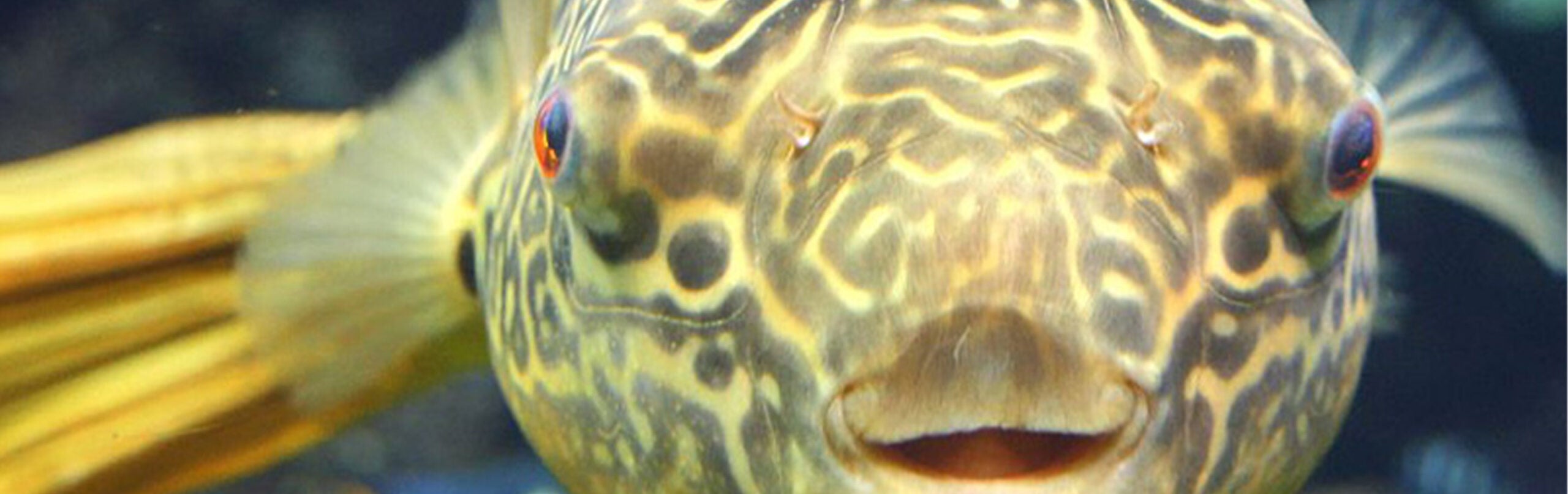
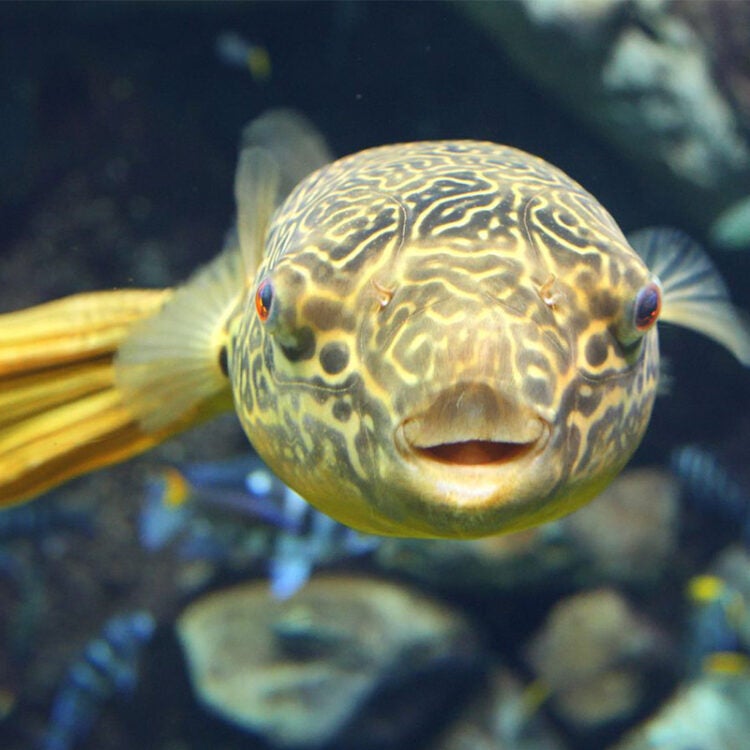
- Coloration is cream to yellow with a pattern of darker brownish-black irregular shaped rings, spots and stripes. Belly is a lighter shade of yellow to white.
- The body is short, stout and has large round pectoral fins
- Small mouth with two sets of fused, beak-like teeth, one each on the upper and lower mandibles.
- Maximum length of 26.4 inches (67 cm).
Animal Fun Fact
The giant puffer is largest species of freshwater puffer fish.
Diet / Feeding
- Diet consists of mollusks, insects, crustaceans and small fish.
- Consuming hard-shelled prey helps prevent tooth overgrowth.
Range / Habitat
- Inhabits large rivers and lakes of Africa and the Congo River Basin.
- Typically found swimming and feeding in shallow water or near the sedimentary bottom of rivers and lakes.
Reproduction & Growth
- Oviparous, or egg-laying species.
Conservation Status
- “Least Concern” on the IUCN Red List.
- Populations in eastern Africa occur in a very limited range, making them more susceptible to threats from increased farming.
Additional Information
- Like all pufferfishes, this species may inflate itself with water or air when threatened or stressed.
- One of the few fish known to blink.
- May change coloration based on surroundings.