
-
Size
Up to 12 feet (3.7 m) across -
Diet
Plants, algae and mollusks -
Range
Pacific Ocean around Japan -
Habitat
Seabed, deep sea vents and holes on the ocean floor
Physical Characteristics
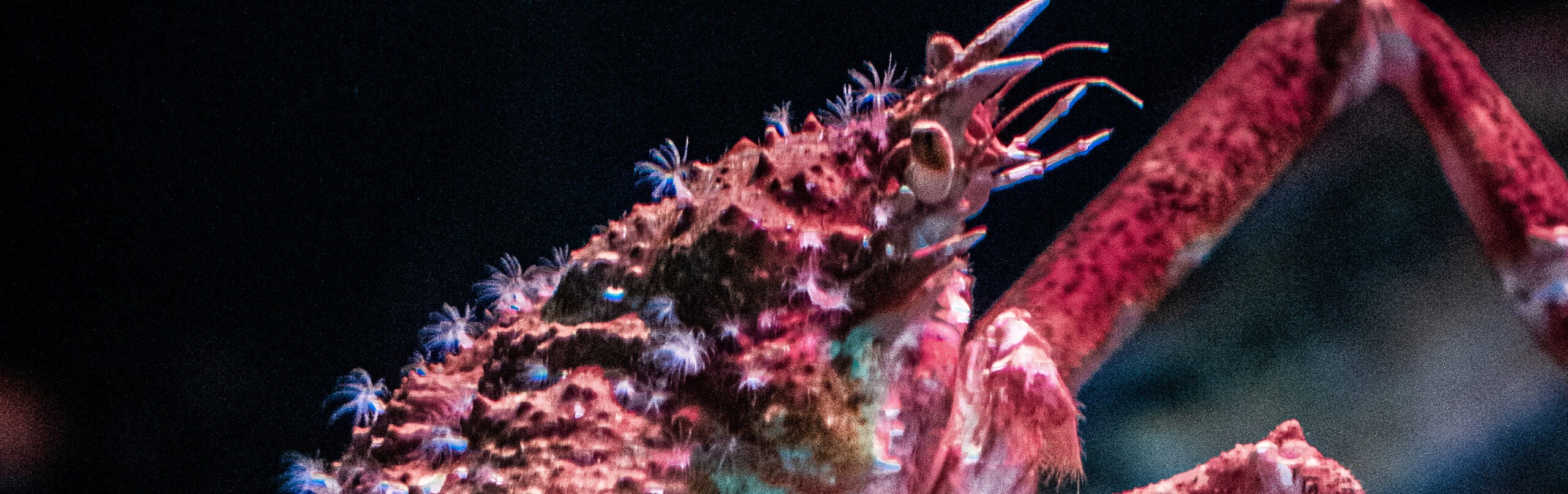
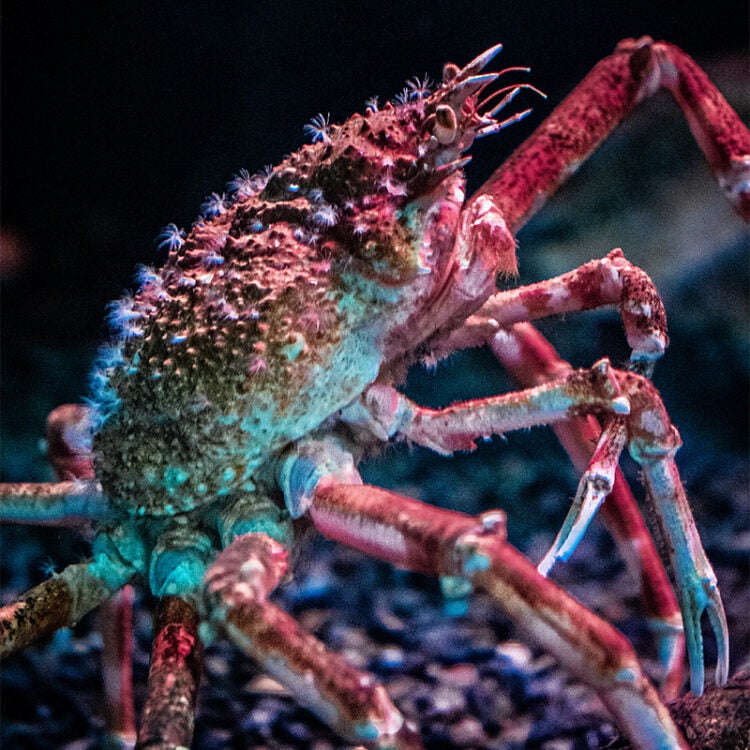
- The Japanese spider crab gets its name from its resemblance to a spider. It has a rounded body covered with stubby projections and long slim legs.
- The species has been known to grow up to 12 feet (3.7 m) across.
- Its body will grow to about 15 inches (37 cm) wide, and the animal can weigh up to 44 lbs. (20 kg).
- Males are larger than females and have larger claws.
Animal Fun Fact
Japanese spider crabs put small animals on their shells as camouflage.
Diet / Feeding
- The Japanese spider crab is an omnivore, consuming both plant matter and animals.
- Sometimes acts as a scavenger, consuming dead animals.
- Some are known to scrape the bottom of the ocean floor for plants and algae, while others pry open the shells of mollusks.
Range / Habitat
- Occurs on the seabed in the Pacific Ocean around Japan.
- Found at depths of 160 to 2,000 feet (50 – 600 m).
- Prefers to inhabit the vents and holes of the deeper parts of the ocean.
Reproduction & Growth
- The female carries the fertilized eggs attached to her abdominal appendages until they hatch into tiny planktonic larvae.
- During the larval stage the young crab looks nothing like its parents. It is small and transparent with a round, legless body and usually drifts as plankton at the surface of the ocean.
Conservation Status
- “Not Evaluated” on the IUCN Red List.
Additional Information
- This crab is one of the largest known arthropods (i.e., the group of animals that includes crabs, shrimp, insects, spiders and horseshoe crabs).
- It is difficult for fishermen to catch the giant Japanese spider crab because of the depth at which it is found, so the species is not widely exploited commercially. However, it is considered a rare delicacy in Asia.
- This species belongs to the Majidae family, which are known as “decorator crabs.” This group of crabs will pick up small anemones, pieces of sponge or other benthic animals and cement them to the top of their carapace (shell). This provides the crab with natural camouflage that protects it from predators.