
-
Size
7.9 inches (20 cm) -
Diet
Zooplankton -
Range
Pacific Ocean -
Habitat
Reefs at depth from 33-591 feet (10-180 m)
Physical Characteristics
- Comes in a variety of colors, including red, pink, orange, yellow and purple.
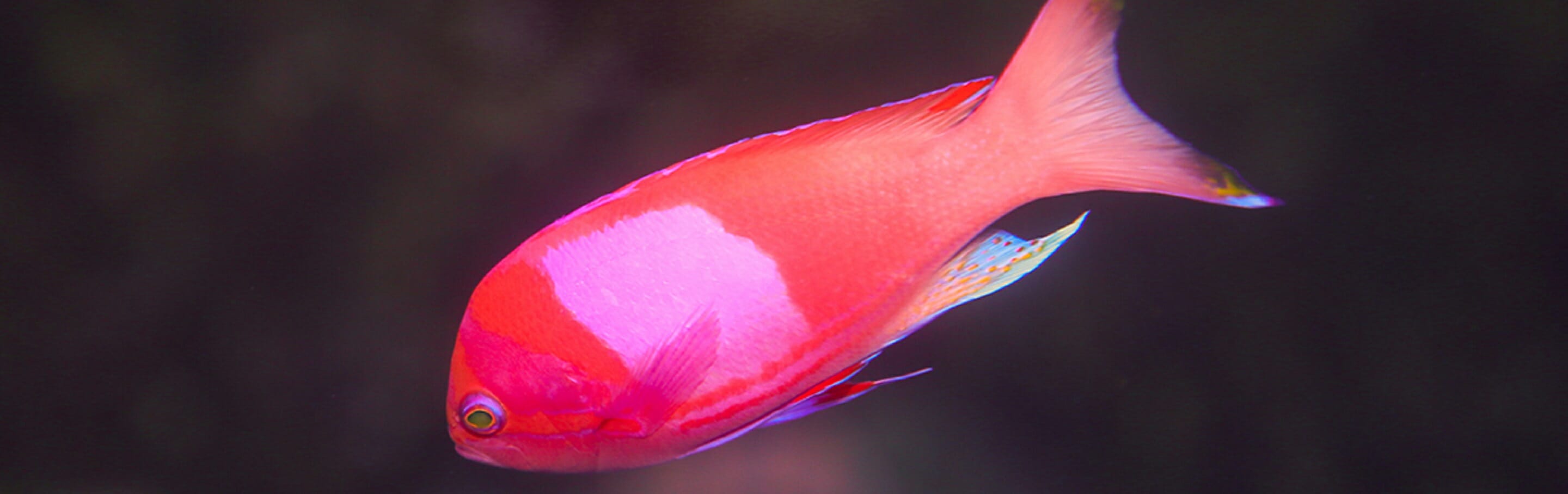
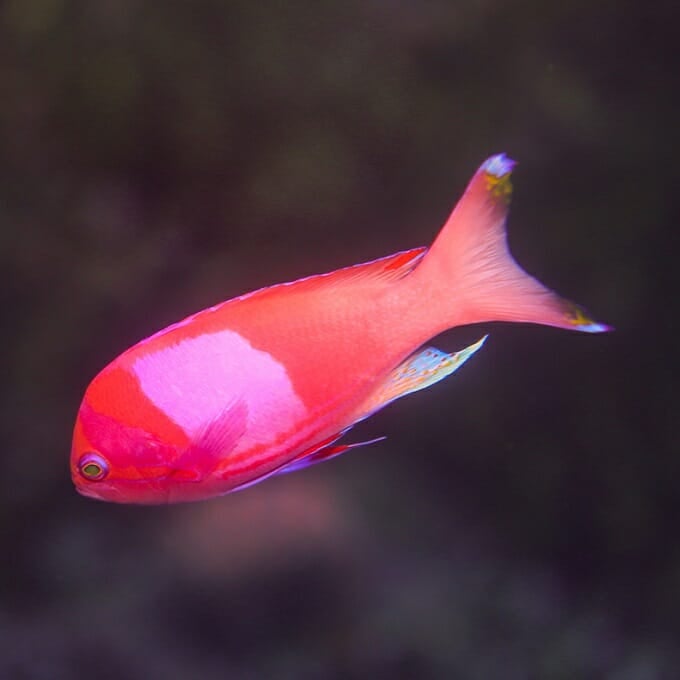
- Male characterized by a reddish pink body with a square violet -colored spot on side and an elongated third dorsal spine. Female is less colorful than the male, often solid yellow or orange with no other markings.
- Maximum size is about 7.8 inches (20 cm).
- Bullet-shaped and darts about when feeding or defending territory.
Animal Fun Fact
All squarespot anthias begin life as female – some individuals then change sex and become male as adults.
Diet / Feeding
- Diet consists of zooplankton.
Range / Habitat
- Occurs throughout the Pacific Ocean from Indonesia to Samoa, the Ryukyu Islands, Rowley Shoals and New Caledonia, as well as throughout Micronesia.
- Found around reefs at depths from 33-591 feet (10-180 m).
- Lives in large groups, with few males and several dozen females and juveniles. These groups are found in areas of branching hard corals where they take shelter.
- Active during the day and will spend most of their time swimming above coral reefs and feeding on plankton.
Reproduction & Growth
- Sequential hermaphrodite: can change sex from female to male.
- Begins life as a female. Due to environmental or social factors, such as a male dying, females can become males.
- Sex change ensures there will always be a male and a female to reproduce.
- A female replacing the dominant male in a harem’s hierarchy is capable of changing her sex to male in a period of 2-3 weeks.
Conservation Status
- “Least Concern” on the IUCN Red List.
Additional Information
- Protogynous hermaphrodite: can change sex from female to male.
- Begins life as female. Due to environmental or social factors, such as male dying, some females can become males.
- Sex change ensures there will always be a male and a female to reproduce.
- Female replacing dominant male in a harem’s hierarchy is capable of changing her sex to male in a period of 2-3 weeks.
- Forms huge schools actually made up of small coexisting social harems. Each harem usually led by largest most colorful male. Includes several smaller less dominant males, a group of females and juvenile fish.
- Dominant male constantly defends its place in the group’s hierarchy by challenging lesser males and males from neighboring harems.
Sources
- www.fishbase.org
- www.masla.com/anthias.html
- Reef Fish Identification – Tropical Pacific. Allen, G.; Steene, R.; Humann, P. and Deloach, N., pgs. 138, 143