
-
Size
Up to 8 inches (20 cm) -
Diet
Algae -
Range
Pacific Ocean -
Habitat
Coral-rich tropical waters
Physical Characteristics
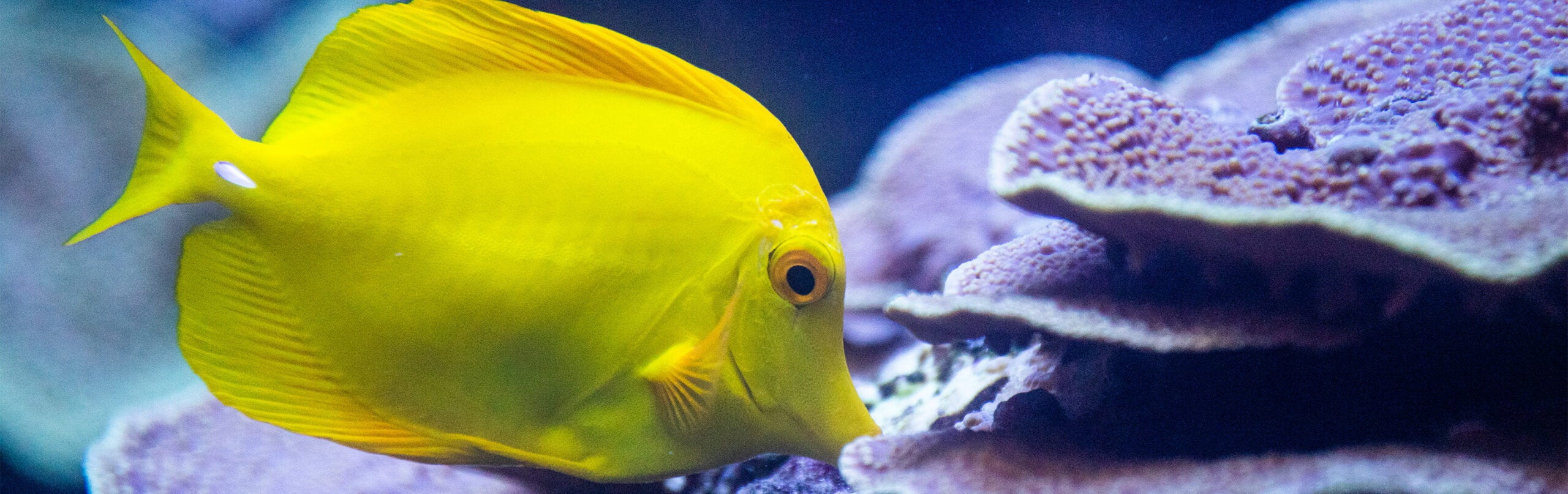
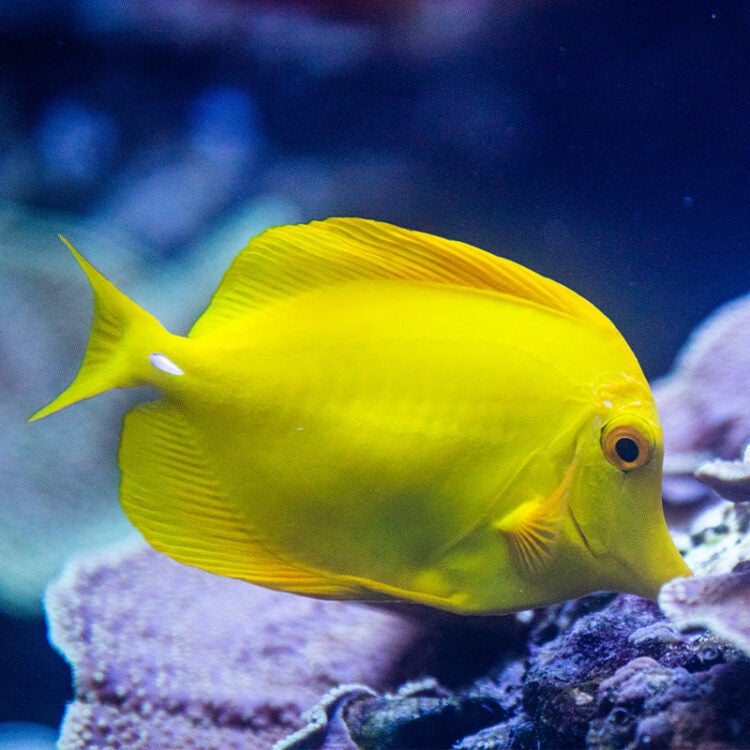
- Maximum length of 8 inches (20 cm).
- Characterized by a long snout and large dorsal fin.
- Coloration is a bright yellow, though at night changes to a darker and more subdued yellow with a visible white lateral line.
Animal Fun Fact
At night, the yellow tang's bright yellow coloration changes to a darker and more subdued yellow with a visible white lateral line.
Diet / Feeding
- Diet consists primarily of algae, macroalgae, such as seaweed, and occasionally eats types of zooplankton.
- Plays a crucial role in coral reef ecosystems by preventing algae from overtaking corals.
Range / Habitat
- Occurs in the Pacific from Japan to Hawaii.
- Found in coral-rich tropical waters at depths down to 250 feet (76 m).
Reproduction & Growth
- Spawns around the full moon in batches throughout the year, though mostly from March to September.
- Females release about 40,000 eggs.
- Clear larvae are planktonic, eventually making their way to coral reefs and crevices.
Conservation Status
- “Least Concern” on the IUCN Red List.
- It is the number one collected aquarium trade fish in Hawaii.
- Threats include collection for the aquarium trade and coral reef degradation.
Additional Information
- Appears singly or in loose groups.
- Juveniles can be territorial.
- Though coloration appears bright to humans, it is negligibly different from the color of coral at common depths.
- A surgeonfish- uses a scalpel-like fin defensively.
- Other common names: Yellow sailfin tang, lemon tang, somber surgeonfish.