
-
Size
5-8 inches (13-20 cm) -
Diet
Omnivorous -
Range
North America -
Habitat
Rivers, ditches, sloughs, lakes, ponds
Physical Characteristics
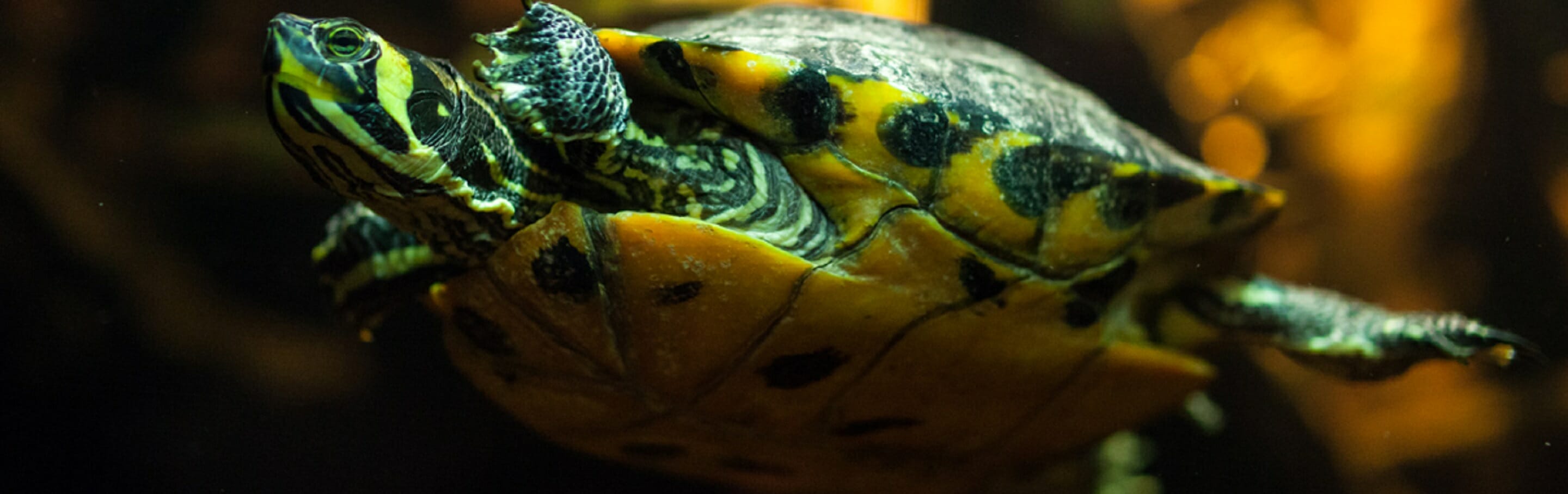
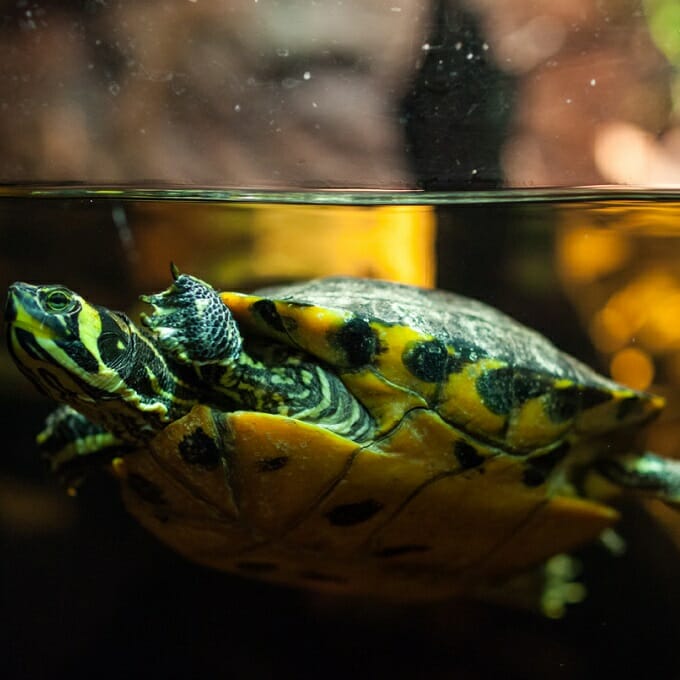
- Bands of yellow streak the carapace, or shell. Most easily visible when the animal is wet.
- Yellow blotch behind the eye. More visible in females and young individuals.
- Sliders have oblong heads that end in snouts that point upward.
- They have webbed feet for swimming with five digits on each limb.
- Common carapace length is 5-8 inches (12.5-20.3 cm) with a maximum size of 11.4 inches (28.9 cm).
Animal Fun Fact
Yellow-bellied sliders are omnivores, eating a wide variety of plant and animal matter.
Diet / Feeding
- Juveniles are mostly carnivorous, feeding on insects, small fish, clams, snails, amphibians, and reptiles.
- Adults develop a microflora in their digestive tract that allows them to break down plant material, so they become omnivorous as they age. They will feed on aquatic and terrestrial plants, algae, fish, and invertebrates.
Range / Habitat
- Occurs in North America from southeast Virginia through north Florida and Alabama.
- Found in rivers, ditches, sloughs, lakes and ponds. Will bask on logs or other surfaces protruding from the water. Will haul out on banks in the western parts of its range.
Reproduction & Growth
- Breeding season is typically April-October, but with ideal weather conditions can last through December.
- Females typically lay 1-2 clutches per year, but can lay up to 4, with an average of 6-11 eggs per clutch.
- Lay spherical eggs with flexible shells that allow for the absorption of water inside to the developing hatchling.
- Embryonic development takes place within fertilized eggs in 27 stages over the course of 60-95 days.
- Sex in hatchlings is temperature-dependent. Nests below 28.6 degrees Celsius develop as males. Nests above 29.6 degrees Celsius develop as females.
- Due to basking needs of the female, she will often construct her nest in places that receive large amounts of sunlight, which can make the nest more subject to predation in the open.
- Hatchlings can remain in their nest for up to 10 months.
- There is no parental care after egg-laying.
Conservation Status
- “Least Concern” on the IUCN Red List.
Additional Information
- Lifespan can range from 30-40 years on average.
Sources
Conant, Roger and Joseph T. Collins. A Field Guide to Reptiles & Amphibians: Eastern/Central North America. Pgs. 174-178
iucnredlist.org
https://animaldiversity.org