

Nintendo News: Animal Crossing: New Horizons Aquarium Partnership Expands into a National Tour

The aquarium experience inspired by the Animal Crossing: New Horizons game is expanding to a national level! After debuting at the Seattle Aquarium, the experience is hitting the road in June, and making multiple stops across the U.S. throughout the year.

Each aquarium on the tour will host themed activities and offer guests the chance to explore the wonders of aquatic life with an Animal CrossingNew Horizons twist. By taking the tour national, even more fans will have a chance to interact with some of their favorite Animal Crossing characters while learning more about the real-world animal kingdom.
Nintendo News: Animal Crossing: New Horizons Aquarium Partnership Expands into a National TourLocal exhibits will include:

  • Animal Crossing: New Horizons photo opportunity, featuring an aquarium themed background with characters from the game.
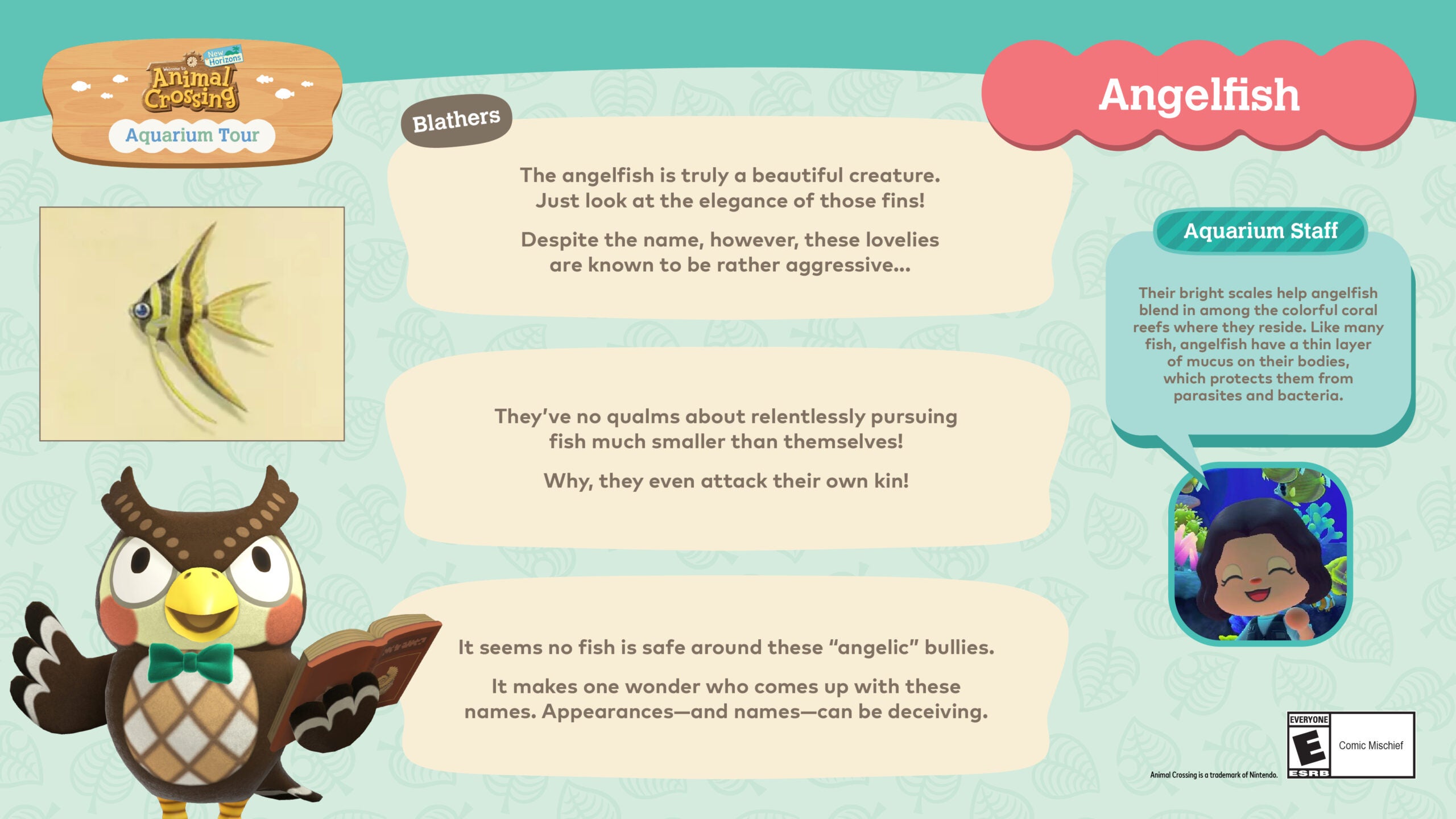
  • Themed signage throughout the aquarium will feature creature descriptions presented by Blathers with information directly from the game.
  • Standees of familiar characters from the game throughout the aquarium near a wide variety of habitats.
  • My Nintendo kiosks where guests can check in to receive 100 My Nintendo Platinum Points* redeemable on my.nintendo.com for exclusive digital and physical rewards.
  • Plus, guests may even have the opportunity to meet-and-greet Isabelle, Tom Nook, or K.K. Slider from the Animal Crossing: New Horizons game on select days and stops!
Nintendo News: Animal Crossing: New Horizons Aquarium Partnership Expands into a National Tour 1Planned aquariums for this partnership include:

  • Ripley’s Aquarium of Myrtle Beach, South Carolina (Jun. 14 to Aug. 11)
  • Audubon Aquarium in New Orleans, Louisiana (Jun. 21 to Sep. 14)
  • Georgia Aquarium in Atlanta, Georgia (Aug. 1 to Sep. 26)
  • Oregon Coast Aquarium in Newport, Oregon (Aug. 26 to Oct. 20)
  • New England Aquarium in Boston, Massachusetts (Sept. 21 to Dec. 14)
  • SEA LIFE Arizona Aquarium in Tempe, Arizona (Oct. 4 to Nov. 17)
  • Tennessee Aquarium in Chattanooga, Tennessee (Dec. 21 to Feb. 28)

Tickets for the experience are included with the cost of general admission and can be purchased from each aquarium directly. Excited and want to learn more? Head over to Nintendo.com for additional information: https://www.nintendo.com/us/events/play-events/animal-crossing-aquarium-tour/

Animal Crossing: New Horizons is available for the Nintendo Switch family of systems on Nintendo eShop and through retailers.

Note to editors: Nintendo press materials are available at https://press.nintendo.com, a password-protected site. To obtain a login, please register on the site.

*A Nintendo Account is required to receive and redeem points. Terms apply (https://accounts.nintendo.com/term_point).
Stop illegal wildlife trafficking! Georgia Aquarium convenes zoos, aquariums and animal-care facilities to join forces against the dangerous trade

Illegal wildlife trafficking is a rampant and serious problem that most people don’t know much about, but it is leading to the decimation of endangered species around the globe. Over the past decade, more than 50,000 live animals have been illegally trafficked into the United States.  Conducted by increasingly sophisticated criminal syndicates, it’s a multi-billion-dollar transnational trade, lagging only drugs, arms, and human trafficking in profitability.

Every year, U.S. law enforcement officials seize thousands of animals trafficked across our borders and through ports of entry, and the Southeast is among the busiest for this work. Too often, illegally smuggled wildlife is malnourished, in poor condition, or doesn’t survive the ordeal. Zoos and aquariums are frequently called upon by wildlife officers to urgently treat and house rescued species. News of these rescues is rarely shared publicly because the confiscations become legal cases that must be handled with discretion.

Georgia Aquarium is a longstanding, trusted partner to wildlife law enforcement officers. The Aquarium has provided expert care for nearly 1,000 confiscated animals, providing a safe haven, medical treatment, long-term care, and, in some cases, a forever home. Nearly half of all the confiscated animals taken in by the Aquarium are corals – and that number continues to climb. “Coral reefs support some of the most biodiverse ecosystems on the planet,” said Kim Stone, director of fishes and invertebrates at Georgia Aquarium. “Thousands of marine animals depend on coral reefs for survival – they provide shelter, spawning grounds and protection from predators. They also support organisms at the base of ocean food chains. As reef ecosystems collapse, already at-risk species may face extinction.”


The Aquarium currently has more than 250 confiscated animals in its permanent exhibits. In addition to coral, the Aquarium built an entire exhibit dedicated to freshwater motoro rays that were confiscated in 2017 and are now part of the Aquarium’s permanent residents – and an important guest touch point where docents talk about the dangers of wildlife trafficking.


Now, Georgia Aquarium is leading an effort to bring an innovative conservation initiative to the Southeast region to combat this grave problem. On April 23rd, the Aquarium hosted a meeting of U.S. government and state wildlife enforcement representatives, zoos, aquariums, and other animal-care facilities to explore creating a Wildlife Confiscations Network in the Southeast.  An innovative conservation initiative led by the U.S. Fish and Wildlife Service and the Association of Zoos and Aquariums, the Wildlife Confiscations Network first launched in October 2023 as a pilot program in Southern California. Since then, more than 1,300 animals have received care and placement through the network.


The meeting laid the groundwork for developing a formalized system for emergency response when wildlife is confiscated and requires immediate, specialized medical care and housing. It’s an important step to provide relief for this intensifying problem that highlights the critically important role of accredited zoos and aquariums in providing world-class care for wildlife at a moment’s notice when no other resources are available.


“As a community of conservationists, we are united in our commitment to safeguard the planet’s precious biodiversity,” said Stone. “Georgia Aquarium’s goal is to create a network that serves as a lifeline for all species caught in the crosshairs of illegal trafficking.”


Stay tuned for more updates on the progress of this important resource in our efforts to combat illegal wildlife trafficking and prevent further harm to endangered species around the globe.

Georgia Aquarium Formalizes International Partnerships to Promote Marine Conservation

Georgia Aquarium, the largest aquarium in the Western Hemisphere, recently formalized conservation partnerships with two of Japan’s preeminent aquariums. The three aquariums share a unique distinction: their care for endangered whale sharks and manta rays. It’s a unique privilege and responsibility that few zoological organizations in the world share.

Georgia Aquarium is partnering with Okinawa Churashima Research Foundation, including its Okinawa Churaumi Aquarium and Osaka Kaiyukan Aquarium, to collaborate on marine conservation strategies, share learnings, and exchange expertise. The partnership between the organizations will focus on endangered species, including whale sharks, manta rays, and coral reefs.

“We are proud to formalize our partnership in a joint quest to protect marine biodiversity,” said Brian Davis, Ph.D., president and CEO of Georgia Aquarium. “Together, we can leverage our combined expertise and resources to foster groundbreaking research and conservation initiatives that promise a brighter future for marine ecosystems worldwide.”

The agreement fosters long-term cooperation in research, conservation, animal care, and staff development. It includes commitments for joint research programs, data sharing, staff exchanges, and public education initiatives. With an initial term of 10 years and options for renewal, the partnership is intended to make a lasting impact on the health and well-being of marine environments.

Representatives from Osaka Aquarium Kaiyukan also visited Georgia Aquarium to get a first-hand look at operations here. “The exchange of staff and expertise between our two aquariums will foster innovation and new approaches to protecting marine life,” Davis added. “Our collaboration also promises to amplify our public education efforts, raising awareness about the critical need for marine conservation and inspiring action within our communities.”

SweetWater Brewing Launches Hammer Red Amber Ale to Support Georgia Aquarium

The Limited-Release Seasonal Is Part of SweetWater’s On-going Partnership with Georgia Aquarium

SweetWater Brewing Company (“SweetWater Brewing” or “SweetWater”), the largest craft brewer in the Southeast and a subsidiary of Tilray Brands, Inc. (“Tilray” or the “Company”) (NASDAQ: TLRY and TSX: TLRY), announced today the release of its new Hammer Red Amber Ale, the latest collaboration beer as part of its partnership with Georgia Aquarium. A portion of sales of the limited-release beer will be donated to Georgia Aquarium to support its mission of inspiring awareness and preservation of oceans and aquatic animals worldwide. Hammer Red Amber Ale is available throughout Georgia now until October 2024.


Inspired by Georgia Aquarium’s research initiatives, education programs and conservation efforts that benefit sharks and rays, Hammer Red Amber Ale (5.6% ABV) is brewed with Magnum, Saaz, and Cascade hops and delivers light caramel flavors, with a touch of wheat for a refreshing finish with a little bite.


“As one of Atlanta’s crown jewels and an important force in protecting our oceans and marine life, our partnership with Georgia Aquarium is incredibly important to SweetWater and part of our continued support for clean and healthy waterways. We also know this cause is just as important to our fans, as we saw so much support for the special-edition cans of our flagship 420 Pale Ale that were available last November, when we started this new relationship,” said Terry Hopper, VP of Sales for Tilray Beers. “Amber ales are a cornerstone style of American craft beer, and with Hammer Red Amber Ale, our brewers have created a delicious, easy-drinking beer that pairs well with a variety of foods, whether you’re grabbing a quick bite between exhibitions at Georgia Aquarium or enjoying it while grilling in the backyard.”


“Our continued partnership with SweetWater is a natural fit as both brands aim to support clean water and give back to the community,” said Hiroshi Okuda, senior director of strategic marketing and corporate partnerships. “We’re excited to debut Hammer Red Ale with SweetWater to showcase another amazing animal that is in need of protection.”


Hammer Red Amber Ale is available in six-packs of twelve-ounce cans and on draft, including at SweetWater’s Taproom. To find the beer in a store or on-premise location near you, please visit SweetWater’s Beer Finder.

Georgia Aquarium Receives Fourth Consecutive Accreditation from the Association of Zoos & Aquariums

Prestigious recognition highlights commitment to animal welfare and conservation initiatives.

In an important recognition of its commitment to exceptional animal welfare, conservation, and educational initiatives, Georgia Aquarium has once again been accredited by the Association of Zoos & Aquariums (AZA), the organization announced yesterday.  This prestigious accreditation underscores Georgia Aquarium’s adherence to the highest standards in the zoological community.

The Aquarium was first accredited by the AZA in 2008 and subsequently in 2013 and 2018, affirming its status as an elite institution and a beacon of excellence and inspiration for others in the zoological field. AZA’s standards are continuously revised to reflect cutting-edge zoological practices based on the latest animal well-being science and research.

“Accreditation by the AZA is not merely a badge of honor; it’s a clear indication of our unwavering commitment to the highest standards of animal care and welfare,” said Brian Davis, Ph.D., President and CEO of Georgia Aquarium. “This recognition further fuels our dedication to conservation and showcases our efforts to provide educational and inspiring experiences for our guests.”

AZA accreditation requires a thorough review, including an on-site, multi-day inspection by an independent team of zoological professionals who evaluated all aspects of Georgia Aquarium’s operations, including animal welfare and wellbeing; veterinary care; keeper training; safety for visitors, staff, and animals; educational programs; conservation efforts; financial stability; risk management; governance; and guest services. AZA requires zoos and aquariums to successfully complete this rigorous accreditation process every five years to meet evolving standards and maintain membership in the association.

“Conservation and the well-being of animals is at the core of everything we do.,” said Georgia Aquarium’s Chief Animal Officer, Michael Boos. “This accreditation is a testament to our team’s hard work, the innovative practices we employ to ensure the health and happiness of our animals, and the ongoing effort we put into global conservation initiatives.”

To learn more about Georgia Aquarium, click here.

New research at Georgia Aquarium helps conserve endangered beluga whales in Alaska

Metabolic and caloric measurements show belugas have big caloric needs to maintain their cold-water lifestyle.

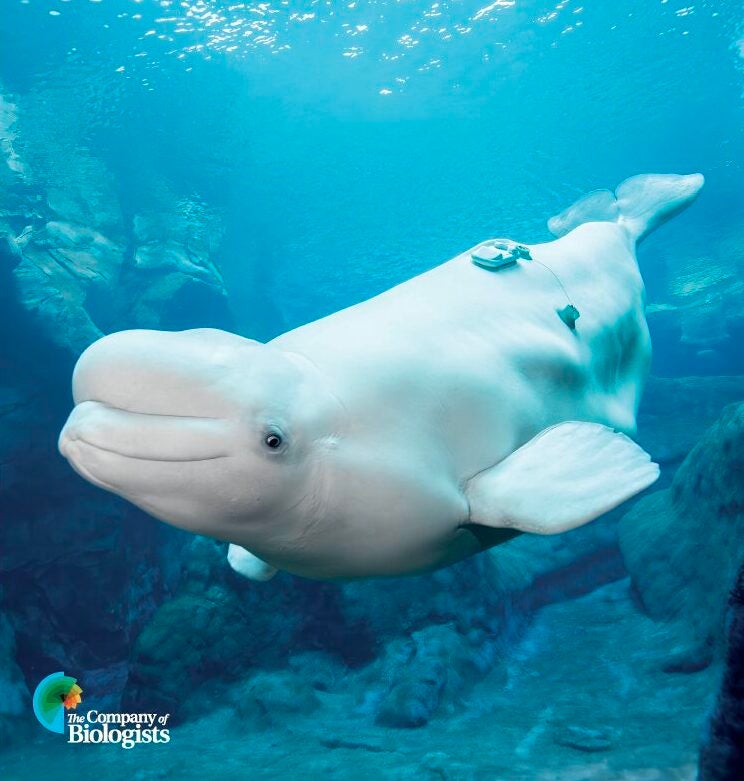
New data provided by studying the beluga whales at Georgia Aquarium helps close a key information gap about how much food these whales need to thrive. The information will inform important management decisions for their counterparts in Alaska’s Cook Inlet, which are protected under the U.S. Endangered Species Act (ESA).

A new study released in the Journal of Experimental Biology, led by Terrie M. Williams, Director of the Integrative Carnivore EcoPhysiology Lab, with her graduate student Jason John at the University of California-Santa Cruz in partnership with Georgia Aquarium, reveals that the whales’ unique metabolism and elevated caloric needs may limit their ability to escape from potential human disturbances.

beluga research

The Cook Inlet beluga population was listed as endangered in 2008 due to a decline from over-harvesting by Alaska’s native hunters. But despite a cessation in whaling and other efforts to help the population recover, their numbers have not increased, and it is unknown why.


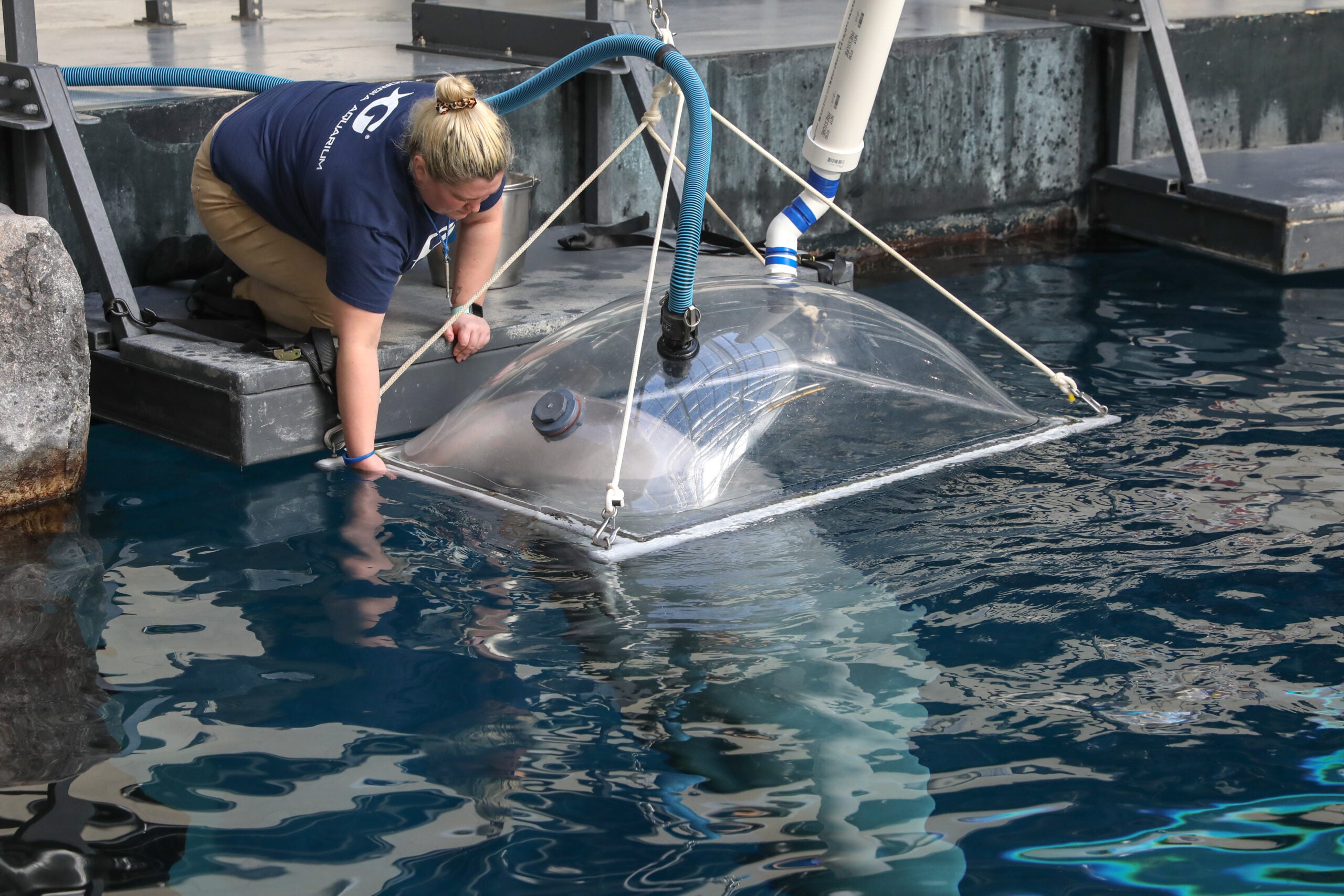
Difficulty collecting this type of data on belugas in the wild has made it hard for scientists to identify why they have failed to recover from excessive harvest. This study, which started in 2018, was a collaboration between U.C. Santa Cruz and Georgia Aquarium with the Alaska Region of NOAA Fisheries, which has management authority for Cook Inlet belugas. Scientists collected data about energy output from the aquarium’s one adult male and two adult female belugas while resting in metabolic domes, during submerged swimming, and when diving for food.


“We are losing large wild species all over the world,” said Williams. “One way that we might be able to prevent wholesale extinctions is to do the basic science that allows us to predict what these animals need to live in this crazy, changing world.”


“This study is one element we can do here to create a better understanding of how these animals take in and use energy,” said Dennis Christen, Georgia Aquarium’s Senior Director, Mammals and Birds. “That’s a measurement that’s nearly impossible to get in the wild. By understanding their metabolism, we can get an understanding of what they have to feed on in the wild and whether it is enough.”


“Taking these baseline measurements – which are the gold standard for conservation modeling – helps us to understand how these whales are built,” Williams explained. “There aren’t many facilities like Georgia Aquarium that have the capabilities and research mindset to conduct this type of research.”


Georgia Aquarium scientists prepared the belugas for the study over a six-month period, using positive reinforcement and operant conditioning techniques to measure their resting and active metabolic rates in different states. Open flow respirometry was used to measure oxygen consumption using a plexiglass dome for the animals to breathe in, and accelerometers were used to measure movement and swim stroke rates in the water.

New research at Georgia Aquarium helps conserve endangered  beluga whales in Alaska 2

Data gleaned from this research will help create predictive energy models to evaluate the potential impact of human activities on beluga whales, and a close relative, Arctic narwhals.


The metabolic study conducted by this collaboration is helping to inform measures to ensure Cook Inlet belugas have adequate resources to fuel their caloric needs. Under the ESA, any action that is funded or permitted by the federal government that has the potential to impact a threatened or endangered species must be reviewed. This includes activities like oil and gas exploration and development, marine construction, and commercial fishing. This review includes mitigations to reduce impacts on ESA species. Obtaining a baseline on the calorie needs of Cook Inlet belugas will help inform these mitigations to reduce the effects of these activities on Cook Inlet belugas.


“Wild belugas typically use the calories from ingesting fish to fuel growth, activity, maintaining their health and reproducing,” said Williams. “With increased human disturbance, calories will have to be diverted to respond to perceived threats. Such energy imbalance cannot be sustained for long periods without negative consequences.”


“The whales at Georgia Aquarium are ambassadors for their species. Getting the opportunity to participate in a research study like this one means a lot,” said Katie Flammer, associate curator, Mammals and Birds. “These animals, and our training team, are helping beluga whales globally.”


To learn more about Georgia Aquarium’s conservation work, click here.