

Adopt a Dolphin
Adopt a Sea Turtle
Adopt an Animal Program
Exploring the Mysteries of Whale Sharks: A Groundbreaking Expedition to Wreck Bay
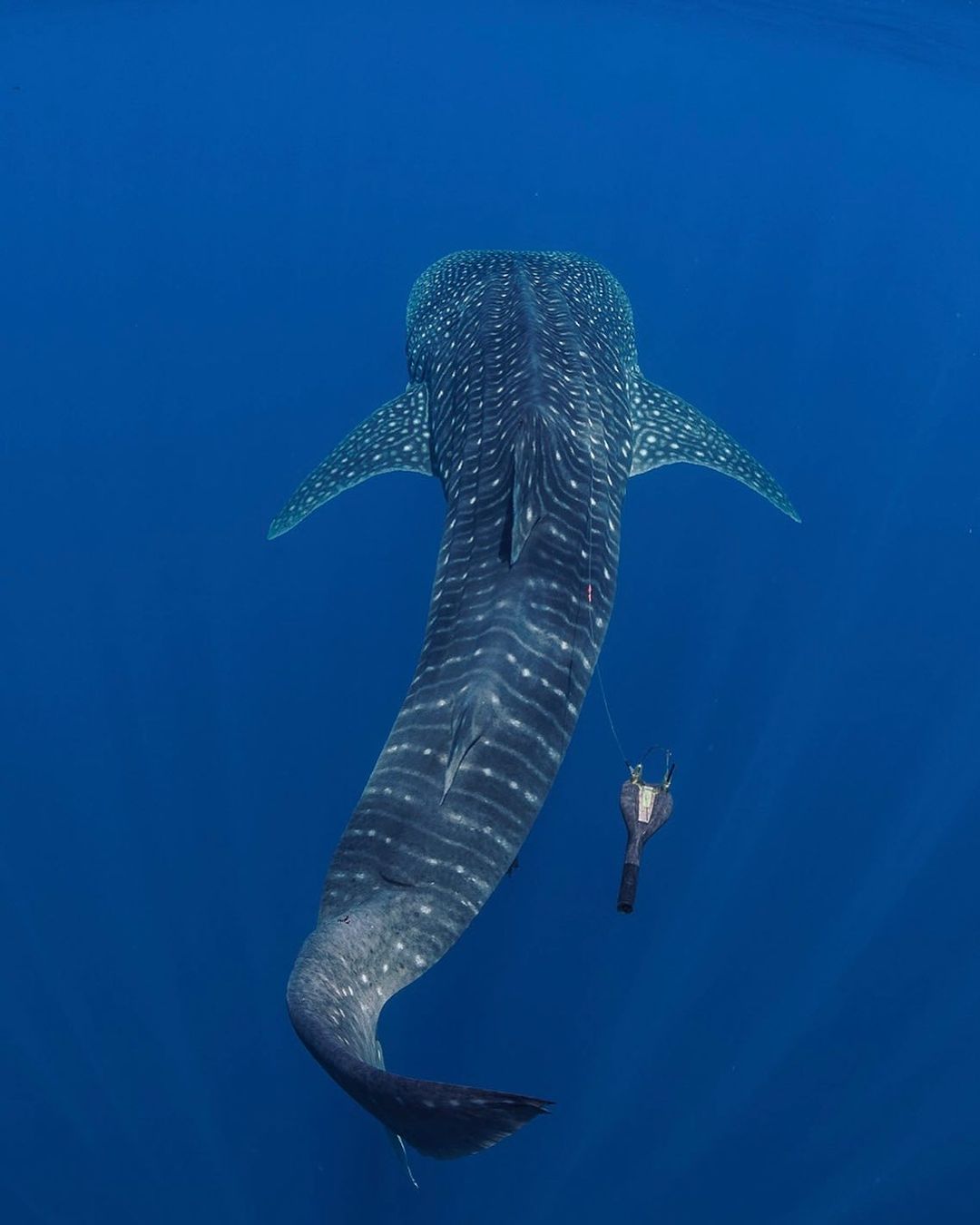
In the remote northern reaches of the Great Barrier Reef lies a previously unknown whale shark aggregation in an area called Wreck Bay. Recently, Dr. Cameron Perry, a research scientist from Georgia Aquarium’s conservation team, embarked on a 10-day expedition to this secluded region. The goal? To deepen our understanding of whale sharks and their elusive behaviors, while also furthering conservation efforts.
A Needle in a Vast Ocean
The story of discovering whale sharks in Wreck Bay is nothing short of remarkable. Finding whale sharks within a large ocean basin is literally equivalent to finding a needle in a haystack. While Ningaloo Reef in Western Australia has long been a hub for whale shark research, the lack of whale shark sightings along the eastern coast represented a large data gap for whale shark populations in the southwest Pacific.
However, researchers from Biopixel Ocean Foundation, Georgia Aquarium’s partner on this project, suspected suitable habitats existed along the eastern coast of Australia. Using environmental modeling—analyzing sea surface temperature, bathymetry, and marine productivity—they were able to identify a potential whale shark habitat. Thus, the first expeditions to Wreck Bay began.
Uncovering the Mysteries at Wreck Bay: Expedition Highlights
Over seven days in Wreck Bay, the research team encountered 45 whale sharks, identifying over 25 unique individuals and nearly doubling previous photo-ID records. But numbers tell only part of the story.
Groundbreaking Research Techniques
We deployed 15 tags on 14 individuals, using a mix of tracking technologies:
- Location tracking tags (SPOT)
- Advanced movement and environmental data tags (SPLASH10)
- Five special deep-dive tags capable of withstanding pressures at 2,500 meters depth
“This trip was incredibly successful,” said Dr. Perry. “Not only did we identify new individuals, but we also deployed 15 cutting-edge tags to track their vertical and horizontal movements, as well as environmental data.”
Particularly noteworthy is the potential to document the deepest whale shark dive to date, surpassing the current record of 1,928 meters.
Why This Matters
Wreck Bay’s story is one of persistence and discovery. For years, researchers believed that whale sharks were confined to Western Australia. Identifying Wreck Bay as an aggregation site has sparked numerous expeditions, providing valuable insights and data on whale shark movement patterns.
“Studying this population is crucial because it fills a critical data gap for whale sharks in the Southwest Pacific,” Dr. Perry explained. “While there are still significant data gaps in our understanding of whale shark populations. This expedition helps us build a more comprehensive picture of their movements, behaviors, and potential threats.”
The team also conducted pioneering research during this expedition, including:
- The first camera tag deployment on whale sharks along Eastern Australia
- Capturing microplastic samples to assess potential threats
- Collection of 17 biopsy samples – which will be used to study the genetics and feeding ecology of whale sharks within Wreck Bay
A Collaborative Effort
Field research on this scale requires a village. Georgia Aquarium, in partnership with organizations like Conservation International, Marine Megafauna Foundation, and Biopixel Ocean Foundation, pooled resources to make this expedition possible.
“This expedition exemplifies the power of collaborative research,” said Dr. Perry. “By combining resources from other organizations, we maximize our potential for discovery.”
The team’s efforts also extended beyond whale sharks. They tagged tiger sharks in southern reefs, collected genetic samples, and tracked sightings of other marine megafauna, such as oceanic manta rays and the rare Omura’s whale.
Looking Ahead
Georgia Aquarium’s work in Wreck Bay is just the beginning. The next steps include analyzing data from the tags, expanding habitat suitability models, and engaging with local communities to deepen understanding of whale shark movements. Plans are already underway to explore new regions further south, with the help of Marlin fishermen who report occasional sightings of these gentle giants.
For Dr. Perry, the mystery of whale sharks is what keeps him passionate about this work. “They’re the largest fish in the sea, yet we know so little about them.”
This expedition underscores Georgia Aquarium’s commitment to advancing marine conservation on a global scale. By bridging gaps in knowledge and fostering collaborations, these efforts help protect not only whale sharks but the ecosystems they call home.
Curious to see where these gentle giants roam? Follow along with BioPixel’s BioTracker to explore the journeys of whale sharks and other sharks across the globe!
For more updates and behind-the-scenes insights into Georgia Aquarium’s conservation work, visit our Newsroom.
Alongside Georgia Aquarium, thank you to the additional funders of this expedition: the Queensland Government’s Threatened Species Research (round 1) program, The Sapphire Project, Blancpain, Conservation International, SeaWorld Foundation, and the Slattery family trust.
Tracking Sharks and Rays: A Collaborative Dive into Marine Research with Chi-Ju Yu (Debbie)
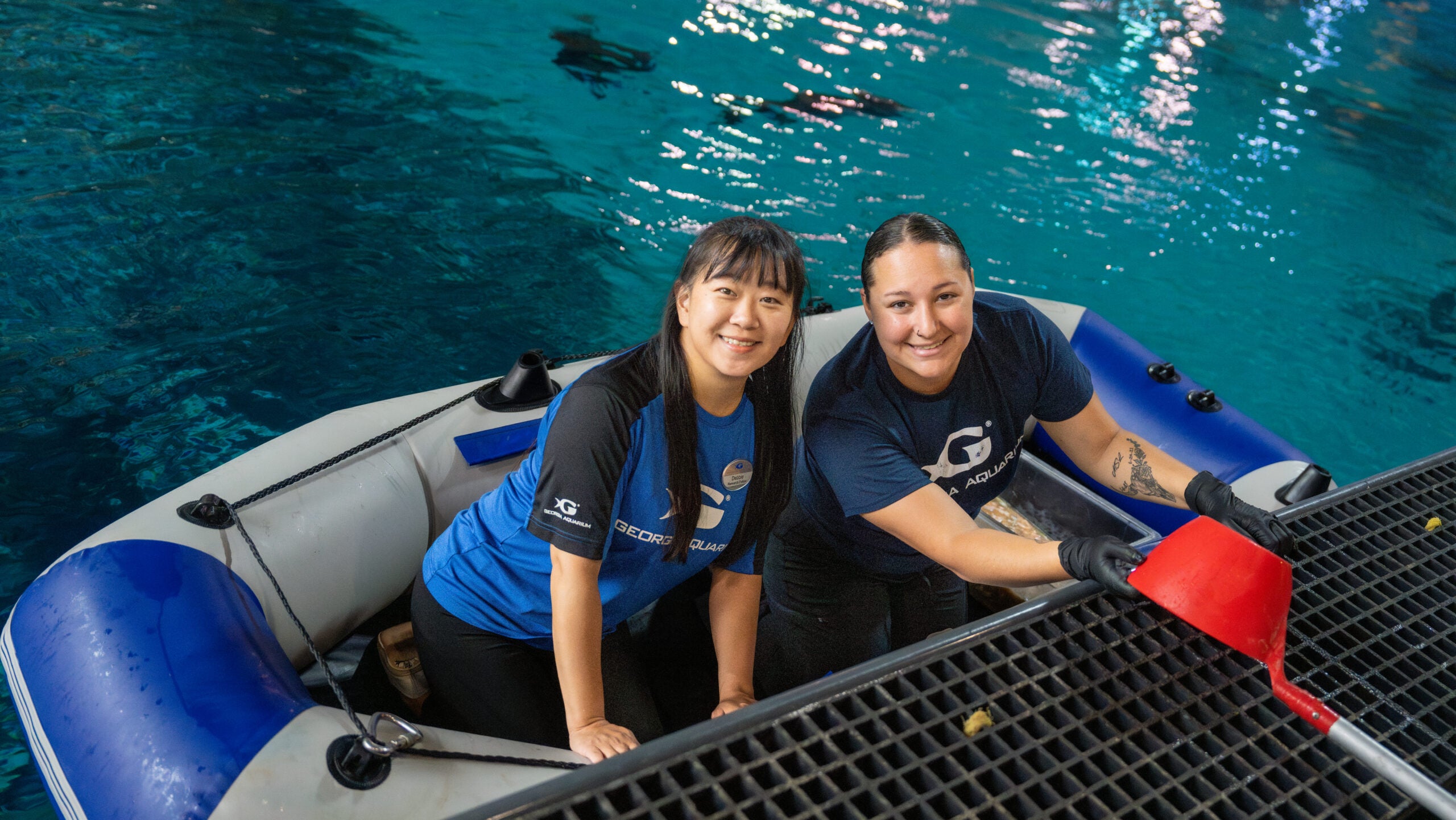
In the vast mysteries surrounding ocean life, few creatures captivate the imagination like sharks and rays. But beyond fascination lies the crucial work of research and conservation—a mission that Chi-Ju Yu (Debbie), a postdoctoral researcher from Dr. Shoou-Jeng Joung’s lab at National Taiwan Ocean University, knows well. Her journey in marine research began 13 years ago and has taken her across continents, most recently bringing her to Georgia Aquarium for a collaborative project aimed at improving the understanding and management of these species.
A Passion Born in the Classroom
Debbie’s love for sharks was ignited during a Fisheries Dynamic and Chondrichthyes class taught by Dr. Joung. “Through the course, I realized Taiwan needs more researchers focusing on sustainable fisheries management,” she explains. This realization propelled her to join Dr. Joung’s team and dedicate herself to shark and ray research.
Her postdoctoral work currently involves using acoustic telemetry, a technique that tracks animal movements by attaching tags that communicate with underwater receivers. Supported by the Georgia Aquarium, this project aims to monitor large species, such as whale sharks and Taiwanese wedgefish, within Taiwan’s waters.
Collaborative Research Across Oceans
Debbie’s research goes beyond tracking sharks. She’s working with the Fisheries Research Institute (FRI) and Georgia Aquarium to deploy acoustic receivers around Taiwan. These tools help detect tagged marine animals and gather data on their movements and behaviors. “I’ve also participated in satellite tagging programs for whale sharks and studies on the scalloped hammerhead shark in Western Taiwan,” she adds.
Her visit to Georgia Aquarium offered invaluable insights. “I wanted to observe the Aquarium’s animal monitoring, handling techniques, and fieldwork,” Debbie shares. It also provided an opportunity to explore future collaborative projects. “Research challenges differ between regions, and Taiwan’s work is often limited by funding, staff, and techniques. Collaborating with Georgia Aquarium helps us address these gaps and fosters a mutual exchange.”
Learning from the Experts
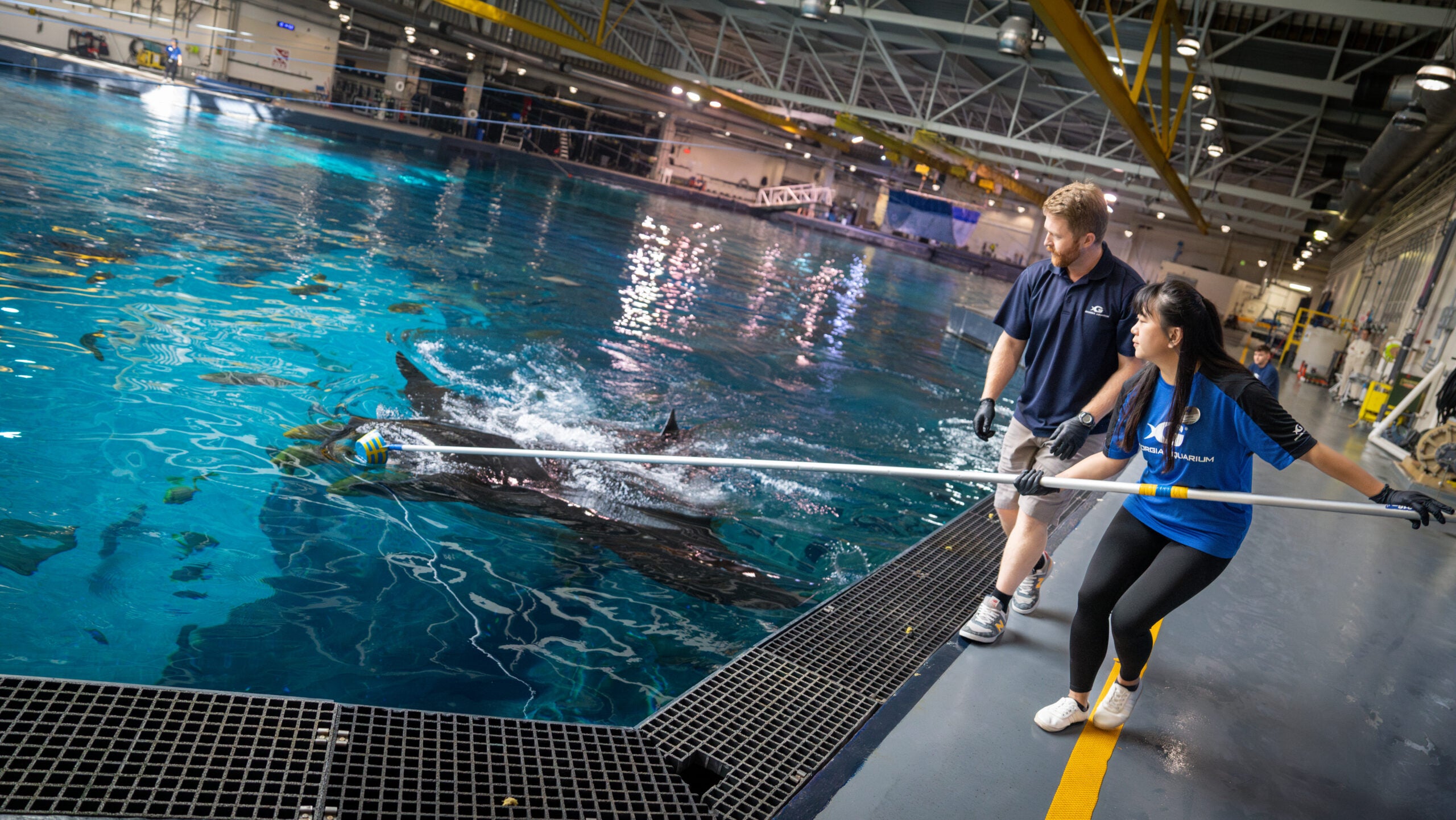
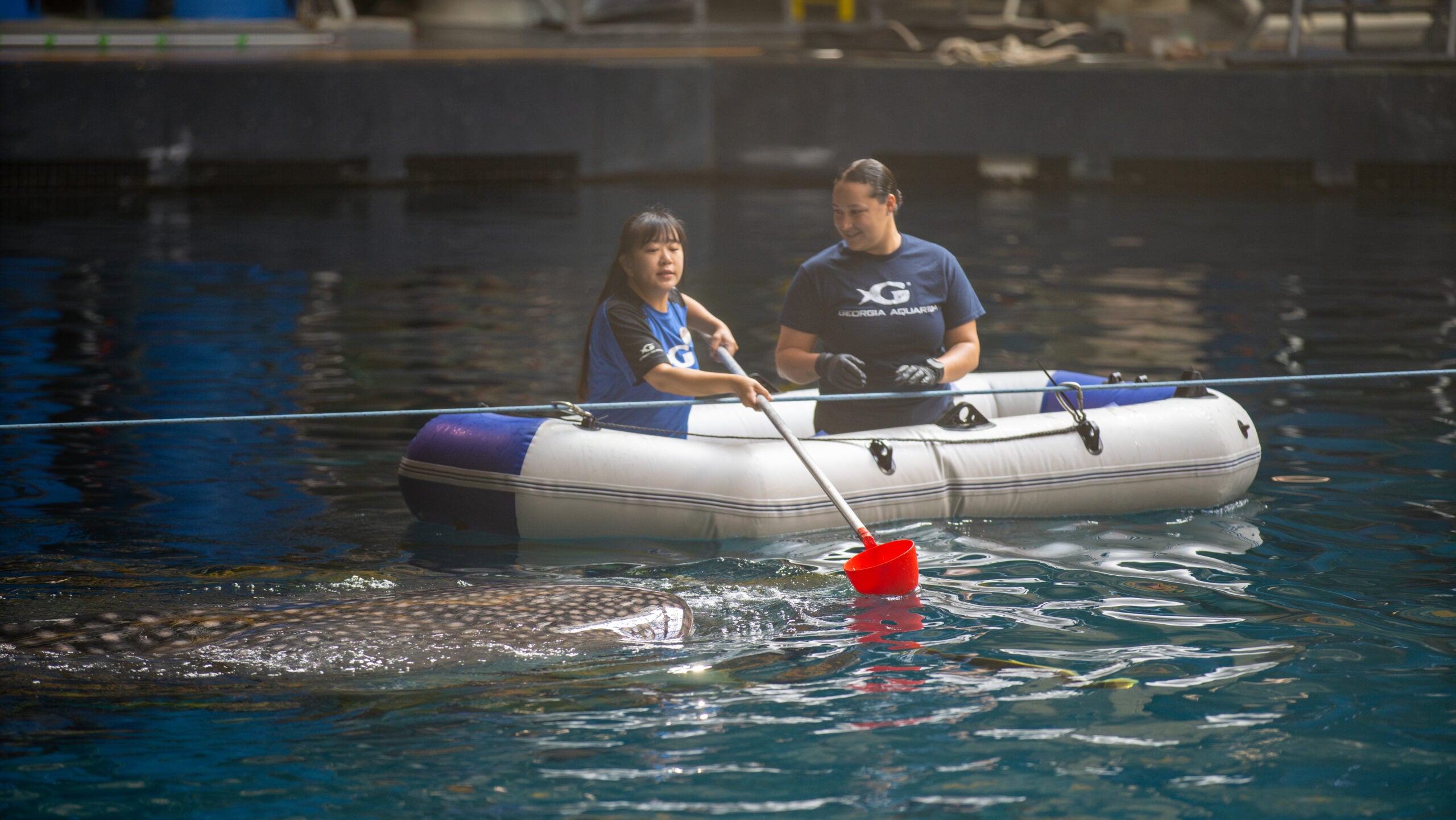
While at Georgia Aquarium, Debbie immersed herself in various activities, from feeding animals in the Ocean Voyager exhibit to assisting with assessments in the field. “I even got to take my first blood sample from a shark and implant an acoustic transmitter with Dr. Lisa Hoopes and Dr. Kady Lyons,” she recalls fondly.
Her time with the Aquarium’s teams reinforced the importance of different monitoring techniques—ultrasound examinations, behavior tracking, and data analysis—all essential tools for understanding marine life. “Although I couldn’t observe everything the Aquarium’s team does, every moment spent here was priceless.”
Facing Challenges in Shark Research
Field research presents unique hurdles, from safety risks to the unpredictability of wildlife encounters. “The biggest challenge is that you can’t always get the sample or data you need,” Debbie reflects. In Taiwan, habitat destruction and fishing practices also pose significant threats to sharks. However, the country has adopted sustainable management strategies, including whole-fish utilization and bycatch monitoring under international guidelines. Despite these efforts, Debbie notes that traditional surveys remain insufficient, underlining the need for continued research and international collaboration.
A Global Vision for Shark Conservation
Debbie’s work highlights how acoustic tracking programs foster global conservation efforts. “Our receivers might detect species tagged by other research teams, and our tagged sharks could be tracked in other regions,” she explains. Connecting nations like Taiwan, Australia, the Philippines, and Japan could yield crucial insights into the movement patterns, population structures, and life stages of marine animals. “These collaborative efforts will help us develop sustainable resource management strategies.”
Priceless Memories and a Hopeful Future
For Debbie, her time with Georgia Aquarium wasn’t just about research—it was also about meaningful experiences. “I saw how the Ocean Voyager team creates unique feeding plans for the whale sharks and conducts regular health checks. I even got to dive with the team and assist in training activities.”
Her gratitude for the experience is evident. “This opportunity to learn and explore means so much to me. I hope to meet everyone again soon, and they’re always welcome to visit me in Taiwan.”
Debbie’s work is a testament to the power of collaboration in advancing marine conservation. With every tag deployed and every data point collected, she moves one step closer to ensuring the future of these majestic creatures—both in Taiwan’s waters and across the globe.