

Georgia Aquarium Aids in the Conservation of Coral
Corals Need Our Help
This summer has seen rising temperatures, both on land and in the water. The rising temperature of the ocean’s waters can be damaging to many species, including coral reefs. Rising water temperatures can also lead to coral bleaching (the process where corals are stressed by changes in their environment and expel the symbiotic algae living in their tissues, causing them to turn completely white). Corals rely on these symbiotic algae for nutrition, without them they are exposed to disease and death.
Georgia Aquarium has been actively involved in coral restoration and conservation since 2010.
Partnering with organizations like the Coral Restoration Foundation to aid in their efforts to effectively grow coral fragments in an underwater nursery near Molasses Reef in the Florida Keys National Marine Sanctuary. The Aquarium recently partnered with the Coral Restoration Foundation on the creation of a “Coral Bus”. This cutting-edge system is the first of its kind and was designed to assist with the transport of nursery-raised corals to their new homes within the Florida Keys National Marine Sanctuary.
Georgia Aquarium also joined the Association of Zoos and Aquariums’ Florida Reef Tract Rescue Project in 2018.
This project is a major undertaking by zoos and aquariums across the nation. Select facilities are working with federal and state agencies to save susceptible coral species along the Florida Reef Tract. Since March 2019, nearly 2000 corals have been placed in 19 facilities managed by AZA-accredited institutions across 12 states – including Georgia Aquarium. As a part of this project, Aquarium staff have been involved in rescuing and housing coral to reintroduce back into the ocean and repopulate the reefs that have been devastated by disease and coral bleaching. It may be quite some time until the ocean is healthy enough to support these corals, but the Aquarium is dedicated to their care until that time.
Coral reefs play a huge role in our ocean’s ecosystem, supporting nearly 25% of all marine life. Coral reefs also protect our coastlines from storms and erosion, provide jobs for local communities, and support global fishing industries. Georgia Aquarium is undoubtedly dedicated to the conservation of coral. By caring for them in Atlanta, assisting organizations in Florida, and propagating existing coral from our exhibits to learn from them we continue to understand ways to protect these incredible animals.
Want to get involved? There are a few things you can do to help save our ocean’s coral:
- Be sure to use reef-friendly sunscreen.
- Recycle and dispose of trash properly.
- Use less impactful modes of transportation.
- Practice safe and responsible diving and snorkeling.
- Save energy at home and at work; reduce your carbon emissions wherever and whenever you can.
- Lastly – spread the word!
Remember: coral is an animal, not a plant! do not touch or remove corals if you see them in the ocean!
To learn more about Georgia Aquarium’s efforts to save coral, please visit our website.
Be sure to follow us on Facebook, Twitter, Instagram and TikTok.
Published on Aug 10, 2023.
Georgia Aquarium Tips & Tricks for Visiting
What to know before visiting the largest aquarium in the Western Hemisphere
Don’t worry, we have your back. The Aquarium compiled a list of ‘tips and tricks’ every guest should know before planning their visit, to ensure its smooth sailing straight to the fun! Here is everything you need to know.
When is the best time to plan a visit?
Know before you go! As one of the world’s largest aquariums, Georgia Aquarium attracts guests from across the globe. It may come as no surprise that the summer and holiday seasons are the busiest times of year.
Pro Tip:
We highly recommend planning your visit around the morning or evening hours.
Where do I park?
Georgia Aquarium has one main attached parking garage located at 357 Luckie Street NW. This seven-level deck includes general parking in addition to spots dedicated to electric vehicle charging and disability parking. There are elevators on every level to ensure easy access to the main entrance. We also encourage guests to use alternate modes of transportation on busy days, like MARTA (there is a train stop at the Georgia World Congress Center/CNN Center within walking distance of the Aquarium), or rideshare.
Pro Tip:
Purchase your parking in advance and save time!
Where do I purchase tickets?
Purchasing tickets is easy – simply visit the Aquarium website or download the mobile app to browse ticket options and experiences.
You can also take advantage of our best deal of the year by purchasing an Aqua Pass, guests can pay for a day and enjoy unlimited access for an entire year. *Blackout dates apply
Pro Tip:
Don’t forget to make seat reservations for the Dolphin and Sea Lion Presentations ahead of time, as seats fill up quickly.
Skip the feeding frenzy!
The Aquarium’s Coastline Café offers a delicious variety of dining options for guests and their families. The café is open daily, 30 minutes after the Aquarium opens.
Where is the best place for a picture?
While the entire Aquarium serves as a unique background for any selfie, there are a few extra special photo spots! Here are some locations to keep in mind for your next visit:
- The Ocean Voyager gallery is known for its breathtaking viewing window and domed tunnel that surrounds guests with aquatic life from above. But some may not realize there is a bubble window, located just past the tunnel, that is the perfect size to sit in. With a stunning view into Ocean Voyager as the backdrop, this spot is not one to miss.
- While the Sharks! Predators of the Deep gallery is designed to draw in guests with its dimly lit ambiance and powerful backdrop music, that turns the fear of sharks into fascination – it doesn’t offer that picture perfect “golden hour lighting”. The best lighting in this gallery can be found at the large dome window at the end of the exhibit – once fear is transformed into fascination, and light is shed on these misunderstood creatures of the deep.
- As guests enter the Aquarium, they may be racing to get inside to see a whale shark or sea otter. But don’t rush to pass through the turnstiles or you might miss one of the most colorful photo ops in the entire building – the jelly wall. This exhibit displays countless jellies in a rainbow-colored array of lights. Since these jellies are translucent, they reflect the colors being light from above, giving the effect of rainbow-colored jellies – and serving as a one-of-a-kind photo spot.
- Speaking of color – the coral wall in the Tropical Diver gallery competes for most vibrant exhibit. Filled with brightly colored coral and fish, it is one of the most popular places for photos.
- Lastly, while inside the Aquarium there are countless opportunities for the perfect new profile picture – outside the entrance is the largest standing penguin statute in the state of Georgia – you can’t miss it!
Don’t skip the tour.
There is so much to see and learn at Georgia Aquarium, but there is even more magic to discover behind the scenes. You don’t want to skip the Behind the Seas Tour! Take a backstage look at the most popular exhibit, while learning what it takes to care for the animals who call Georgia Aquarium home. A Behind the Seas Tour can be purchased in advance on our website or at the Animal Interaction Desk located on our second level!
Plan your visit on our website.
For frequently answered questions, animal information, and additional Aquarium resources, please visit our website.
Sharks in Danger this Shark Week
Who doesn’t enjoy heading to the beach during summertime? But with the increase of visitors to beaches across the globe, the ‘hot’ topic of discussion is shark attacks.
In recent years, the worldwide average of confirmed unprovoked shark attacks has been declining. In 2022, the worldwide total was a record low at 57, compared to previous years when the average was 70. A new study, conducted by Stanford’s Hopkins Marine Station, also shows that the risk of a shark bite for surfers, swimmers, and divers in California, specifically, has dropped by 91 percent in the last 50 years.
With unprovoked shark attacks on the downward trajectory, what about human effects on sharks?
A recent report shows the global shark population has decreased by more than 70% in the last 50 years. This is a startling decline and poses a large threat to the recovery rate of these populations. But what is causing such a rapid drop?
Researchers have uncovered vast amounts of information regarding sharks, their behavior, and feeding patterns. This information has created a deeper understanding of sharks and their important role in our ocean’s systemic balance.
For decades, a gruesome practice called shark finning has resulted in the mass killing of sharks worldwide. This process involves cutting off a shark’s fin while discarding the remaining body, often dumping it into the ocean. The shark finning industry is still legal in areas across the globe and has increased in the past decade due to the growing demand for shark fin soup – a popular dish in many countries.
How many sharks are killed every year?
An estimated 100 million sharks are killed each year. To put this into perspective – that is nearly 2 million times the number of confirmed shark attacks worldwide in 2022 (57).
How does this affect our ocean?
As an apex predator, sharks play an important role in our ocean’s ecosystem. When there is a significant decrease in any population, the results throw off the entire system’s balance. The decline of these predators causes an increased population of their prey. For example, the decline of the endangered great hammerhead has caused the population of stingrays to increase. The growing stingray population now eats more of their prey – scallops, clams, and oysters. This not only impacts these prey populations, and therefore the biodiversity of the ecosystem; but also impacts human fisheries.
It is also difficult for many shark species to reproduce as quickly as they are being diminished, due to their slow growth and reproductive rates. This makes many shark species highly susceptible to extinction. Several species of shark are already endangered, according to the International Union for the Conservation of Nature (IUCN) Red List, including the great hammerhead, zebra shark, whale shark, and over 125 other species. 98 other species are listed as critically endangered.
How are we helping sharks?
At Georgia Aquarium, and around the world, our teams are educating the public on the critical role sharks play in our ocean’s ecosystems. Government officials are also implementing protective regulations for endangered shark species, and in recent years, over 30 countries have placed full or partial bans on finning.
Research is also an important part of protecting and preserving shark species. A few years ago, Georgia Aquarium teams traveled to the Bimini Shark Lab in Bimini, Bahamas to study a variety of shark species and how pollution with microplastics affects them. Georgia Aquarium researchers were also the first to fully sequence the shark genome from blood drawn from its whale sharks, which scientists now use to study health implications with sharks and their unique adaptations.
It is imperative, now more than ever, that we spread the message on the importance of sharks to our ocean. At Georgia Aquarium, our Sharks! Predators of the Deep gallery serves to transform our guests’ view of sharks from fear to fascination. Many of the shark species in our one-million-gallon exhibit are endangered and serve as important ambassadors. By providing a deeper understanding of sharks, we hope to inspire compassion and create advocates to share our message of conservation.
Learn more about the decline of sharks and their importance to our ocean:
Reef Sharks Being Pushed to Brink of Extinction, New Research Shows
New Global Study Finds Unprecedented Shark and Ray Extinction Risk
Sharks & Rays in Rapid Global Decline: IUCN Report
Be sure to follow us on Facebook, Twitter, Instagram and TikTok.
Published on Jul 24, 2023.
Georgia Aquarium Introduces New Coastal (and Colorful) Feathered Friends
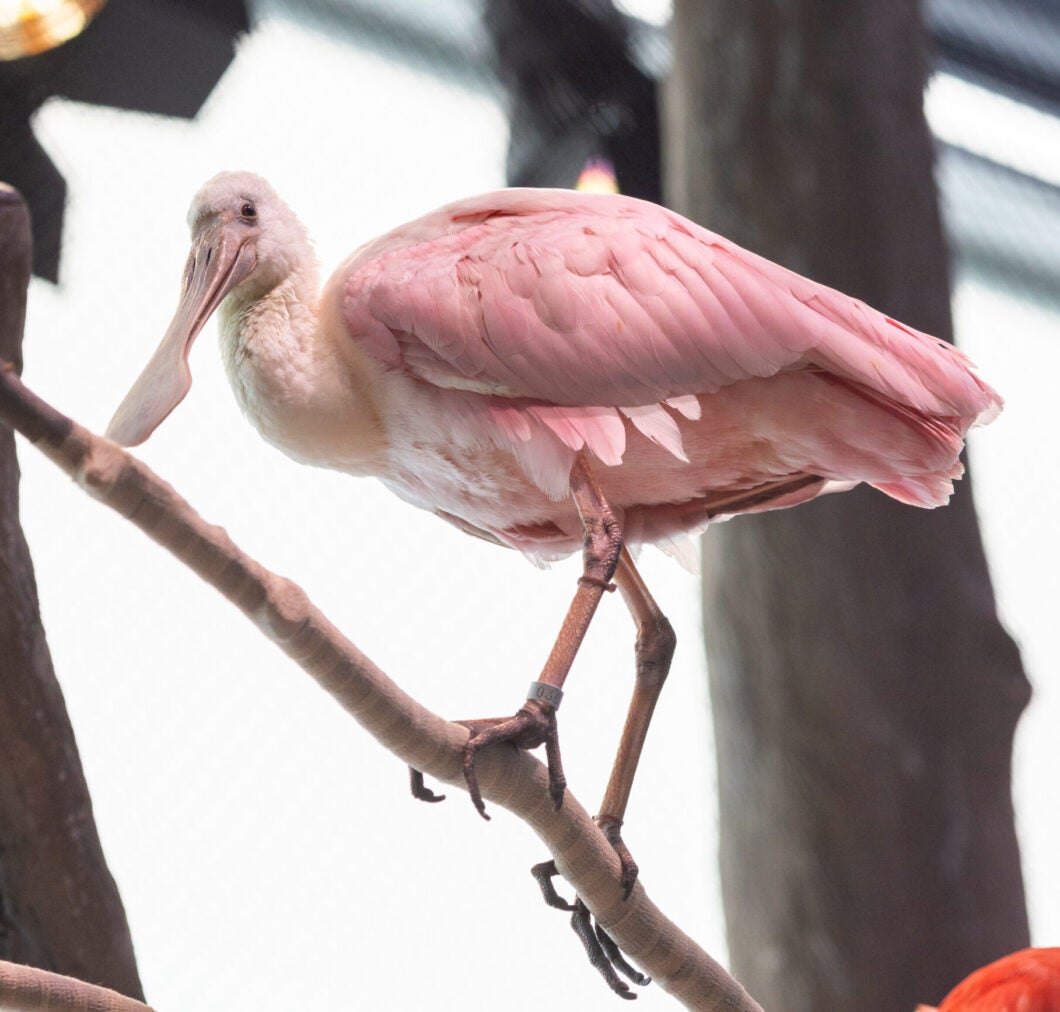
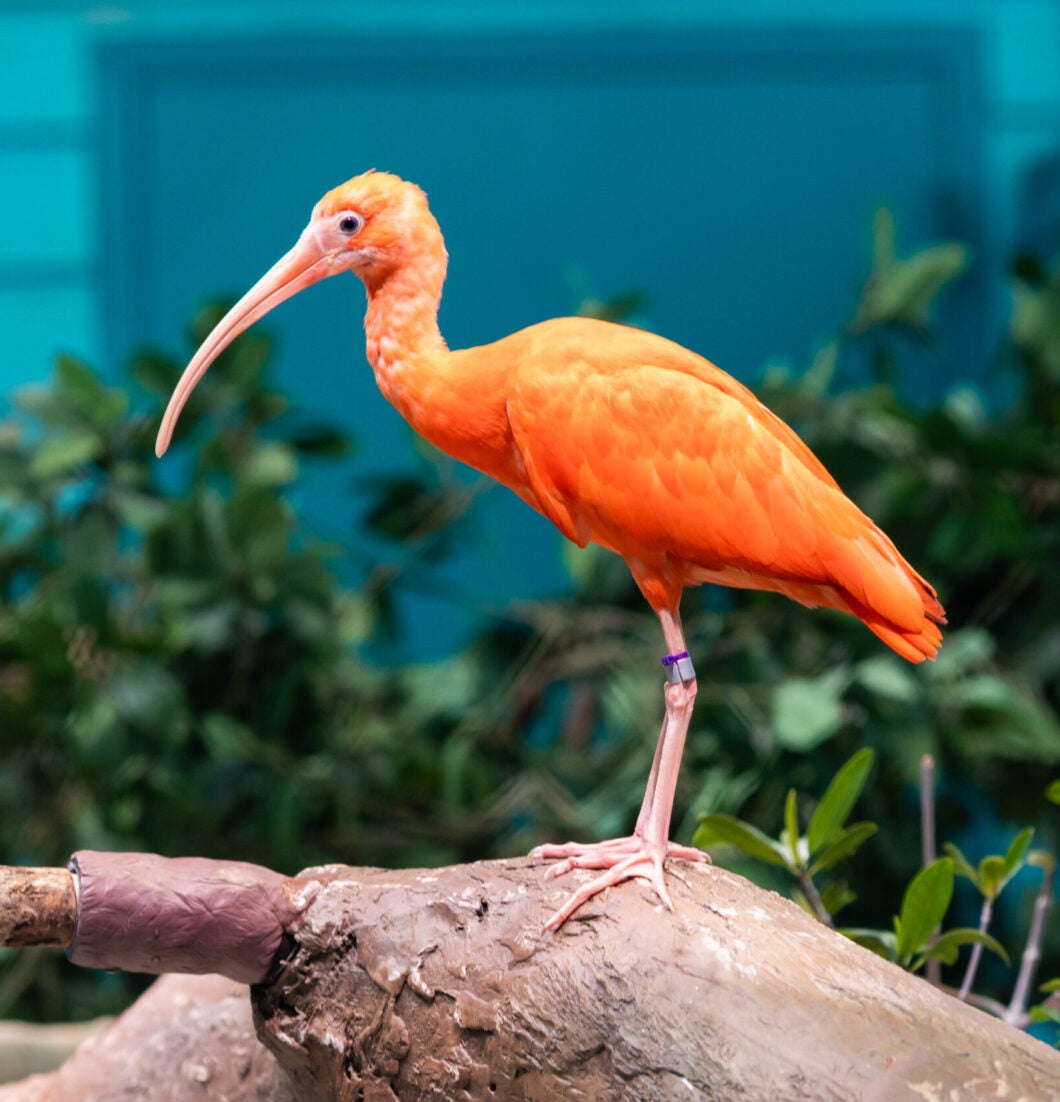
For the first time ever, Georgia Aquarium is now home to a brand-new coastal birds exhibit, featuring roseate spoonbill and scarlet ibis.
These colorful birds are now on display for guests in the Margaritaville Vacation Club Dolphin Coast gallery. This new habitat is the first of its kind at the Aquarium and features both aquatic and arboreal elements. Guests will learn about the importance, diversity, and delicate balance of coastal ecosystems – especially those found in Georgia.
Roseate spoonbills live in shallow waters and marsh areas along the coastal areas of Southeast U.S. through Central America, the Caribbean, and South America. These light pink to dark red colored birds are aptly named for their long, spoon-shaped bills which have a distinct yellow-green color. They use this large bill to sweep through the water and catch prey. Spoonbills feed mainly off small fish and aquatic invertebrates. This species is very social and will colonize with members of the same order for feeding and breeding. The largest threat to roseate spoonbills is habitat destruction. Learn more about the roseate spoonbill on our animal guide.
Scarlet ibis can be easily spotted from their bright red to pink color with long legs, necks, and beaks. These birds can be found throughout South America, occasionally seen in Florida. Seasonal shifts and migrations move this species between coastal environments and interior wetlands. Ibises use their long beaks to search through water for food and to peck surfaces for other prey. Their diet consists of small fish, crustaceans, mollusks, worms and insects. Like the spoonbill, these are highly social animals, not just for breeding, but also for foraging. This species is vulnerable to predation by large cats which is another reason they stay in large groups. Adult ibises will make a “honking” noise as a form of communication; males and females may also greet each other by wrapping necks. Learn more about scarlet ibis on our animal guide.
See here for photos of our new exhibit and coastal birds.
To learn more about our exhibits, and to purchase tickets, please visit our website.
Be sure to follow us on Facebook, Twitter, Instagram and TikTok.
Published on Jun 21, 2023.
Reef Sharks Being Pushed to Brink of Extinction, New Research Shows
A major new research study has found that overfishing is driving coral reef sharks rapidly toward extinction, with global declines of 70% and no sharks found at all on many reefs.
Georgia Aquarium was part of the massive Global FinPrint study, published recently in the respected journal Science, which was conducted at nearly 400 reefs in 67 countries using about 23,000 underwater video stations.
Sharks keep the ocean food chain healthy, eating sick, weak animals and keeping individual species from taking over reef ecosystems. When sharks disappear, it sets off a significant chain reaction throughout the ocean.
The new research found that on reefs where sharks were gone, the number of rays had expanded significantly, creating a serious imbalance in the ocean’s food web – which many people rely on, too.
The biggest declines were in five common species: grey reef sharks, Caribbean reef sharks, nurse sharks, and blacktip and whitetip reef sharks.
Dayne Buddo, Ph.D. and director of Georgia Aquarium’s Global Ocean Policy, has worked extensively in the waters off Jamaica, where the research found low numbers of reef sharks, especially near the shore. In Jamaica, the issue isn’t catching of the sharks themselves, but the fish they love to eat.
Private and commercial fishing for sharks’ prey – like grouper, jacks and snapper – are popular there. And when those fish disappear, so do the sharks.
Georgia Aquarium is working with Jamaica to establish large marine protected areas, or MPAs.
“The protected areas are working, but they need to be bigger and cover more areas,” Buddo said.
Where those protections are in place, sharks and the fish they eat are slowly coming back. But it will take a while for these fish species to recover.
It’s also an uphill battle to convince local communities, including fishers who hunt using spears and fish pots, to protect sharks.
“There is a tremendous fear of sharks and the overall ocean,” Buddo said. “When sharks go after the fish caught by spear fishers, it causes serious conflicts. Seeing a brother or cousin hurt by sharks seriously damages conservation efforts.
“So we must not just set aside protected areas for sharks – we have to change people’s minds about why sharks matter, and teach fishers how to avoid and protect themselves against sharks. The key is involving people – the public, schools, entire communities and government policy makers – in the solutions,” he added. “That’s where the answer lies.”Tourism offerings, such as shark diving, can help save sharks by providing a valuable alternative way for local residents to feed their families.
Georgia Aquarium’s shark residents are helping change fear to fascination, too, by teaching visitors about sharks’ important role in our oceans.
“When we change people’s minds about these species, it’s a powerful tool to help us protect them,” Buddo said. “We’re making a difference.”
Researcher Colin Simpfendorfer of the James Cook University and the University of Tasmania was the lead author on the study. Read more here.
Published on Jun 21, 2023.