

ATLANTA (June 1, 2026) –
By Dr. Cameron Perry, Research Scientist at Georgia Aquarium
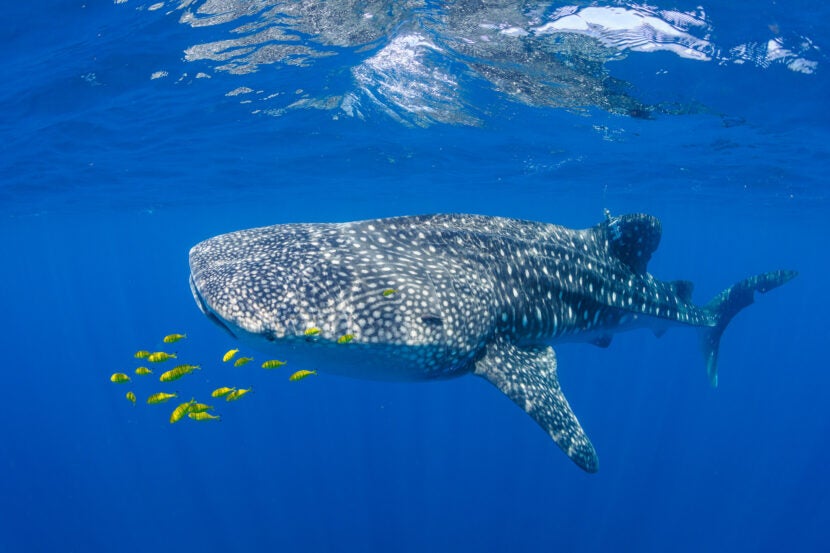
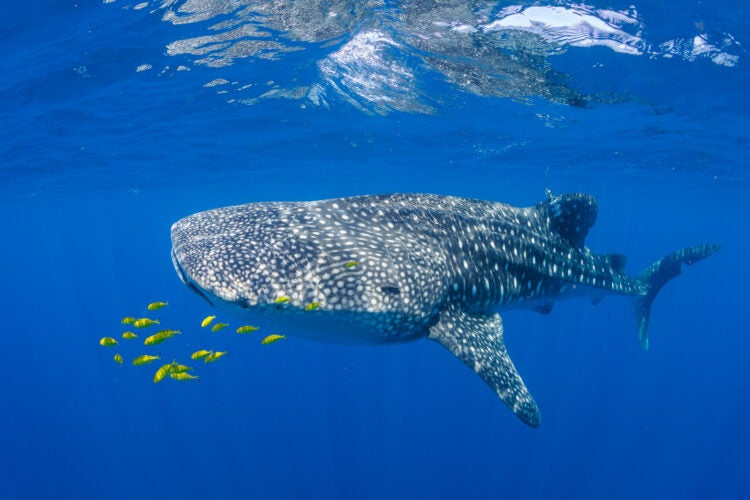
Whale sharks are the largest fish in the ocean, but despite their size, much of their lives remain hidden from us.
They move through vast ocean spaces, travel across national boundaries and spend long periods far beyond where researchers can observe them directly. As highlighted in a newly published paper in Animal Biotelemetry, scientists rely on clamp-based tools like satellite tags and other devices to better understand where whale sharks go, what habitats they depend on and what threats they may encounter.
But tagging a whale shark is not simple. Because of their size, wide-ranging movements and gentle nature, whale sharks require thoughtful, specialized approaches when researchers study them in the wild. Scientists must collect meaningful data while keeping animal well-being at the center of every decision. That challenge is at the heart of the new paper, “Methods for tagging whale sharks: insights into performance and best practices with a focus on clamp attachments.”
I was proud to contribute to this international study alongside whale shark researchers from around the world. Together, the authors surveyed global experts to better understand current whale shark tagging methods, identify best practices and help guide future research efforts.
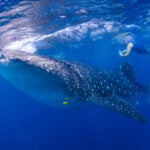
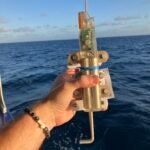
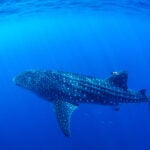
The paper explains how tracking technology can open a window into a world we otherwise would not see. Satellite tags can help reveal migration routes, diving behavior, habitat use and areas where whale sharks may overlap with human activity. Those data are essential for conservation. Whale sharks are globally endangered and protecting them requires understanding not only where they gather near the surface, but where they travel throughout the year.
Georgia Aquarium has long been part of that effort. Through field research, animal care expertise and partnerships around the world, Georgia Aquarium contributes to a growing body of knowledge about whale shark health, movement, behavior and conservation. Our experience caring for whale sharks also allows us to support research questions that can be difficult to answer in the wild.
The study included dorsal fin measurements from Taroko, a whale shark who lived at Georgia Aquarium and contributed to our understanding of this remarkable species. These measurements provided additional information that may help researchers refine clamp design and selection for whale sharks of different sizes.
The goal is straightforward: collect the best possible data while reducing potential impacts to the animal. A tag that is placed well and designed appropriately can transmit for longer, provide higher-quality data and help researchers learn more from each deployment. By comparing experiences across research teams and study sites, the study helps identify what is working, what needs improvement and where future innovation should focus.
One of the most valuable aspects of the study is that it brings together knowledge from scientists and conservationists working across the world. The paper reflects contributions from researchers with experience across many whale shark study sites, helping turn individual lessons learned in the field into shared guidance for the broader research community.
Whale sharks are a global species. No single organization, field site or research team can answer every question about their lives. By sharing successes, challenges and lessons learned, the whale shark research community can improve methods for everyone.
That kind of collaboration is central to Georgia Aquarium’s approach to whale shark conservation. The more we can learn from one another, the more effectively we can study these animals and apply that knowledge to protect them.
For me, this work is a reminder that conservation science is built through steady, collaborative progress. Each study, measurement and shared lesson adds to a deeper body of knowledge about whale sharks and the ecosystems they depend on. At Georgia Aquarium, we are proud to contribute to that larger effort by combining research, animal care expertise and global partnerships to help inform how this endangered species is studied and protected.
The paper makes clear that better tagging methods can lead to better conservation outcomes. Longer-lasting and more reliable tags can help researchers identify important habitats, document long-distance movements and understand where whale sharks may face risks from threats such as vessel traffic, fishing activity or environmental change. These insights can inform conservation planning and help decision-makers better protect a species that still holds many mysteries.
The findings from this paper may also have broader applications for other large marine animals. As researchers continue to refine clamp-based tagging methods, the lessons learned from whale sharks could help improve how scientists study other species that are difficult to observe, tag or track.
At Georgia Aquarium, we are committed to advancing science that supports animals in our care and their counterparts in the wild. Whale sharks inspire millions of guests, but they also remind us how much there is still to learn about life in the ocean.
Every improvement in how we study them brings us closer to understanding what they need to survive. And for the world’s largest fish, better data can help build a better future.
Dr. Cameron Perry is a research scientist at Georgia Aquarium, where he contributes to studies that advance understanding of animal biology, health and conservation. His work supports Georgia Aquarium’s broader research efforts across species in human care and in the wild, helping inform science-based conservation strategies for aquatic animals and their ecosystems.
Through Georgia Aquarium’s partnership with Fahlo, guests can purchase whale shark tracking bracelets that connect them to individual whale sharks and help support Georgia Aquarium’s research and conservation programs. Learn more about the partnership and how you can follow along at https://www.georgiaaquarium.org/fahlo-partnership/
###
Georgia Aquarium is one of the largest aquariums in the world with more than 11 million gallons of water and tens of thousands of animals. Located in Atlanta, Ga., it is a premier animal care and research facility that is accredited by the Association of Zoos and Aquarium, the Alliance of Marine Mammal Parks and Attractions, Humane Certified by American Humane, and a Class R research institution certified by the USDA. By providing guests with unparalleled opportunities to learn about marine life, Georgia Aquarium is dedicated to unlocking the ocean’s wonder for all, providing transformative experiences that inspire a shared responsibility for conserving our aquatic ecosystems.