

ATLANTA (August 7, 2026) –
By Dr. Chelsea Black, Research Scientist, Georgia Aquarium
Thousands of people ride MARTA trains through Atlanta each day. Miles off Georgia’s coast, two retired MARTA railcars are serving a very different purpose beneath the water.
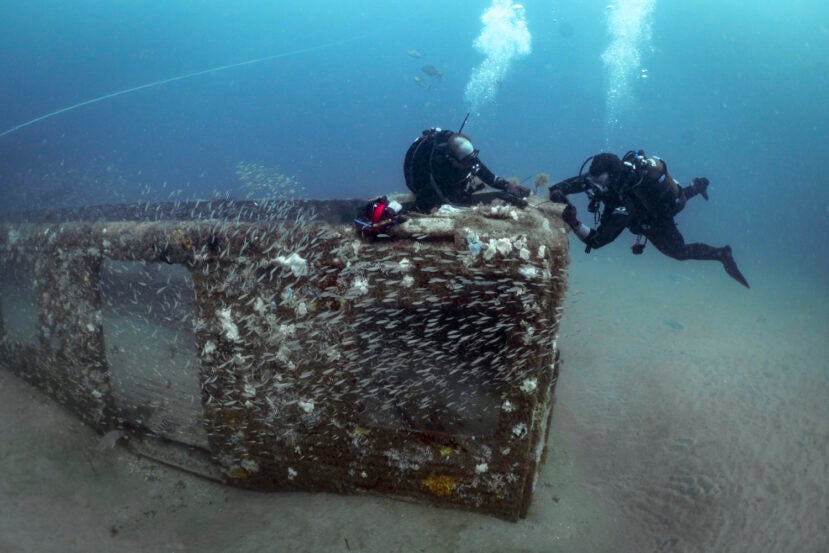
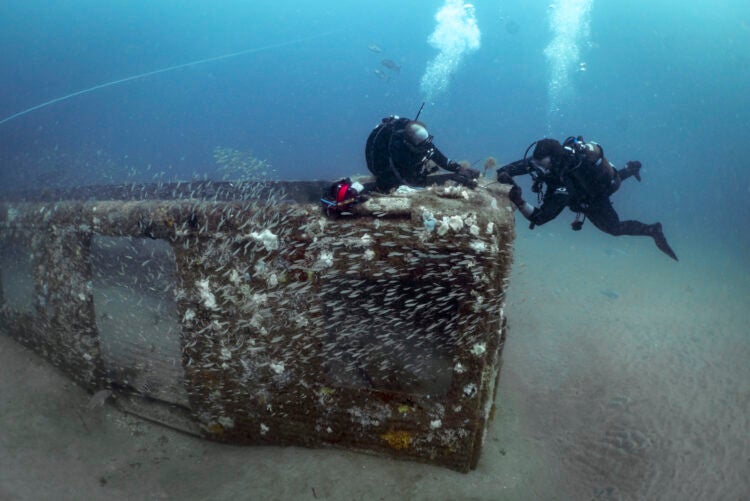
In 2021, the railcars were added to an artificial reef to provide a new structure where marine life could settle and find habitat. This summer, our Georgia Aquarium research team returned to assess how the railcars had changed and install a new acoustic receiver. The device records signals from animals fitted with acoustic tags, helping scientists identify which species pass through the area, how often they are detected and how they move through Georgia’s coastal and offshore waters.
The dive provided a unique look at how a familiar piece of Atlanta infrastructure has changed underwater. It also marked an important step in a broader effort to expand acoustic monitoring along the Georgia coast.
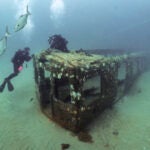
In June, fellow Georgia Aquarium research scientist Dr. Cameron Perry and dive team membersJeff Odom, Nick Kistler and Lindsay Degeorges, joined me for acoustic receiver maintenance off the coast of Georgia. One of these sites included two MARTA railcars placed in 2023. Of the two cars originally placed at the reef, one had been reduced largely to rubble. The other remained intact enough for our team to attach an acoustic receiver to the structure.
The remaining railcar looked very different from the trains Atlantans may remember. Its surface was covered with sponges, algae and other marine growth, and fish were visible throughout the surrounding area.
During the dive, we confidently identified 11 fish species, including almaco jacks, spottail pinfish, red snapper, scad, sheepshead, Atlantic spadefish, slippery dick, black sea bass, gray triggerfish, great barracuda and crevalle jack. These observations show how artificial structures can add complexity to the seafloor and create new places for marine organisms to settle, shelter and move through.
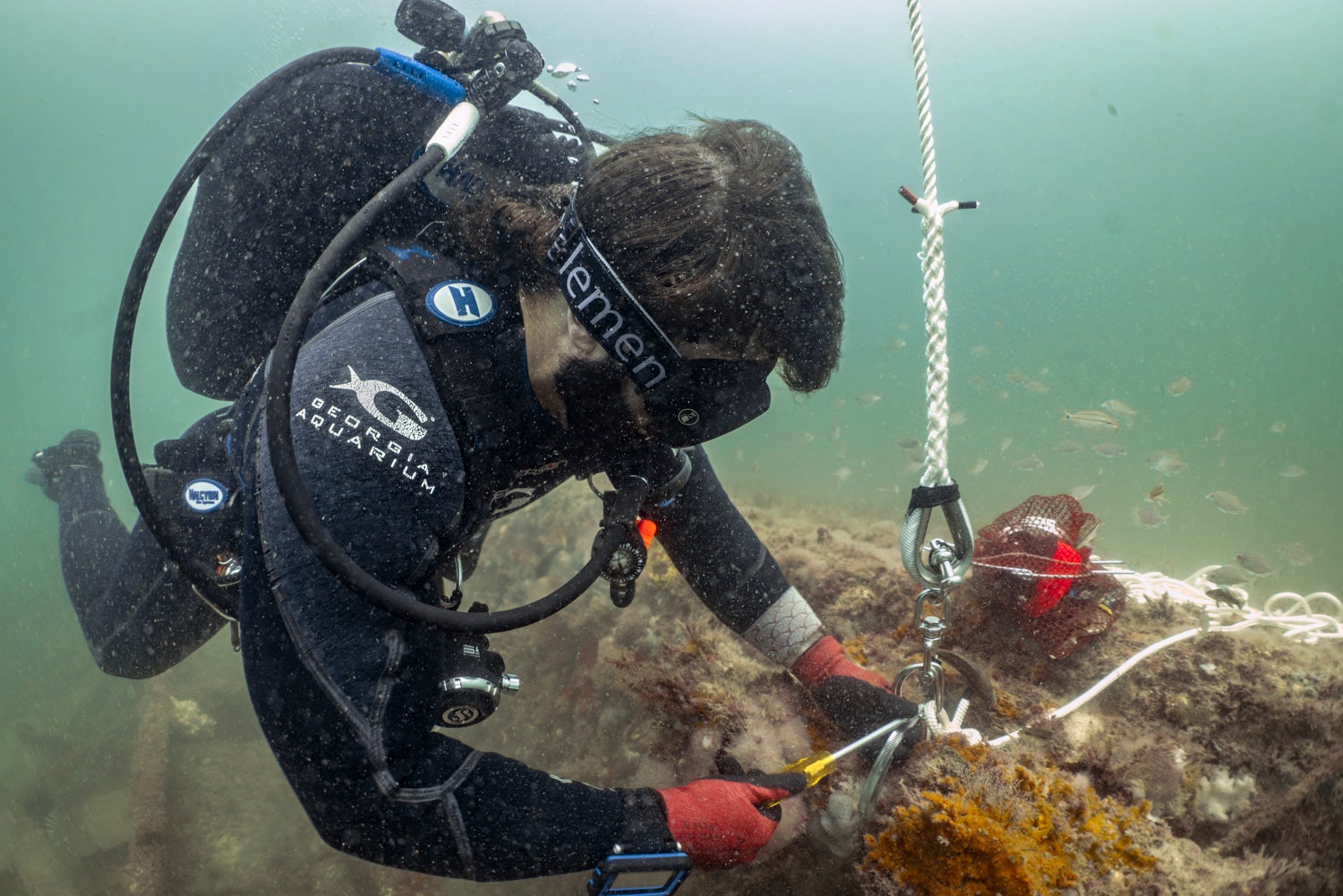 Listening for Tagged Animals
The receiver we installed is part of an acoustic tracking network used to study the movements of fish, sharks and other marine animals.
Researchers place small acoustic tags on individual animals. Each tag transmits a unique identification number. When a tagged animal swims within range of a receiver, the device records that number, along with the date and time of the detection.
This allows scientists to document animal movements that would otherwise be difficult to observe directly. A receiver may detect animals tagged by the research team that installed it, as well as animals tagged by other scientists.
These receivers will record the sharks that I am tagging along the Georgia coast. Small juvenile sharks are being tagged to better understand how long they spend time in nearshore estuaries before moving offshore and migrating along the East coast.
Data collected by our receivers are shared through the Florida Atlantic Coast Telemetry Network, or FACT Network, a regional network of researchers using acoustic tracking technology. By sharing information across the network, scientists can follow tagged animals over a much larger geographic area than any one team could monitor independently.
Georgia Aquarium receivers have previously detected several tagged species, including sand tiger sharks, tiger sharks, white sharks and red drum.
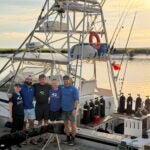
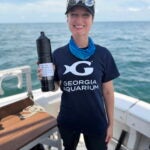
This is the furthest offshore location where we have installed an acoustic receiver along the Georgia coast. Acoustic receivers are already used in estuaries and other nearshore environments but expanding the network into deeper water will help me better understand where tagged sharks travel after leaving those estuaries.
How far offshore do tagged animals travel? How frequently do they move between estuaries and deeper water? Do they return to the same locations? Are artificial reefs important habitats or movement corridors?
The new receiver will benefit more than just my research, it will give multiple research teams an opportunity to see how far offshore some of their tagged animals are traveling. Because it can detect animals from several different studies, the information it collects will support a range of research projects across the region.
This deployment was the first of several planned trips to expand acoustic receiver coverage along the Georgia coast. I have been working with scientists from the University of Georgia, Georgia Department of Natural Resources and NOAA to determine how receivers can be arranged to provide the most useful coverage.
Our hope is that by next year, receivers will be monitoring most of Georgia’s artificial reefs and detecting tagged animals as they move through these areas.
This receiver will remain in place for approximately one year. During that time, it will record any tagged animals that swim within range. When our team returns, we will replace the batteries and download the data. Those records may reveal which tagged species passed the railcar, when they were present and how their movements connect with other areas along the Georgia coast.
It is exciting to see a familiar piece of Atlanta’s history take on a new role, providing habitat for marine life while helping scientists learn more about how animals move through Georgia’s coastal waters.
###
Georgia Aquarium is one of the largest aquariums in the world with more than 11 million gallons of water and tens of thousands of animals. Located in Atlanta, Ga., it is a premier animal care and research facility that is accredited by the Association of Zoos and Aquarium, the Alliance of Marine Mammal Parks and Attractions, Humane Certified by American Humane, and a Class R research institution certified by the USDA. By providing guests with unparalleled opportunities to learn about marine life, Georgia Aquarium is dedicated to unlocking the ocean’s wonder for all, providing transformative experiences that inspire a shared responsibility for conserving our aquatic ecosystems.
Dr. Chelsea Black is a Research Scientist in Georgia Aquarium’s Research and Conservation Department and a shark scientist whose work focuses on marine animal movement, habitat use and population dynamics. She uses tools including acoustic telemetry, satellite tagging and long-term datasets to study sharks and rays along the Atlantic coast and around the world. Her research combines field science, collaboration and public engagement to improve understanding of marine species and support evidence-based conservation.