

ATLANTA (June 30, 2026) –
By Kim Stone, Director of Fishes & Invertebrates at Georgia Aquarium
Some of the most exciting conservation moments happen quietly, behind the scenes.
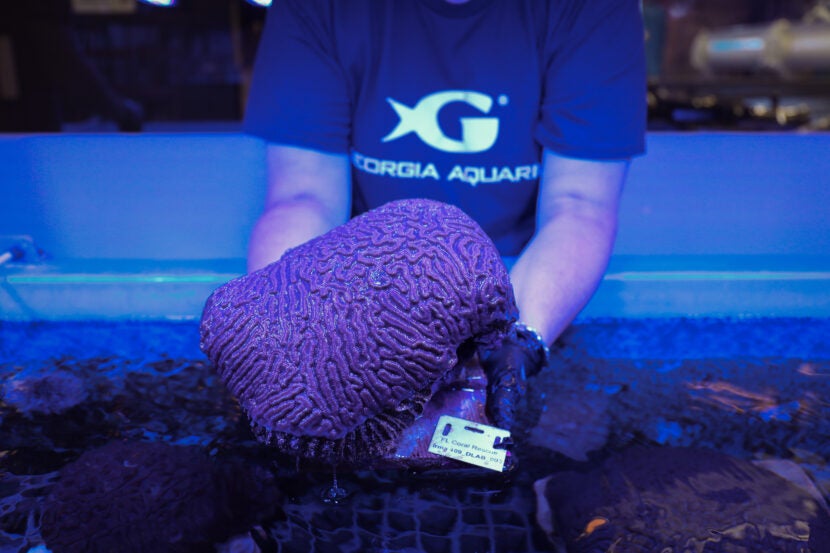
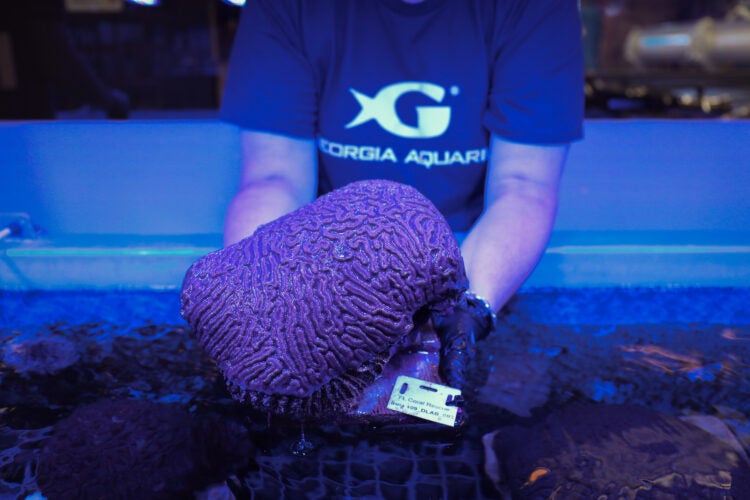
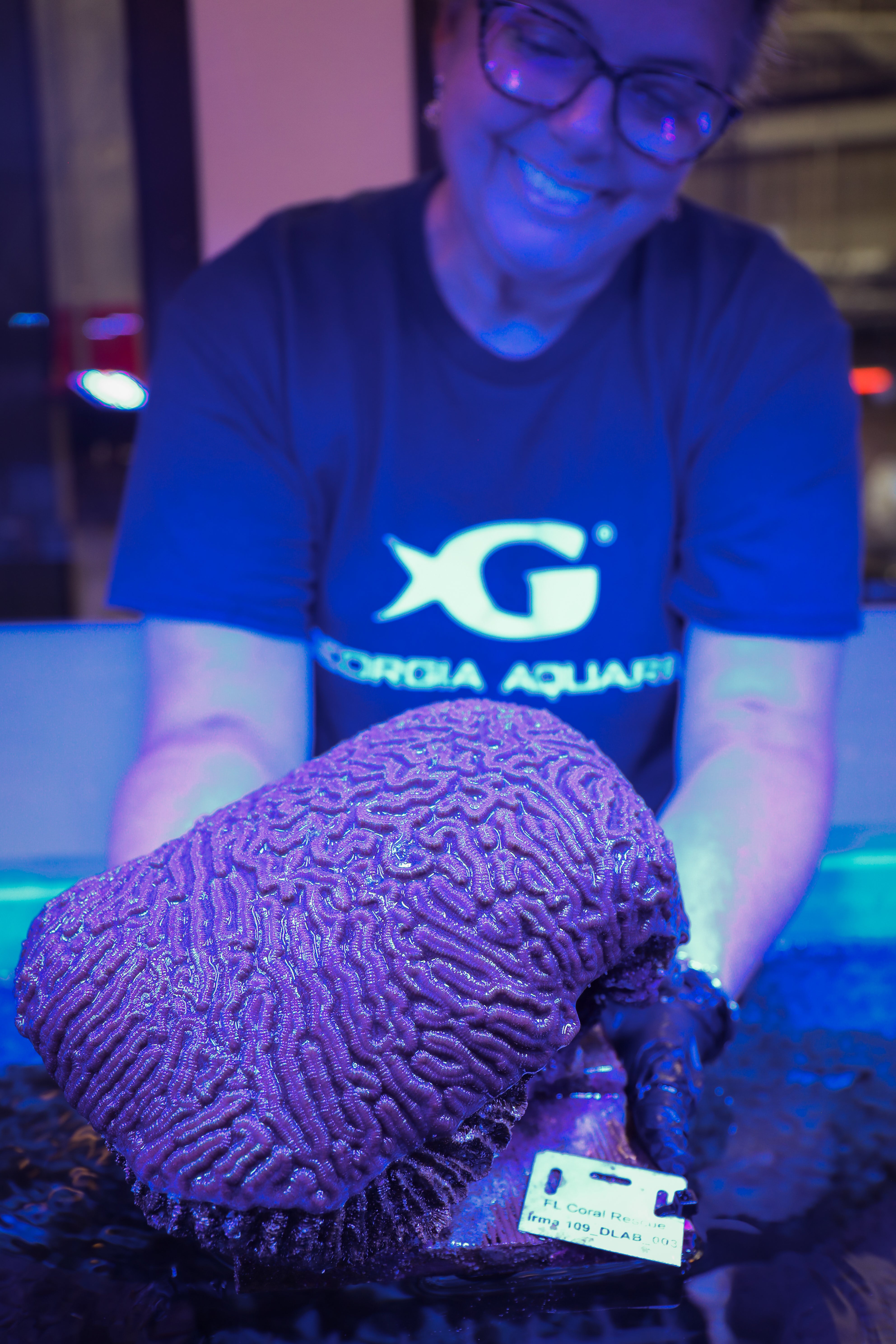
Recently, our coral team at Georgia Aquarium successfully spawned Grooved Brain Corals, creating nearly 60,000 coral larvae. For us, this was a meaningful milestone, not only because of the number of larvae produced, but because coral spawning in a controlled setting is an incredibly delicate process that requires careful timing, specialized systems and a deep understanding of coral biology.
Grooved Brain Corals are Critically Endangered, facing increasing pressure from warming waters, disease and reef degradation. For a species at this level of risk, this successful step toward reproduction is important.
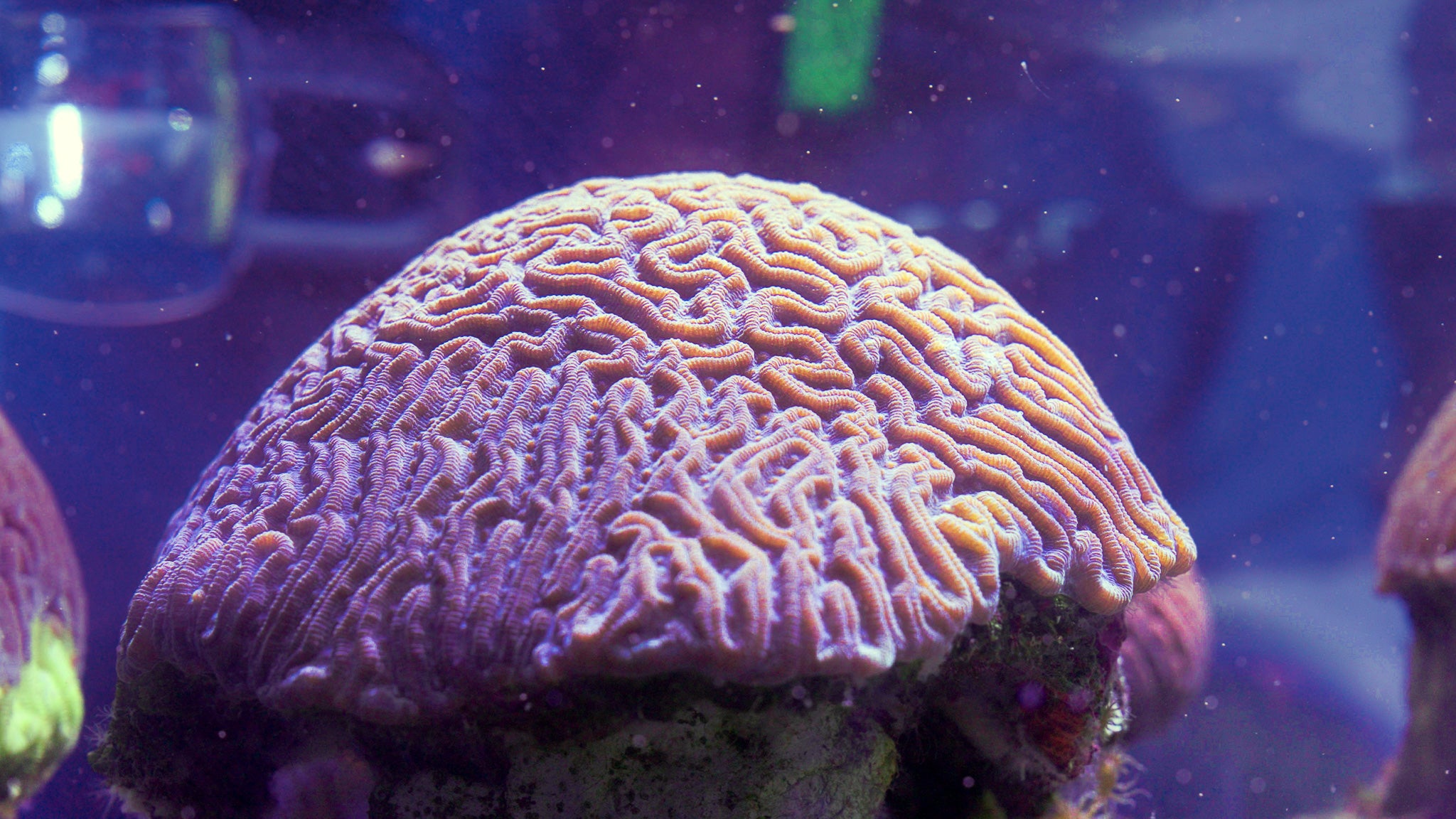
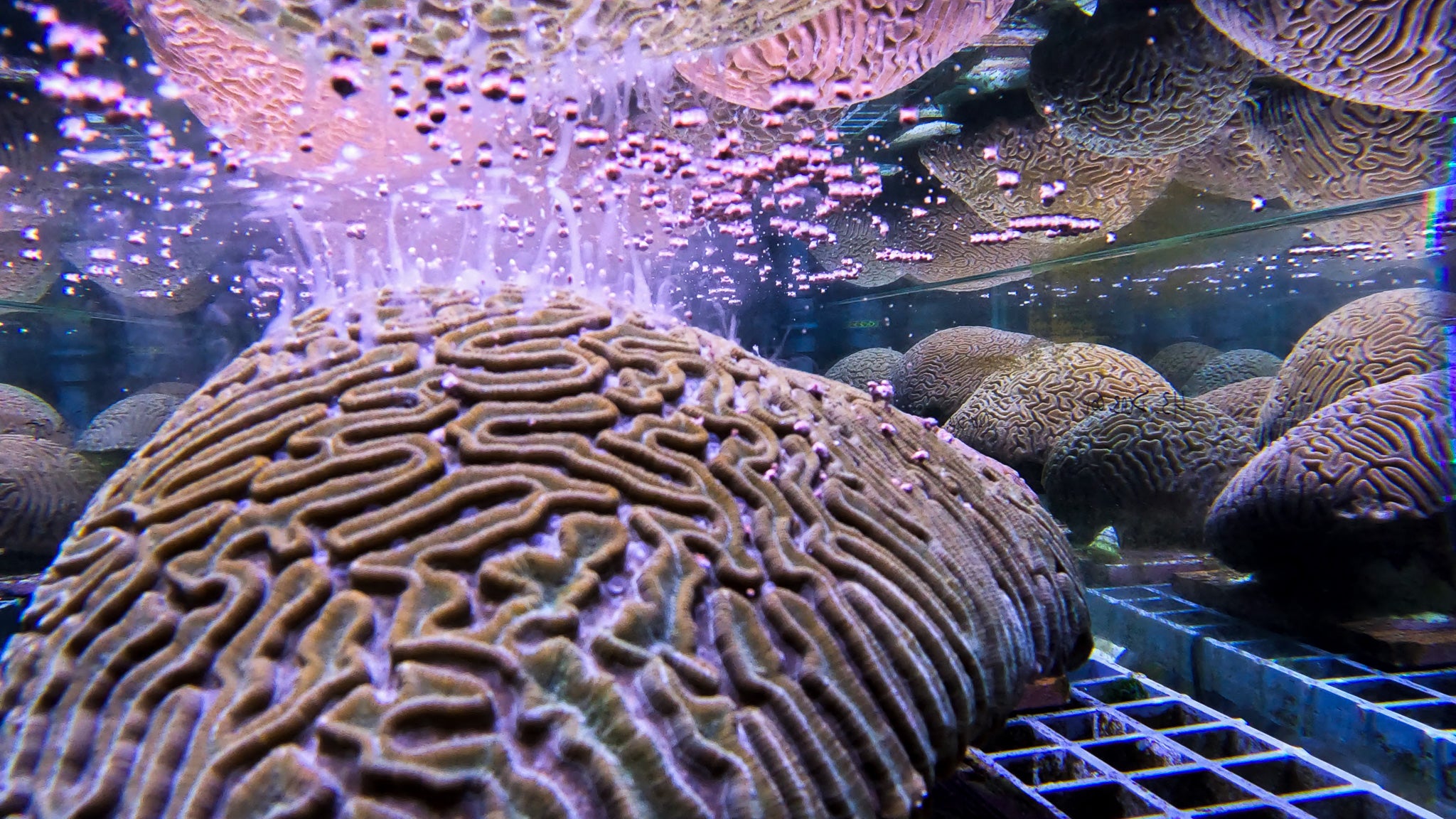
Corals may look like rocks or plants, but they are living animals. Many corals reproduce through spawning, releasing eggs and sperm into the water during carefully timed events. In the ocean, that timing is guided by environmental cues such as seasonal temperature changes, daylight patterns and lunar cycles.
Recreating those cues in an aquarium setting is complex. Our team works to carefully manage conditions so the corals receive the right signals at the right time. When spawning occurs, it represents the beginning of a new generation of corals and the result of months of preparation, observation and care.
After the spawn, the larvae were moved into specialized tanks where they can settle, attach and begin the earliest stages of life as young corals. The next several weeks are critical. Our team will carefully monitor their development as they move through some of their most fragile life stages.
Only a small percentage of coral larvae survive each stage, which is why corals produce so many larvae. Our hope is that this effort could ultimately produce several hundred to a thousand young Grooved Brain Corals that may one day support broader efforts to restore Florida’s coral reef.
This work is part of a much larger conservation effort. Across the country, aquariums, scientists and conservation partners are working urgently to advance coral rescue, care and reproductive science. As reefs face growing threats, aquarium-based programs can help preserve coral genetics, refine techniques for raising young corals and support future restoration work.
At Georgia Aquarium, coral conservation requires a highly trained team, specialized life support systems and a commitment to caring for corals through every stage of development. The work can be painstaking, but moments like this remind us why it matters.
These larvae are tiny, but they represent hope. They are a glimpse of what careful science, collaboration and persistence can make possible for the future of coral conservation.
About Kim Stone
Kim Stone is Director of Fishes and Invertebrates at Georgia Aquarium, where she leads the teams responsible for the care of the Aquarium’s fish and invertebrate habitats and helps advance research and conservation initiatives for marine species. She has played an instrumental role in developing Georgia Aquarium’s coral research and propagation program and building conservation partnerships, including work with Coral Restoration Foundation in Key Largo, Florida. Her work supports the Aquarium’s broader commitment to exceptional animal care, coral conservation and the protection of aquatic biodiversity.
###
Georgia Aquarium is one of the largest aquariums in the world with more than 11 million gallons of water and tens of thousands of animals. Located in Atlanta, Ga., it is a premier animal care and research facility that is accredited by the Association of Zoos and Aquarium, the Alliance of Marine Mammal Parks and Attractions, Humane Certified by American Humane, and a Class R research institution certified by the USDA. By providing guests with unparalleled opportunities to learn about marine life, Georgia Aquarium is dedicated to unlocking the ocean’s wonder for all, providing transformative experiences that inspire a shared responsibility for conserving our aquatic ecosystems.