

ATLANTA (June 9, 2026) –
By Dr. Patrick Charapata, Research Scientist at Georgia Aquarium
Most people do not think twice about what an animal leaves behind. For scientists, though, a fecal sample can be an important window into health.
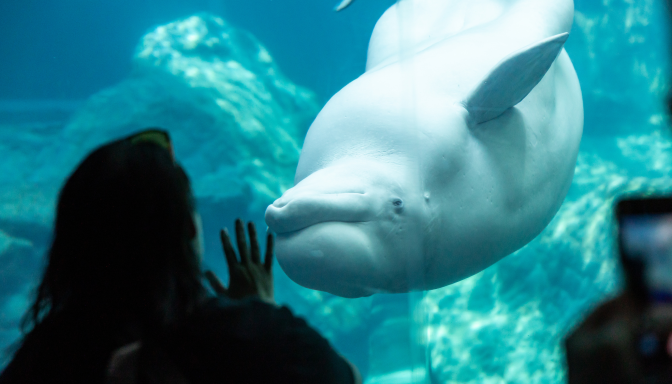
At Georgia Aquarium, our team is studying what beluga whale feces can tell us about reproduction, stress, metabolism and the communities of microbes living in the gut. We call it the “beluga fecal project,” and while the name usually gets a smile, the science behind it can help us better understand beluga health both here at the Aquarium and, potentially, in the wild.
Poop is the end product of what goes into the body and what the body metabolizes. That makes it a goldmine of information.
For beluga whales, fecal samples can help us better understand what is happening inside the body without needing to use more invasive methods. Through this project, we are looking at two key types of health data: hormones and the microbiome.
Hormones can provide insight into reproduction, stress and metabolism. The microbiome (the community of bacteria and other microorganisms that live in the gut) can help us understand whether an animal has healthy gut microbes or whether there may be microbes present that could indicate a health concern.
Together, these data can help us build a more complete picture of beluga health from one fecal sample.
This work would not be possible without the close collaboration between Georgia Aquarium’s beluga training and animal health teams. Our trainers work with the belugas every day, building the trust that allows the animals to voluntarily participate in their own health care. When a fecal sample is available, the training team carefully collects it through established husbandry behaviors, making it possible for us to study beluga health in a noninvasive way.
From there, Georgia Aquarium’s animal health team helps prepare the samples for analysis and records important details needed for hormone and microbiome testing, including how much fecal material was collected. Dr. Zach Ready, Pilar Nelson and the veterinary technicians have all played an important role in supporting this work, and Dr. Ready has helped develop the collection methods that make the project possible.
Because the belugas at Georgia Aquarium receive consistent care, and because we know so much about their diets, environments and health histories, these samples can help us establish important baseline information about beluga health.
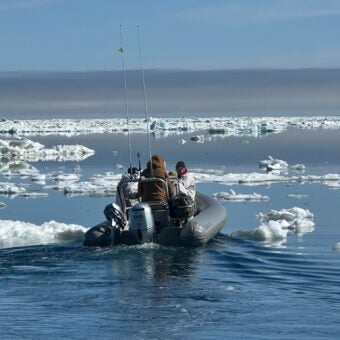
The inspiration for this project came in part from the Cook Inlet beluga population in Alaska. This is a critically endangered population and faces several threats connected to human activity, including vessel traffic, oil and gas development, wastewater treatment and the pressures of a growing urban area. One of the big questions in conservation is understanding how different stressors affect animal health. For wild belugas, that can be difficult to study. Fecal samples may offer a promising way to collect health information from whales in their natural environment.
By studying samples from belugas in our care, we can better understand what hormone and microbiome data look like when we have known information about an animal’s health, diet and environment. The goal is that, one day, similar data collected from wild belugas can be compared with known stressors in places like Cook Inlet. That could help scientists identify which threats may have the greatest impact on beluga health.
One of the most meaningful parts of this work is that it connects the care we provide every day at Georgia Aquarium with conservation questions affecting wild populations.
The animals in our care give us opportunities to learn in ways that can benefit both individual animal health and the future of their species in the wild. What we learn from this project may help improve how we monitor beluga health, support veterinary care and contribute to broader conservation efforts for vulnerable populations. It is a reminder that important science can start in unexpected places. Even poop can help tell a bigger story.
###
Dr. Patrick Charapata is a Research Scientist at Georgia Aquarium, where he studies how changing Arctic and subarctic environments affect the physiology and health of marine mammals. His work focuses on conservation physiology, marine toxins, harmful algal blooms and the use of biological markers to better understand how animals respond to environmental and human-caused stressors.