
-
Size
7-10 inches (18-25 cm) -
Diet
Leaves, seeds, fruit, flowers, small lizards and insects -
Range
Mexico -
Habitat
Found in rocky, lightly vegetated areas
Physical Characteristics
- Common length of 7-10 inches (18-25 cm).
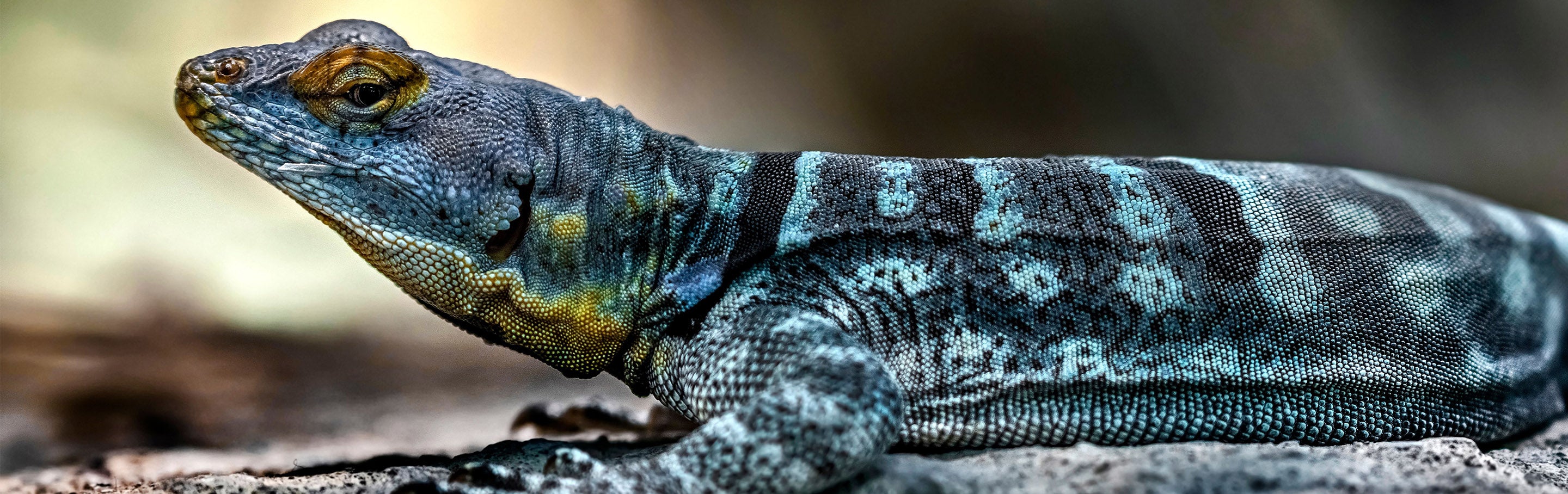
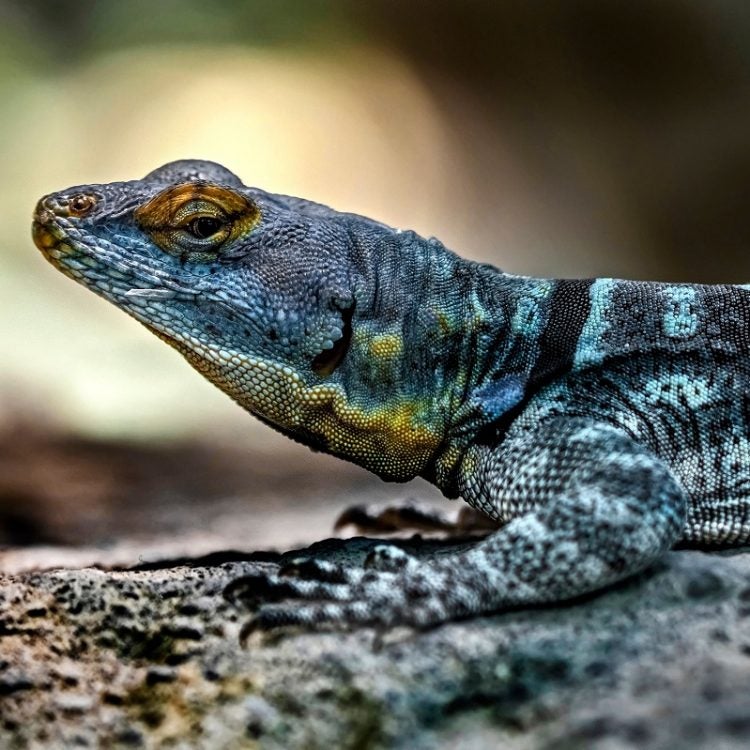
- A grayish-blue lizard with a speckled banding pattern across its back. Darker bars often mark the lizard from the neck to upper back.
- The face and tail are often brighter blue than the rest of the body, and the head and neck can sport yellow, orange and red highlights.
- The coloration can intensify during breeding season for both sexes.
Animal Fun Fact
Occurs only on the tip of the Baja California Peninsula in northern Mexico.
Diet / Feeding
- Diet consists primarily of leaves, seeds, fruit, flowers, small lizards and insects.
Range / Habitat
- Occurs only on the tip of the Baja California Peninsula in northern Mexico.
- Typically found in rocky canyons, lightly vegetated areas, arroyo bottoms and seaside cliffs.
Reproduction & Growth
- Oviparous, female lays a clutch of eggs.
- Females lay 20-30 eggs in the spring to early summer, and hatchlings appear 85-88 days later in the late summer or early fall.
- Life expectancy is about 20 years.
Conservation Status
- “Least Concern” on the IUCN Red List.
Additional Information
- Like most lizard species native to rocky habitats, the Baja blue rock lizard makes use of small caves and crevices in rocks to hide from predators.
- This species is diurnal: active during the day. They can often be seen basking in full sun, even on very hot days.
- When threatened, it can extend a skin flap along its throat, and it is able to drop its tail when caught.
Sources
- www.iucnredlist.org
- Santa Barbara Zoo
- animalia.bio