

-
Size
11 inches (28 cm) -
Diet
Fish, birds, benthic crustaceans, insects, aquatic vegetation -
Range
South America -
Habitat
Tropical freshwater areas
Physical Characteristics
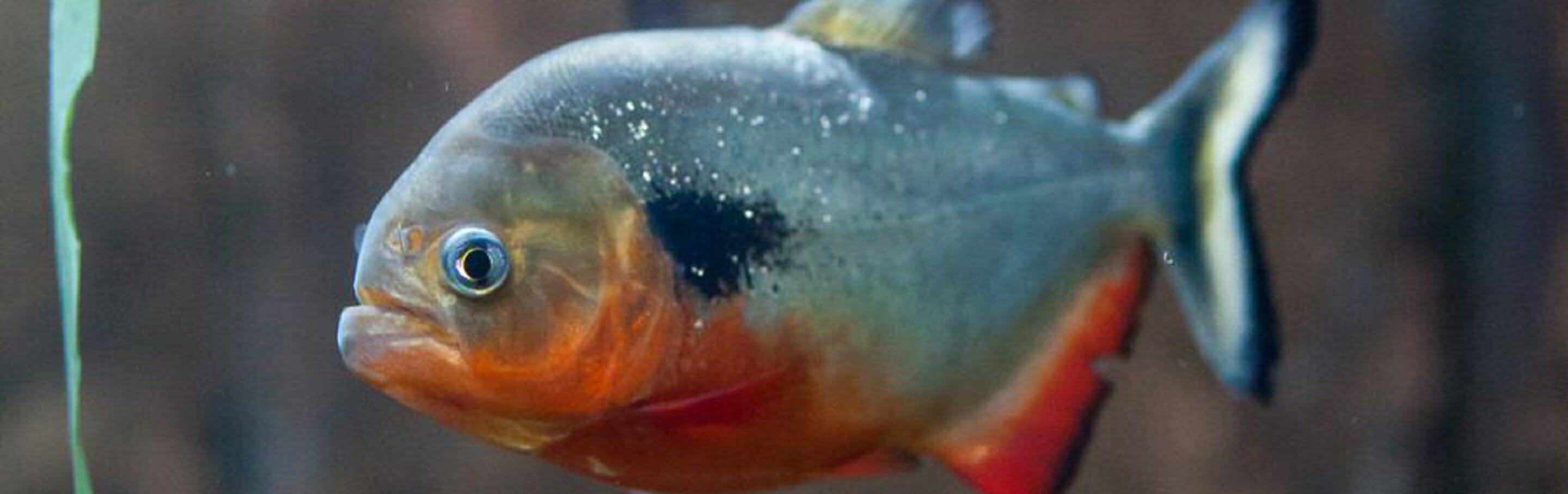
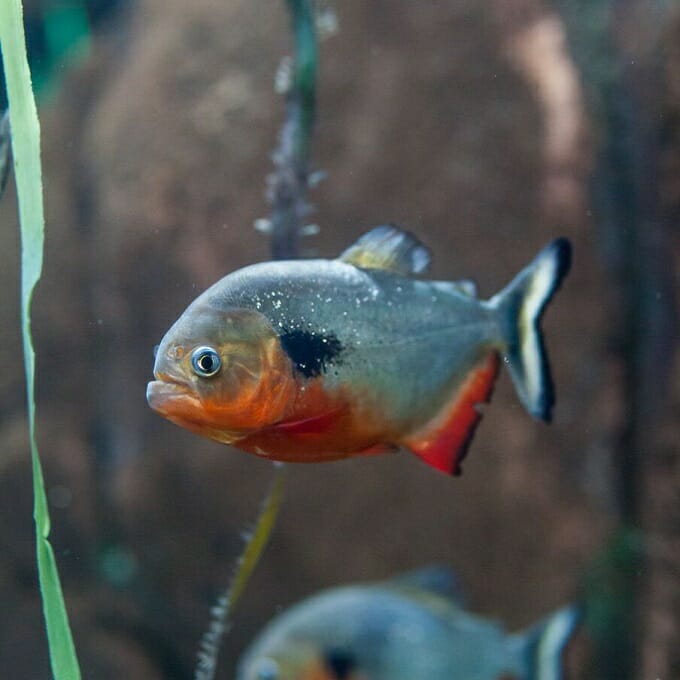
- The upper body of the black spot piranha is silvery grey, while the lower body is red to red-orange, but varies among individuals. There is a black spot behind the operculum.
- Pectoral and anal fins are orange to red and the dorsal fin is black.
- Juveniles have black spots on the upper body.
- This piranha can reach 11 inches (28 cm) in length and weight about 1.2 lbs. (0.6 kg), with a maximum weight of 5 lbs. (2.3 kg).
- Females are generally larger than males.
Animal Fun Fact
Piranha can replace their razor-sharp teeth when needed.
Diet / Feeding
- Described as “opportunistic generalists”.
- Feeds on fish, birds, benthic crustaceans, insects, aquatic vegetation and terrestrial plant seeds.
- They also attack sick or dying fishes, feed on the fins of larger species, and scavenge carcasses.
Range / Habitat
- A South American freshwater fish found primarily in the Orinoco River basin lowlands and tributaries.
- Prefers warmer waters and stays pelagic (open water).
Reproduction & Growth
- Black spot piranhas breed during the rainy season, as the water levels rise and food becomes more available. Females lay their eggs in shallow, sandy areas.
- After fertilizing the eggs, the males guard the nest until the young are ready to swim on their own.
Conservation Status
- “Least Concern” on the IUCN Red List.
Additional Information
- Black spot piranha is caught locally for food.
- As with other piranhas, this species has very sharp teeth that can inflict serious bites. It also forms large schools.
Sources
- www.fishbase.org
- iucnredlist.org
- marinelifeid.com