
-
Size
14 inches (36 cm) -
Diet
Invertebrates, algae, sponges and plankton -
Range
Eastern Pacific Ocean -
Habitat
Clear water on rocky reefs and in coral areas
Physical Characteristics
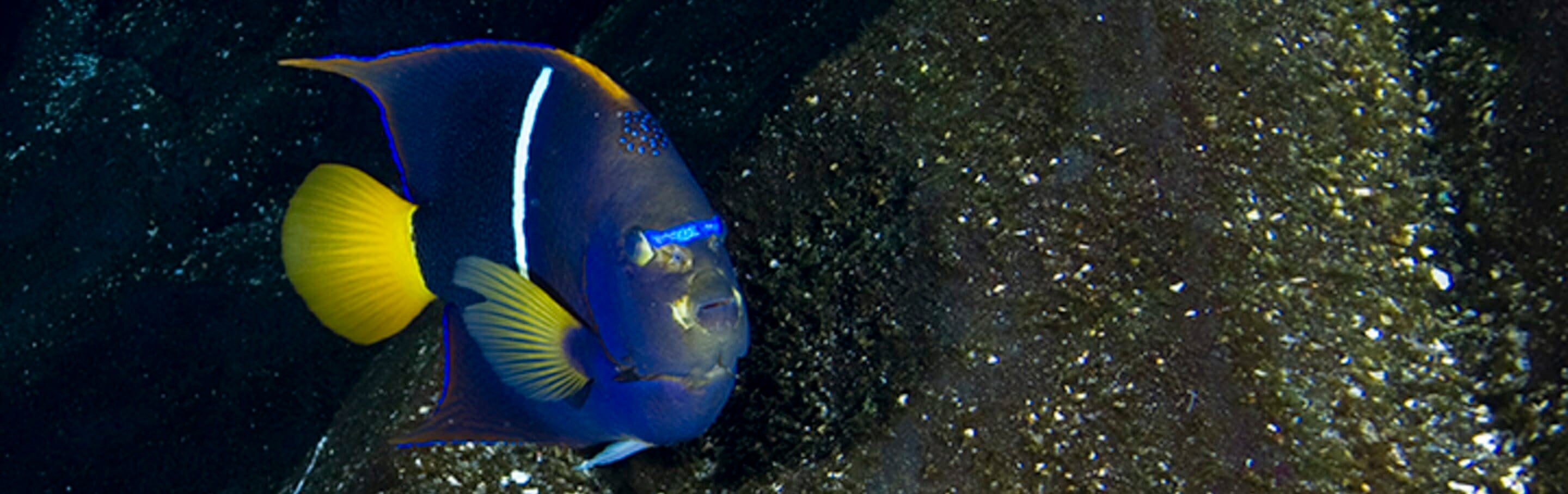
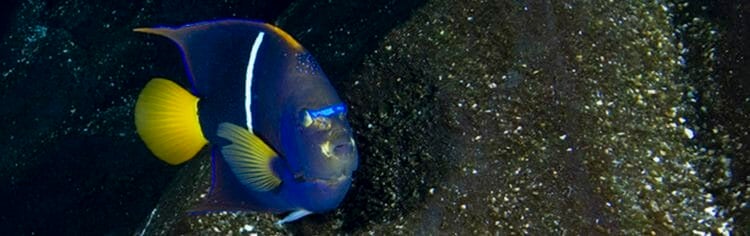
- Mottled dark blue-gray in color with a white bar extending from the dorsal fin to the level of the pectoral fin, tapering at its lower end. The fan-shaped caudal fin is orange yellow, as are the pectoral fins.
- Juveniles have a different color pattern than the adults, displaying a brown and orange body with narrow vertical blue bars on their sides and blue margins on the dorsal and anal fins. They also have a blue bar behind the eye.
- Adults can reach about 14 inches (35.6 cm) in length.
Diet / Feeding
- Feed during the day mostly on sponges, as well as other invertebrates, algae and plankton.
- Adults will clean parasites from sharks
Range / Habitat
- Occurs in the tropical Eastern Pacific from the Gulf of California to Ecuador and Peru, including the Galapagos Islands.
- Adults are found in clear water on rocky reefs and in coral areas at depths from about 13- 262 feet (4- 80 m).
- Juveniles hide in reef crevices and rarely venture out. They may also be encountered in tide pools.
Reproduction & Growth
- Reproduction takes place in late summer, with spawning occurring daily throughout the lunar cycle.
Conservation Status
- “Least Concern” on the IUCN Red List.
Additional Information
- Occurs alone, in pairs (usually during breeding season) or in aggregations with other king angelfish or sometimes with the Cortez angelfish (Pomacanthus zonipectus).
- Females can be territorial and form pair bonds with males.
- Juvenile king angelfish exhibit cleaning behavior.
- Also known as the “Passer angelfish.”
Sources
- www.fishbase.org
- A Guide to Angelfishes and Butterflyfishes. Allen, G.R.; Steene, R. and Allen, M., pg. 208.