
-
Size
6 inches (15 cm) -
Diet
Small fish and crustaceans, amphibians, fish eggs, insects -
Range
Congo River basin -
Habitat
Slow-moving waters, stagnant ponds, and fast-flowing streams
Physical Characteristics
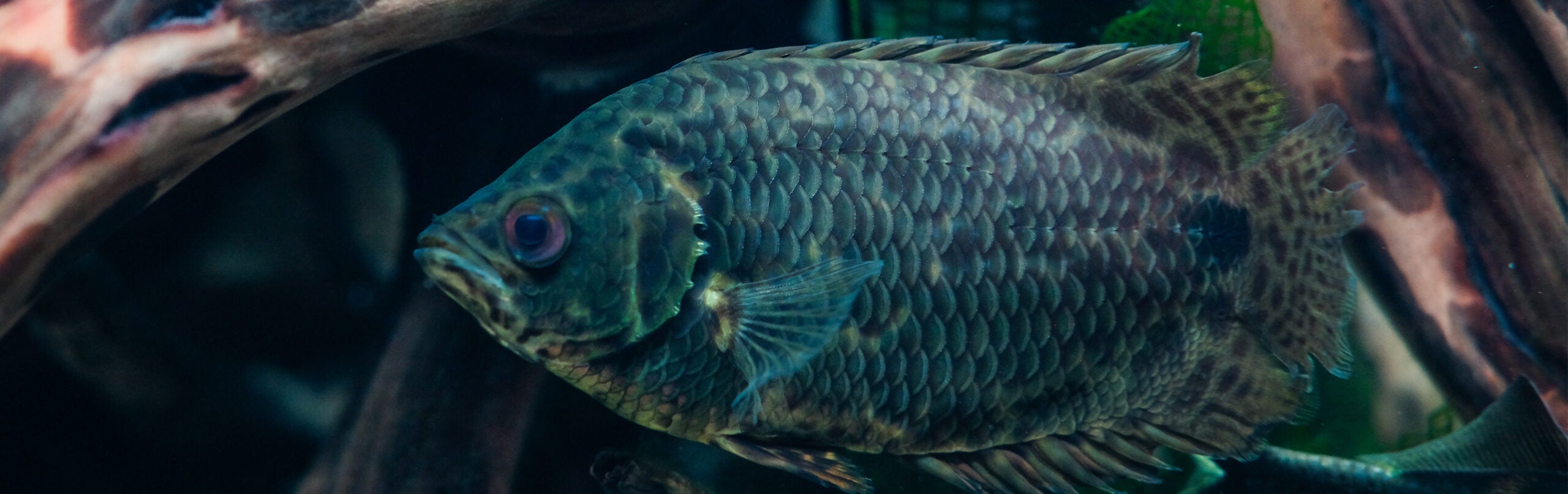
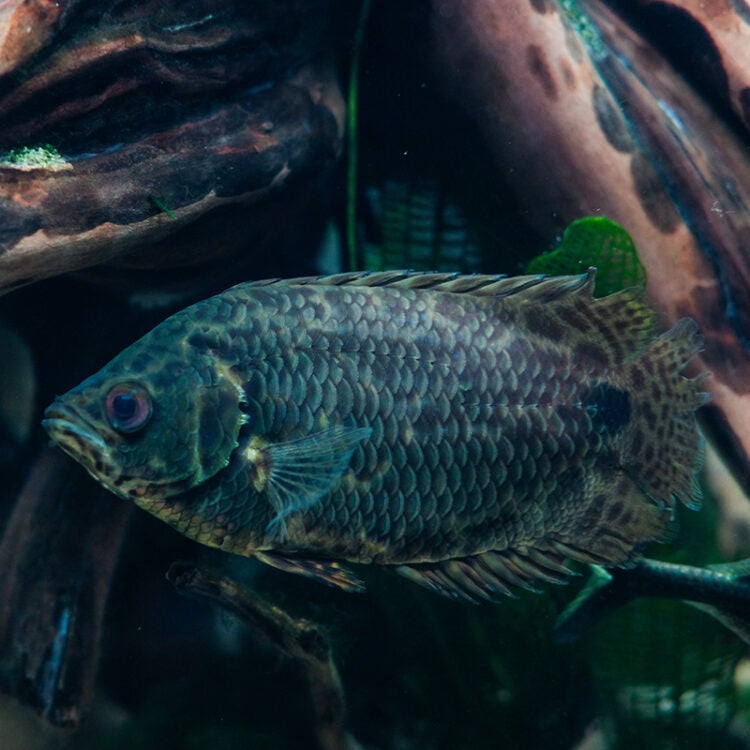
- Body is rounded and laterally compressed with an elongated snout, wide mouth and large eyes.
- Common length is 6 inches (15 cm).
- Coloration is patterned with a golden-yellow base and brown spots.
- One of the most colorful species of the Ctenopoma genus.
- Exhibit spines on gill covers.
- Males tend to have more spines than females.
Animal Fun Fact
The leopard bushfish possesses a breathing organ (known as the labyrinth organ) that allows the fish to breathe atmospheric air.
Diet / Feeding
- Predatory species; diet consists of fish juveniles, small-sized fish, amphibians, fish eggs, insects, shellfish and small crustaceans.
- To take in food, it will open its mouth, suck in and swallow its prey whole.
- A patient predator; often remaining still waiting for food to pass by.
- Mimics leaves and other aquatic debris while hunting their prey by turning their body completely vertical and bending their caudal tail.
Range / Habitat
- Occurs in tropical, freshwater throughout the middle Congo River basin in the Republic of the Congo, the Democratic Republic of the Congo and Central African Republic.
- Found in many diverse biotopes, including slow-moving waters, stagnant ponds, and fast-flowing streams. They are also present in several major tributary systems.
Reproduction & Growth
- Oviparous; egg-laying species that are egg-scatterers.
- To breed, a pair will embrace and then release eggs and sperm.
- The eggs will float to the surface and stick to the floating vegetation and hatch within 48 hours.
- Adults exhibit no parental care after eggs and sperm are released.
- Females may lay thousands of eggs but fry’s survival rate is typically low.
- Thought to breed seasonally – spawning regularly for several months and then stop for several months.
Conservation Status
- Listed as “Least Concern” on the IUCN Red List.
Additional Information
- Also known as, “Spotted Climbing Perch,” “African Leaf Fish,” and “Leopard Ctenopoma.”
- Scientific name derives from the Latin word acutus meaning “sharp” and rostrum meaning “snout.”
- Typically live 5-10 years.
- Possess a breathing organ (known as the labyrinth organ) that allows the fish to breathe atmospheric air to a certain extent.
- Most active at night and often hides among thick vegetation during the day.
Sources
- fishbase.org
- seriouslyfish.com
- iucnredlist.org
- https://aquadiction.world