
-
Size
Up to 9 inches (23 cm) -
Diet
Plankton, small crustaceans, mollusks and worms -
Range
Western Atlantic Ocean -
Habitat
Exposed rocky areas and coral reefs
Physical Characteristics
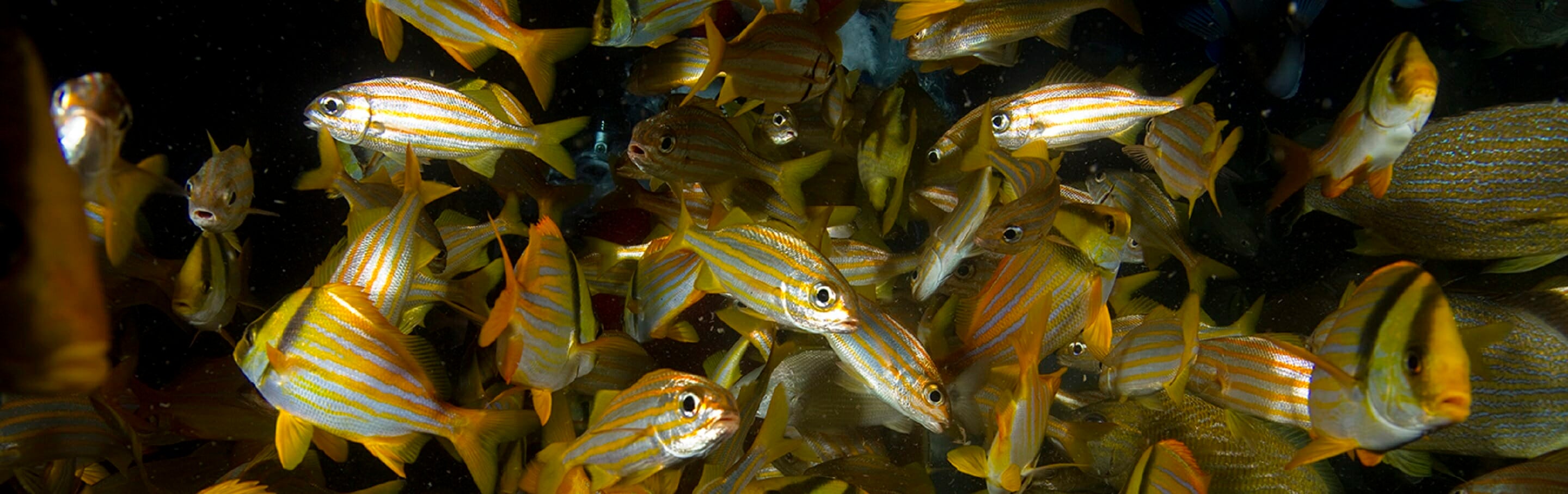
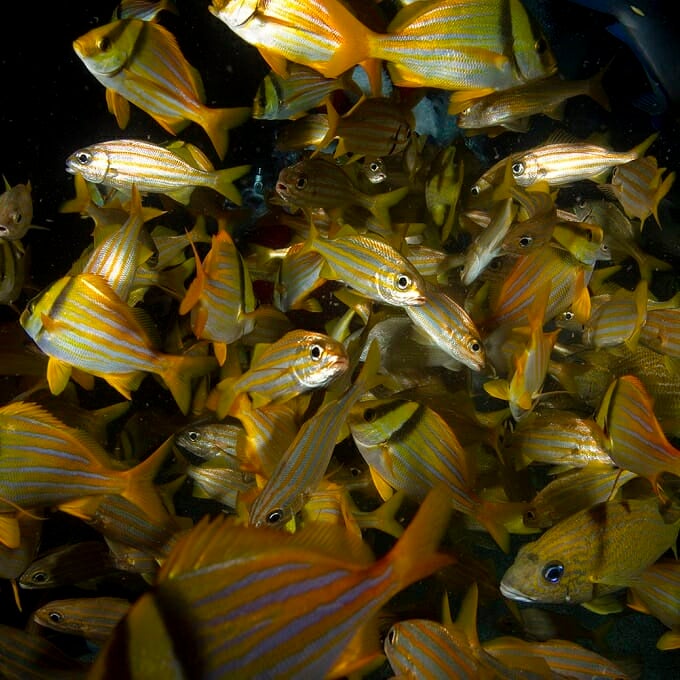
- Bluish silver or silver-white body color with five or six yellow stripes.
- Distinguished by its smaller mouth compared to other grunts.
- Reaches a maximum size of about 9 inches (23 cm).
Diet / Feeding
- Feeds mainly on plankton, small crustaceans, mollusks and worms.
- This grunt is reported to spend daylight hours on reefs and moves into open water to feed at night.
Range / Habitat
- Occurs in the Western Atlantic from southern Florida, the Bahamas, the Caribbean and the Yucatan to Brazil.
- Found in small schools over exposed rocky areas and coral reefs from near-surface to about 82 feet (25 m). Sometimes seen sheltering in elkhorn coral and staghorn coral.
- Juveniles are often encountered in turtle grass (Thalassia) beds.
Reproduction & Growth
- Oviparous- egg-laying species.
- Forms distinct pairings during breeding.
Conservation Status
- “Least Concern” on the IUCN Red List.
Additional Information
- Smallmouth grunts form large schools around reefs.
Sources
- www.fishbase.org
- iucnredlist.org
- Coral Reef Fishes. Lieske, E, and Myers, R.
- Atlantic Coast Fishes – Peterson’s Field Guides. Robins, C.R., Ray, G.C. and Douglass, J.
- McClane’s Field Guide to Saltwater Fishes of North America. McClane, A.J.