
-
Size
16 feet (4.9 m) and more than 1,400 pounds (635 kg) -
Diet
Bony fishes, sharks, rays, marine mammals and reptiles, invertebrates and seabirds -
Range
Tropical and temperature ocean environments worldwide -
Habitat
Continental shelves or islands and coral reefs
Physical Characteristics
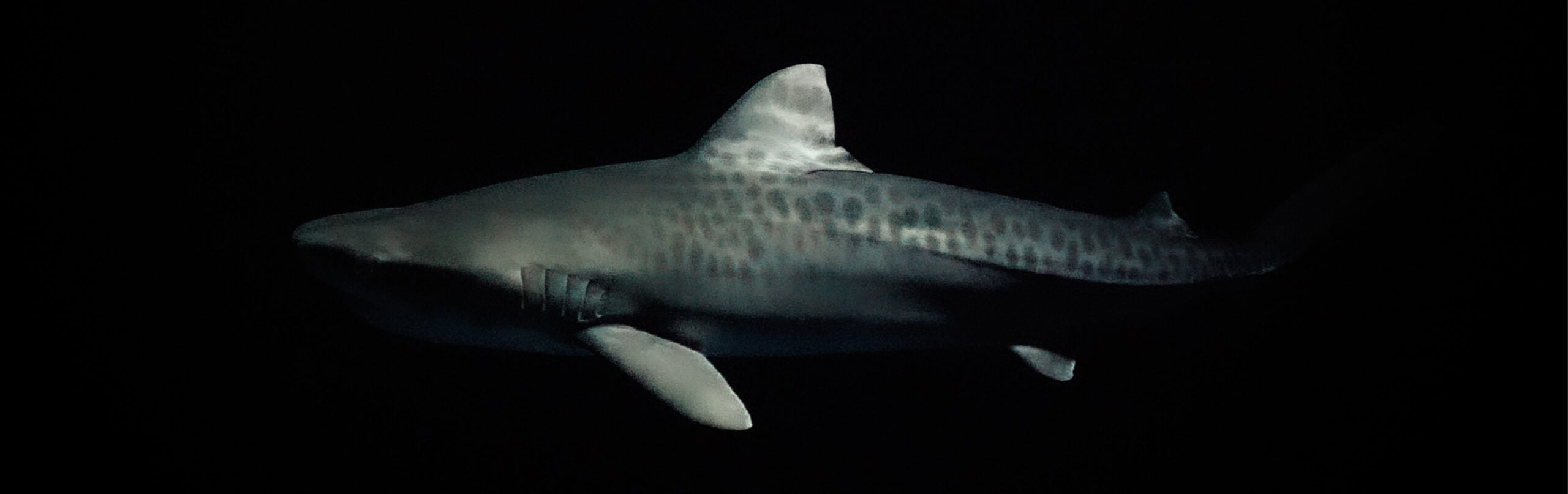
- Juveniles have tiger-like stripes, which give this species its name. Stripes fade as the shark grows into adulthood, but are still visible.
- Females are generally slightly larger than the males.
- Max length 24.2ft (7.3m) but usually stay under 16.4ft (5.0m) and can weigh more than 1,763 lbs (800kg).
- One of the largest carnivores in the ocean.
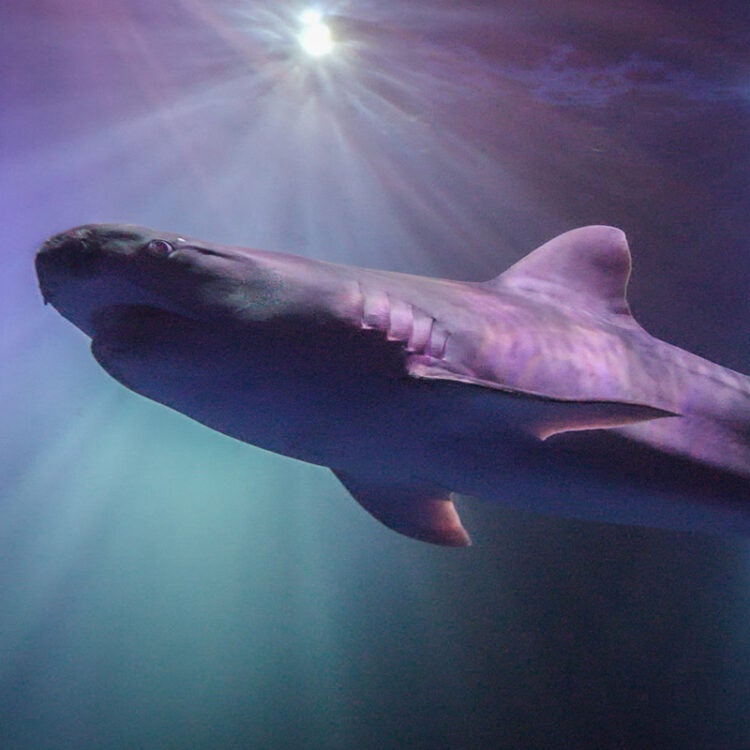
- Broad, wedge-shaped head with blunt snout.
- Coloration is dark gray to light grey on the dorsal surface. Underside is stark white.
Diet / Feeding
- One of the most diverse diets of any shark.
- Diet consists of many species of bony fish, sharks, rays, marine mammals (such as seals and dolphins), marine reptiles (such as turtles and sea snakes), invertebrates (such as crustaceans, cephalopods and jellies) and seabirds.
- Known to consume marine debris that ends up in the ocean.
Range / Habitat
- Occurs in tropical and temperate ocean environments worldwide.
- Found on or near continental shelves or islands and coral reefs. Occasionally found in river estuaries and harbors.
Reproduction & Growth
- Both males and females will have multiple mates and do not form pair bonds.
- Lecithotrophic viviparous. Only species of the family Carcharhinidae (requiem sharks) that does not use a placenta to nourish developing embryos.
- Gestation usually takes 15-16 months.
- Litter size of 10-82 pups.
Conservation Status
- Listed as “Near Threatened’ on The IUCN Red List.
Additional Information
- Curious and aggressive in contact with humans.
- Generation length 17-22 years
- Largest of the requiem sharks.
Sources
www.fishbase.org
www.iucnredlist.org
www.flmnh.ufl.edu/fish
Castro, José I., Keiichi Sato, and Ashby B. Bodine. “A novel mode of embryonic nutrition in the tiger shark, Galeocerdo cuvier.” Marine Biology Research 12.2 (2016): 200-205.