
Aquariums Announce Initial Spot A Shark USA Findings

PINE KNOLL SHORES, N.C. – Less than a year after the North Carolina Aquariums launched Spot A Shark USA, a citizen science program, lead researchers have issued initial findings in a manuscript published in the journal “Ecology” today. The four-page document outlines a discovery that could play a significant role in the strategic protection of the sand tiger shark, Carcharias taurus, a globally designated vulnerable species, whose presence is linked to healthy aquatic ecosystems.

“Photographs collected by citizen scientists revealed that a large coastal shark species, the sand tiger shark, returns to the same or nearby shipwrecks,” said Avery Paxton, lead researcher for the project and principal author of the paper. “This behavior, known as site fidelity, could mean shipwrecks play a significant role in the lives of this imperiled shark species.”

The preliminary findings add to a growing body of evidence that shipwrecks are potentially critical habitat for the species and could help facilitate conservation of sand tiger sharks, whose U.S. populations have been estimated to have declined by more than 75 percent primarily in the 1980s and 1990s.

“This manuscript is an introductory representation of the larger body of work that’s developing around sand tiger sharks and habitat use on sites along the coast of North Carolina,” said Hap Fatzinger, director of the North Carolina Aquarium at Fort Fisher. “The larger body of work, utilizing acoustic telemetry work and expansion of the Spot A Shark USA data set, will reveal the bigger picture over time.”

It is believed this highly migratory species uses the North Carolina wrecks as “rest stops” on their journey from New England to Florida. Another hypothesis suggests the shipwrecks may be even more valuable to sand tigers. The shipwrecks could be key reproductive habitats or year-round habitats.

That’s what makes citizen scientists so important. The area is so vast and there is no way researchers could cover that much ground, said Paxton, a visiting scholar at Duke University Marine Lab.

Divers submit both new and historical images to the Spot A Shark USA website giving as much information about the image as possible. Behind the scenes researchers map the spots of each shark to identify them uniquely, much like a human can be identified by a finger print.

“Six female sand tiger sharks were photographed and re-photographed at the same or nearby shipwrecks located off the coast of North Carolina over a period of time ranging from a few months to six years,” said Paxton, formerly a postdoctoral researcher with the South-East Zoo Alliance for Reproduction & Conservation. “This indicates shipwrecks are potentially critical habitats for sand tiger sharks and worthy of further research.”

These findings are similar to research along the eastern Australia coast and in offshore waters of South Africa, which shows “sand tiger sharks exhibit high site fidelity on offshore reefs as juveniles and adults,” Paxton said.

“There are still a lot of unknowns,” Paxton said. “We do not know what the female sand tigers are doing in between the times they are photographed. We also do not know what the males are doing. That does not mean that the males do not also return to the same or nearby shipwrecks, rather they have not been photographed doing so.

“It is a scientific process, and we have just started chipping at the surface,” said Paxton. “That’s why it is so important to share this information to further future research efforts.”

The North Carolina Aquariums led collaboration includes Georgia Aquarium, Minnesota Zoo Foundation, Maritime Aquarium at Norwalk, New York Aquarium, Wildlife Conservation Society, South-East Zoo Alliance for Reproduction & Conservation, Duke University, University of North Carolina at Chapel Hill, University of North Carolina Wilmington, East Carolina University, Coastal Studies Institute, Wild Me, Blue Elements Imaging, and most importantly the citizen scientists who are submitting photos.

Bringing researchers and divers from around the world to the table is crucial to solving the complex mysteries of the sand tiger shark and facilitating conservation and ultimately the recovery of this iconic species.

“The North Carolina Aquariums are proud to lead a multi-institutional effort to better understand how sand tiger sharks are using habitats along the coast of North Carolina. Through collaborations and strong partnerships, Spot A Shark USA is engaging recreational divers to become citizen scientists and provide essential data to expand our knowledge,” said Fatzinger. “By increasing community engagement, we are creating stronger connections to local, regional and global concerns for sharks and healthy ocean ecosystems.”

For the full manuscript DOI: 10.1002/ecy.2687, visit the online library here.

This article was published on: June 25, 2019
Sea Lions Alex & Josie Receive Surgery for Cataracts: PHOTOS

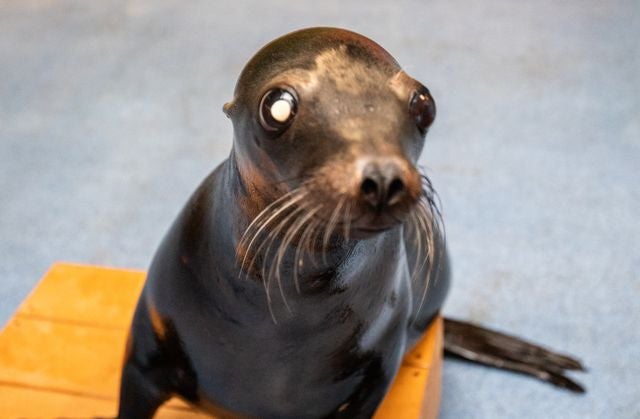
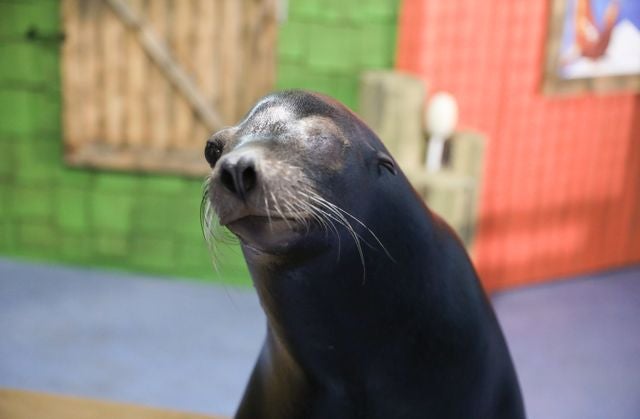
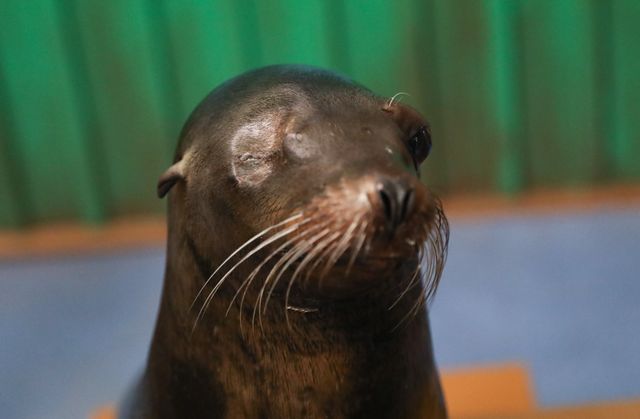
Two California sea lions have relocated to Georgia Aquarium from a partner facility in Texas. Six-year-old Alex and five-year-old Josie were deemed non-releasable by the National Oceanic and Atmospheric Administration (NOAA) after it was determined they would not be able to survive on their own. Unfortunately, Alex had a cataract in his left eye, while Josie had cataracts in both eyes. Cataracts can impair vision and could impact a sea lion’s survival in the ocean because it makes it more difficult to search for food and avoid predators.

Sea Lions Alex & Josie Receive Surgery for Cataracts: PHOTOS
Six-year-old Alex prior to surgery
Sea Lions Alex & Josie Receive Surgery for Cataracts: PHOTOS 7
Five-year-old Josie prior to surgery


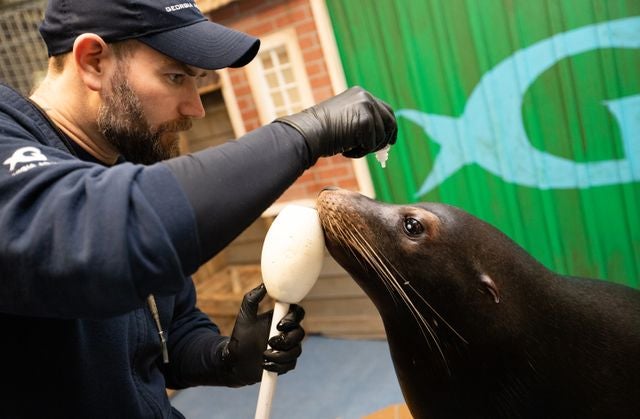
Our teams focused on establishing a positive relationship with the sea lions and building mutual trust with them as they settled into their new home. This trust is important because it helps our teams facilitate medical related behaviors allowing us to provide the best care possible. For example, Alex and Josie learned target training to help them receive eye drops and tactile training to acclimate them to physical exams.


Sea Lions Alex & Josie Receive Surgery for Cataracts: PHOTOS 6
Alex practices receiving eye drops in preparation for surgery

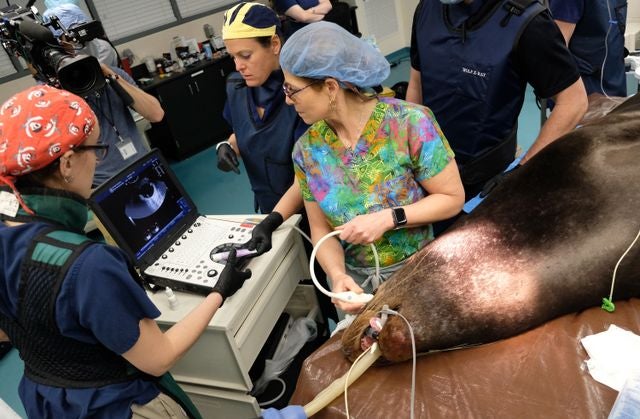
After the sea lions became more comfortable with our teams, it was time to safely evaluate their individual cataracts under anesthesia with a specialist. This was done to assess the severity of the cataracts, if their vision could be improved, and the best treatment for each sea lion.


Sea Lions Alex & Josie Receive Surgery for Cataracts: PHOTOS 5
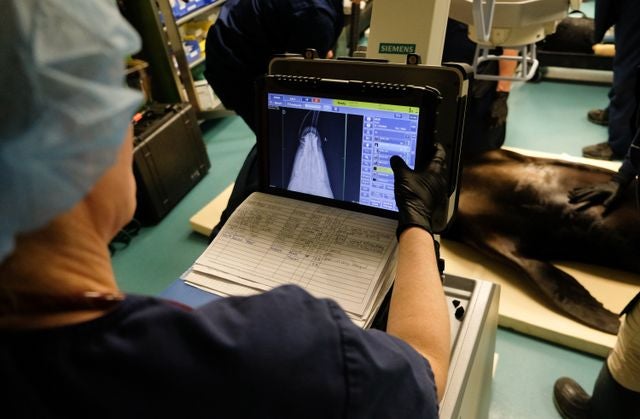
Georgia Aquarium staff veterinarian Dr. Michelle Davis reviews a radiograph of Alex’s skull during pre-surgical diagnostics.
Sea Lions Alex & Josie Receive Surgery for Cataracts: PHOTOS 4
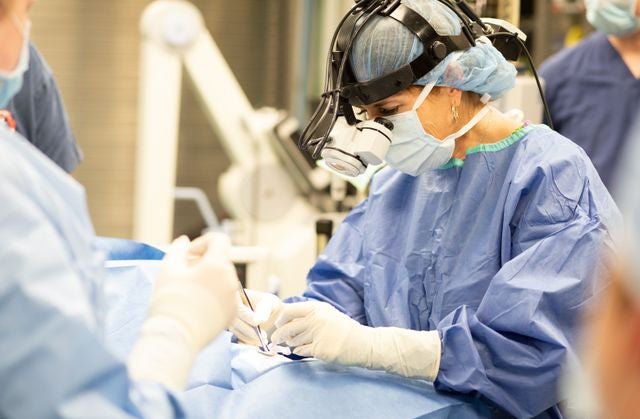
Under anesthesia, Alex’s left eye is imaged by consulting veterinary ophthalmologist Dr. Carmen Colitz to evaluate vision prognosis.

Upon further examination, it was discovered that Alex and Josie each had a detached retina – Alex in his left eye with his cataract and Josie in her right eye with her cataract. Josie’s left eye with a cataract was small and did not require surgical intervention but will be monitored for the rest of her life. The detached retina discovered in Alex and Josie resulted in irreparable blindness in those eyes. After careful consideration of all options, the decision was made to remove the severely damaged eyes to minimize any chance of infection, discomfort, or complications.


Sea Lions Alex & Josie Receive Surgery for Cataracts: PHOTOS 3
Consulting veterinary ophthalmologist Dr. Carmen Colitz performs surgery on Josie’s right eye.

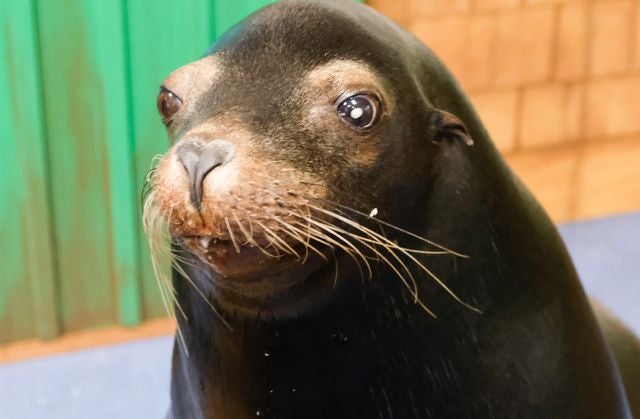
Following the success of the surgeries, Alex and Josie have recovered remarkably and are continuing to bond with their fellow sea lions and caretakers.

Sea Lions Alex & Josie Receive Surgery for Cataracts: PHOTOS 2
Alex post-op
Sea Lions Alex & Josie Receive Surgery for Cataracts: PHOTOS 1
Josie post-op


To continue following Alex and Josie’s stories, tune in to our new show The Aquarium on Animal Planet. For more animal updates, be sure to follow us on Facebook, Twitter and Instagram.

This article was published on: June 18, 2019

Leading Institutions Come Together to Cultivate Innovative, Scalable, Science-Driven Solutions to Ocean Challenges

Leading ocean science and engineering institutions are joining forces to create Ocean Visions, an innovative scientist-driven ocean conservation venture that fosters collaboration between top researchers, conservationists and entrepreneurs committed to solving some of the biggest challenges facing ocean health.

The endeavor’s first summit – OceanVisions2019 – Climate – will be held April 1-4 at the Georgia Institute of Technology in Atlanta. The summit will highlight ocean-based science and engineering successes that promote solutions addressing human, climate and ecological pressures.

There are many problems facing the oceans, and Ocean Visions enables a huge and optimistic step forward by creating a comprehensive set of commercially marketable solutions that will make a powerful positive impact on ocean health while offering profitability incentive for widespread adoption on a global scale.
- said Martin Gray, Senior Vice President & Chief Marketing Officer for Georgia Aquarium

Ocean Visions represents the nation’s leading organizations in ocean science and engineering – Georgia Tech, The Smithsonian Institution, Stanford University, Scripps Institution of Oceanography at UC San Diego, Skidaway Institute of Oceanography University of Georgia, Monterey Bay Aquarium Research Institute, Georgia Aquarium, Monterey Bay Aquarium and Birch Aquarium at Scripps – coming together under a memorandum of understanding (MOU) to collaborate on scientifically sound, scalable, impactful and viable ocean conservation solutions.

The ocean covers 70 percent of the Earth and provides food and jobs valued at $2.5 trillion dollars each year – making the ocean the seventh largest economy in the world. Unfortunately, ocean health has been declining as a result of climate change, overfishing and pollution. Climate change is making our ocean warmer and more acidic, threatening critical ocean ecosystems including corals, shellfish, and plankton. Thirty percent of the world’s fisheries are overfished and nine million tons of plastic are dumped into the ocean every year. Fertilizer and sewage runoff are creating massive “dead zones” – waters with such low oxygen levels that fish can’t survive. Coastal dead zones have increased tenfold since 1950. Finding solutions to these pressing challenges is more urgent than ever.

“The ocean is our past and our future. Healthy people, healthy communities and healthy economies depend directly on a healthy ocean,” said Jane Lubchenco, Ph.D., recipient of the OceanVisions2019 Tethys Award, past head of the National Oceanic and Atmospheric Administration (NOAA) and environmental scientist and distinguished professor at Oregon State University. “Ocean Visions is a pioneering endeavor that is committed to delivering comprehensive, science-led solutions to the ocean’s many challenges – solutions that are scalable at a global level. That has never been done before.”

A champion of science, Lubchenco is the first recipient of the Tethys Award, which was named for the Greek goddess of water and created to honor role models who contributed to, promoted, enabled or raised awareness about ocean solutions and who inspire new generations of ocean experts and leaders. Lubchenco will deliver the Tethys Award lecture during the summit’s opening ceremony live streaming on April 1.

To nurture and work towards these solutions, Ocean Visions will:

create a network that will bring together non-profits, industry and other private and public groups to focus on translational research;
host regular summits to highlight the latest research and scalable concepts to address ocean conservation needs;
launch a fellows program to foster an integrated community of scientists, engineers, policy makers, stakeholders and other groups who can exchange knowledge and experiences; and
sponsor startup competitions in the heart of academic institutions to engage young talent.
“Addressing the challenges facing our oceans will take an ambitious effort that brings together the best talent in our nation,” said G. Wayne Clough, Ph.D., secretary emeritus of the Smithsonian Institution, who will open the summit. “Ocean Visions is unique because it is led by trusted institutions and top scientists and researchers in ocean conservation working together to formulate a call to action to foster, support and advance innovative and viable solutions that can make a difference.”

The summit will provide networking events for business leaders to learn more about proposed solutions, ranging from advanced concepts to those that are market ready, such as marine algae-based animal feeds and biofuels that can reduce the carbon footprint of biofuel and protein production and sea-level sensor technologies for coastal cities and communities threatened by rising sea levels.

“There are many problems facing the oceans, and Ocean Visions enables a huge and optimistic step forward by creating a comprehensive set of commercially marketable solutions that will make a powerful positive impact on ocean health while offering profitability incentive for widespread adoption on a global scale,” said Martin Gray, senior vice president & chief marketing officer for the Georgia Aquarium.

Georgia Tech is hosting the April 1-4 OceanVisions2019 summit. Learn more about the OceanVisions2019 program.


This article was published on: June 17, 2019