
Animals After Dark

Come check out what our animals are up to in the evenings! 

The animal kingdom is as active at night as it is during the day. As the sun dips below the horizon, the oceanic world transforms. Bioluminescent creatures come alive, lighting up the dark waters. Nighttime hunters, such as sharks and eels, emerge from the depths, taking advantage of the cover of darkness to ambush their prey. The bustling daytime ecosystem of coral reefs gives way to a different cast of nocturnal inhabitants, including shrimps and crabs, all navigating the shadows in search of food.

Meanwhile, the silent glide of stingrays and the rhythmic movements of schools of fish display a dynamic underwater world that flourishes in the cover of night. Life continues its relentless, captivating dance in these darkened waters, reminding us of the ocean’s boundless wonders. Witness the enchanting evening routines of our aquatic residents and relish a more intimate atmosphere. 

Check out some species that are more active at night:

Animals After DarkAmerican Alligators

American alligators are diurnal and nocturnal, meaning they are active both day and night. They hunt predominantly at night, but they are also commonly seen basking in the sunlight during the spring and summer. 

Animals After Dark 1Asian Smalled Clawed Otter

Asian small-clawed otters are active during the day but are primarily nocturnal animals. Our otters often nap throughout the day, but if you visit in the evening, you might catch them playing in the water or with their enrichment items! 

Animals After Dark 5Electric Eel

The electric eel is a nocturnal species, hiding under shelter or in holes during the day and hunting for prey at night. Because they have poor eyesight, they emit a weak electric signal, which they use like radar to navigate, find a mate, and find prey.

Animals After Dark 9Giant Pacific Octopus

Generally nocturnal, giant Pacific octopuses move about and do their hunting at night. They use their arms, each covered with approximately 200 suckers, to find and hold their prey.

Animals After Dark 2Green Moray Eel

The green moray eel is a nocturnal predator.  During the day, it hides in a hole in the rocks.  It uses its sense of smell to find its prey because moray eels have poor vision.  It does not go hunting for its prey; instead, it sits and waits for the prey to cross its path.

Animals After Dark 10Green Sea Turtle

Green sea turtles (Chelonia mydas) are typically diurnal but can also exhibit nocturnal activity, including feeding, nesting, and breeding.

Animals After Dark 8Japanese Spider Crabs

Japanese spider crabs are active at night to avoid predators rather than to camouflage themselves when hunting prey. They live on the ocean floor along Japan’s Pacific coast, primarily on the sandy and rocky continental shelf and slope. 

Animals After Dark 7Manta Rays

Manta rays are filter feeders and are most active at night when they feed. Some say the best time to see manta rays up close in the ocean is at night when they come together in large numbers to feed. 

Animals After Dark 4Red Lion Fish

This species is a solitary, nocturnal hunter that stalks its prey and corners it using outstretched and expanded pectoral fins.

Animals After Dark 3Sharks

Many sharks are active and feed during low light hours (dawn or dusk) and at night.

Animals After Dark 6Starfish

Some species of starfish are nocturnal and become more active at night. Recent research published in the journal Proceedings of the Royal Society B highlighted that starfish have eyes and can even see in the dark. 


Georgia Aquarium is home to all of these unique and spectacular species and many more! It’s the perfect opportunity to explore the ocean’s depths without the usual daytime bustle. Take advantage of this unique, serene adventure and make your summer nights unforgettable!

Day in the Life of a Dolphin Trainer at Georgia Aquarium

  Take a look behind the scenes into a day in the life of a dolphin trainer at Georgia Aquarium.  Day in the Life of a Dolphin Trainer at Georgia Aquarium 1By: Stephen Fischer, Associate Curator, Dolphin

As a kid, most of our family vacations were to Orlando to visit Disney and SeaWorld. As I got older, these parks continued to be a favorite destination, but I started to see them in a different light. During an animal presentation at SeaWorld, I realized the unique relationship required to work with these aquatic animals. Seeing how closely the trainer and animal worked together inspired me. I remember 14-year-old Stephen every time I perform in our presentations, and I think of the thousands of people in our audience. The trainer I watched and admired as a kid will never know how she impacted me. I hope I can have a similar effect on our guests and young aspiring animal trainers.

While pursuing this career, I spent my summer interning at different animal parks to gain hands-on experience in the field. After graduation, I was hired at a marine park near my hometown, working with dolphins and sea lions. I then met one of the trainers in Georgia Aquarium’s dolphin area and was invited to shadow them. I was so impressed with the Aquarium and its animals that I knew this was where I wanted to be.

A typical day on the dolphin team starts very early. We begin by sorting hundreds of pounds of fish to make individualized diets for each of our animals. Once their diets are ready, we begin each day with visual exams and collecting any medical samples our vets may need to ensure all our dolphins are healthy. The best part is every day is different – it is our job to ensure our dolphins never know what’s coming next because this keeps them excited, engaged, and active throughout the day. Their day may include participating in presentations, guest programs, new behavior training sessions, play sessions with some of their favorite toys, or sessions focused on continuing to build bonds between our animals and trainers.

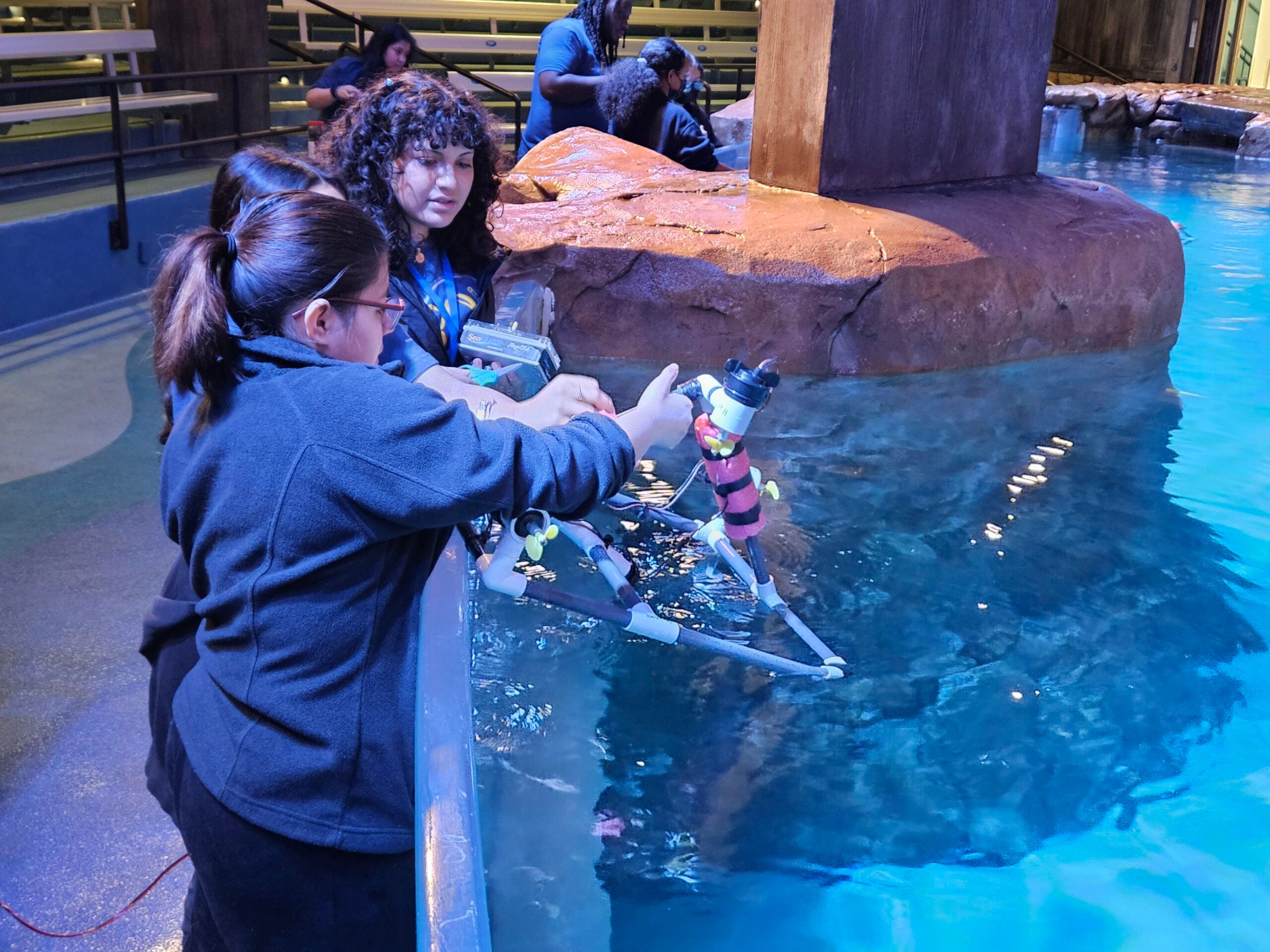
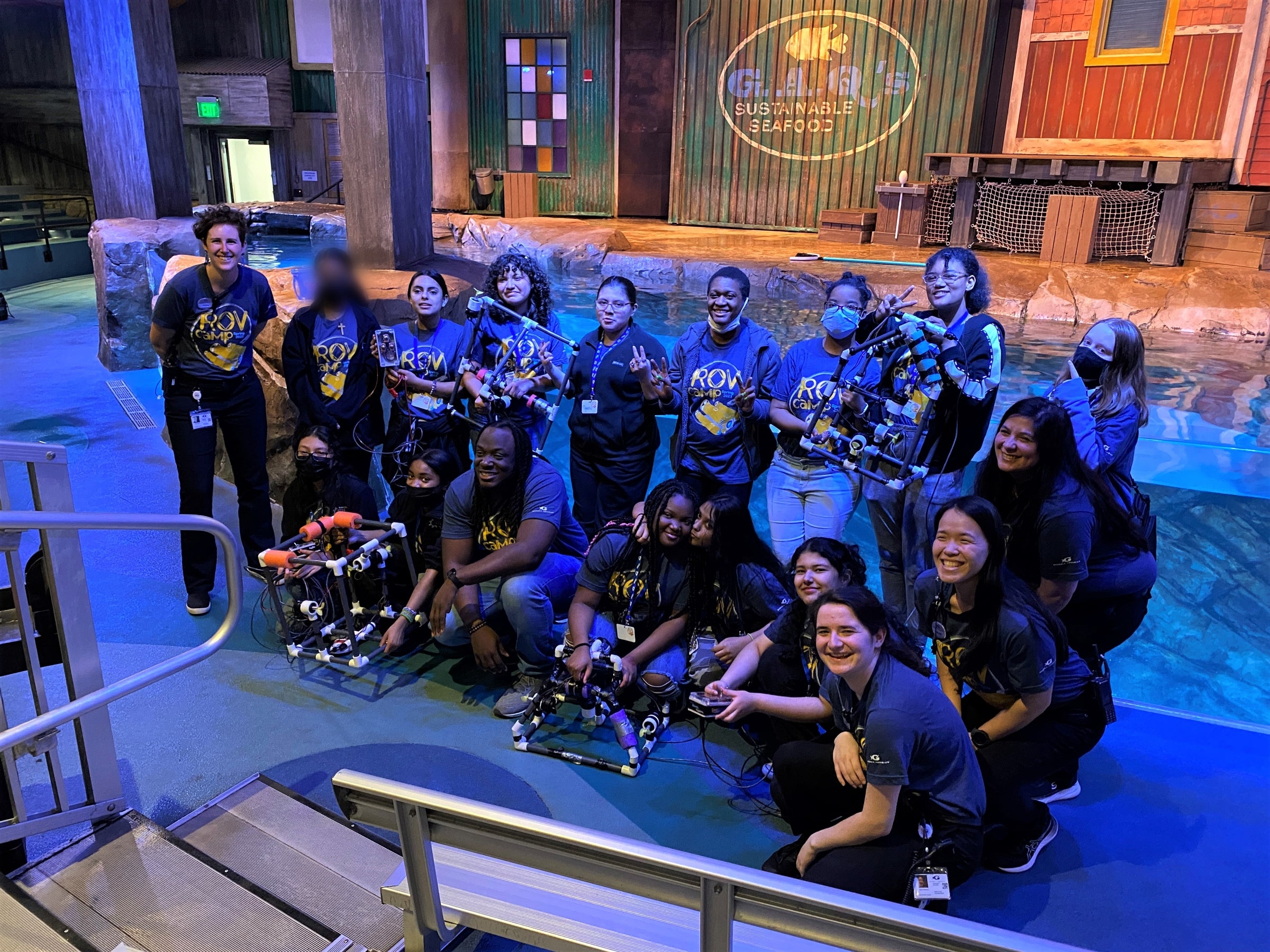
Occasionally, I get the incredible opportunity to go out into the community and share my passion for these animals. This will be my fourth year joining Toomer Elementary School at their Science Night. Science Night is an entertaining and informative STEAM-filled event hosted by volunteers from the Atlanta community. These are opportunities for the kids to have hands-on exposure to the various fields of science. Our education department also recently hosted students from Booker T Washington at the Aquarium so they could learn more about careers in the field of STEM from our staff and experts.

Living in Atlanta, many of these students may never see animals like ours up close. The Aquarium provides an opportunity to learn more about our animals, their habitats, and what we can do to protect them. Though some of these students may have seen our dolphin presentation, they may still need to learn what it takes to care for these animals.

Events like this allow them to ask questions and get more inspired by what they learn. Many of our firmest habits develop at an early age.  Working with kids at this age helps form habits of conservation that become a way of life. I secretly hope these kids go home and bug their parents to start recycling, too.

Day in the Life of a Dolphin Trainer at Georgia Aquarium 3Dolphin Trainer at Georgia Aquarium

Being an animal caretaker is an incredibly rewarding career. The animals I work with truly depend on me, and that inspires me to give them my all every day. The bonds we form make these animals more like family than co-workers. I love seeing the smiles on our guests’ faces as they leave our presentations, and knowing what I do brings joy to their day.

For anyone interested in working with dolphins or other marine mammals, I recommend pursuing a degree in psychology, biology, marine biology, or another life science-related field. You will also want strong swimming skills and a SCUBA certification. Most importantly, look for ways to volunteer or internships working with animals to gain some hands-on experience. These programs will also help you ensure you are passionate about this. Working with these animals is a lot of fun. But heads up – it’s also a lot of hard work (and a LOT of cleaning).