
On the Front Lines for Penguins: Inside SANCCOB’s Seabird Ranger Program
Georgia Aquarium supports SANCCOB’s Seabird Rangers in South Africa, protecting African penguins and rescuing vulnerable seabirds at key colonies.
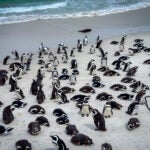
Along South Africa’s coastline, African penguins draw visitors from around the world. But behind the memorable waddle and tuxedo markings is a hard truth. The African penguin is now listed as Critically Endangered, reflecting an extremely rapid population decline.
Protecting a species in crisis takes more than awareness. It takes consistent, on the ground action at key breeding colonies, every day. That is the purpose of SANCCOB’s Seabird Ranger Program, which places trained rangers at five vital seabird colonies in South Africa.
What Seabird Rangers Do, and Why it Matters
SANCCOB, the Southern African Foundation for the Conservation of Coastal Birds, works in partnership with conservation authorities to protect African penguins and other seabirds. Through the Seabird Ranger Program, rangers are stationed at important colonies to provide practical, daily conservation support. Their work includes:
- Monitoring nesting activity and colony health
- Identifying injured, sick, or malnourished birds and coordinating transport for treatment
- Supporting conservation authorities with practical, field-based protection
- Helping reduce human disturbance and improve conditions for breeding success
This kind of daily, local protection is especially important at public sites, where penguins and seabirds are more likely to encounter human impacts.
Georgia Aquarium’s Support at Stony Point
Georgia Aquarium is proud to support this work by fully funding one Seabird Ranger position at Stony Point in Betty’s Bay. That support covers salary, uniforms and essential field resources, helping ensure there is a trained conservation professional on site every day.
The ranger role funded by Georgia Aquarium is held by Adrienne Johnson Europa, who joined the Stony Point team in 2025 as the second ranger at the colony. In this role, Adrienne helps protect African penguins, cormorants, and other seabirds in a high visibility public setting where consistent monitoring and quick response can make a meaningful difference.
“African penguins are running out of time, and some of the most important conservation happens on the ground every single day,” said Dr. Lisa Hoopes, senior director of research and conservation at Georgia Aquarium. “By funding Adrienne’s ranger role at Stony Point, we are helping ensure there is a trained professional on site to protect the colony and respond quickly when seabirds need help.”
When Georgia Aquarium team members visited Stony Point at the end of 2025, the rangers responded to immediate needs on the ground, bringing in three injured or malnourished birds that were transported back to SANCCOB for care.
A Partnership Built on Action
Georgia Aquarium has partnered with SANCCOB since 2009, supporting the first health assessment of penguin populations found naturally on South African islands. And when SANCCOB faced an unprecedented crisis at the end of 2010, with 483 abandoned penguin chicks in need of intensive care, Georgia Aquarium responded by sending veterinary staff to provide emergency assistance. That effort supported an 80 percent or higher success rate for releasing orphaned chicks.
Today, the collaboration continues through ongoing research into the diseases and environmental conditions affecting penguin populations, all with the goal of strengthening rescue and rehabilitation responses.
Saving African penguins requires support across their lifetime, from field protection in South Africa to long-term conservation collaboration and research. By funding Adrienne’s ranger role at Stony Point, Georgia Aquarium helps ensure there is trained, daily protection at a key colony where immediate response can make a lifesaving difference.
Manatee Rehabilitation: From Rescue to Release
In June 2025, Georgia Aquarium welcomed two temporary residents to our off-site care facility: Lorenzo and Alfredo. The young manatees were rescued after being found stranded and emaciated along the coast of Florida. There are several natural reasons a manatee may need rescue. The most common are cold stress, red tide, and becoming tidally stranded.
As a proud partner in the Manatee Rescue & Rehabilitation Partnership (MRP), Georgia Aquarium stepped in to provide a safe haven where Lorenzo and Alfredo could regain weight, build strength, and continue developing until they were healthy enough to return to their native waters.
Growing Stronger Every Day
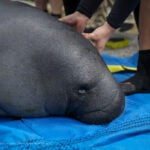
Under the watchful care of our dedicated animal care and veterinary teams, Lorenzo and Alfredo steadily gained weight and improved body condition. When Lorenzo first arrived at our off-site care facility, he weighed under 300 pounds. Their daily routine included specialized nutrition plans, routine health monitoring, and behavioral observations to ensure they were progressing as expected.
By the time Lorenzo was cleared for release, he had more than doubled his weight, at 639 pounds. A powerful milestone that reflects months of attentive care and steady recovery.
Before any manatee is cleared for release, they must pass comprehensive health assessments. This includes physical exams, bloodwork, and other diagnostics. These evaluations, along with months of attentive care, help ensure each manatee has the best possible chance for long-term survival after they are released.
A Journey Home
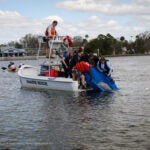
On February 17, our team traveled to Florida’s coast to reunite Lorenzo with his natural habitat. Working alongside our partners at Zoo Tampa, the Florida Fish and Wildlife Conservation Commission, U.S. Fish and Wildlife Service, Clearwater Marine Aquarium Research Institute (CMARI), and other MRP organizations, Lorenzo was successfully released back into his home waters. A heartwarming and milestone moment for everyone involved in his care.
Prior to release, Lorenzo was fitted with a satellite tag to help researchers monitor his movements and post-release progress. CMARI will oversee tracking efforts, allowing experts to gather valuable data.
Because he is just under the 600-pound release benchmark, Alfredo will continue receiving expert care from the Zoo Tampa team until he reaches the necessary criteria for release. Every manatee’s rehabilitation timeline is unique. Continued monitoring ensures Alfredo will return to his native waters with the best chance for survival.
Continuing the Mission
The successful rehabilitation and release of manatees like Lorenzo represents more than a single milestone; they symbolize hope for a species that continues to face environmental challenges. Collaborative conservation efforts like the Manatee Rescue & Rehabilitation Partnership demonstrate the powerful impact of teamwork, combined expertise, and compassionate care.
Georgia Aquarium is honored to play a vital role in this mission, supporting the protection and preservation of these mellow marine mammals.
Published on Feb 18, 2026.
Behind the Scenes of Sea Otter Pup Rehabilitation: A Coast-to-Coast Collaboration
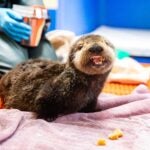
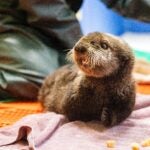
When a sea otter pup is found alone, time is critical – and so is capacity. This fall, Alaska SeaLife Center (ASLC) in Seward, Alaska, responded to two reports of orphaned northern sea otter pups within a two-week span. Both animals required urgent veterinary attention and intensive, round-the-clock support. To help meet those demands, Georgia Aquarium joined a coast-to-coast network that supported ASLC’s rehabilitative care for the pups alongside other partners, including Minnesota Zoo.
This kind of collaboration helps wildlife rehabilitation teams expand hands-on care during the most demanding phases of recovery, especially when young marine mammals need frequent feedings, constant monitoring and developmentally appropriate enrichment.
Why these pups needed help
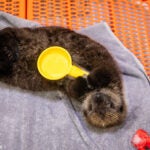
The first pup, a female estimated to be less than two months old, was found alone on the beach in severely malnourished condition. Ten days later, a male pup estimated to be 4–6 months old was reported in the same region after a fall storm moved through the area. He was also alone and in poor condition.
In both cases, reports came through ASLC’s 24-hour Stranded Marine Animal Hotline. ASLC staff and volunteers responded quickly and observed each pup closely to confirm no adult otters were caring for them. When no adults were seen, the pups were transported to Seward for urgent veterinary care.
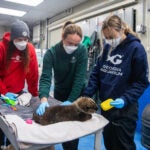
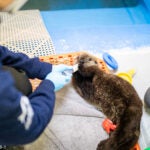
Sea otter pups depend on their mothers for warmth, nourishment and protection, especially early in life. When a pup is orphaned or separated, rehabilitation becomes complex and time-intensive. Care teams may need to provide bottle feedings every few hours — including overnight — while also monitoring hydration, weight gain, behavior and stress levels.
For one of these pups, that meant 24/7 care and feeding throughout the night. That level of attention requires experienced staff, specialized protocols, and the ability to maintain consistency over weeks and months.
Georgia Aquarium’s role in supporting ASLC
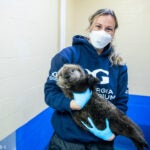
Georgia Aquarium is a longtime partner of ASLC and has supported rehabilitative care for marine mammals over the years, including a stranded beluga calf, and walrus, in addition to this recent sea otter rescue. During this rehabilitation effort, Georgia Aquarium staff helped support day-to-day care, adding capacity so ASLC’s team could maintain the intensive schedule required for young animals in recovery.
That support reflects a shared mission with ASLC: to inspire connection and care while preserving ocean health and aquatic life worldwide.
“Helping care for stranded animals reflects our commitment to ocean conservation and animal welfare. Supporting Alaska SeaLife Center’s experts with additional animal care assistance is one way we can strengthen a larger network of responders working on behalf of wildlife,” said Jason Jones, Sr. Curator of Animal Wellbeing & Zoological Compliance Curator at Georgia Aquarium.
A hopeful update on the pups’ progress
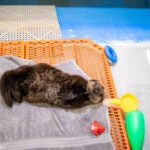
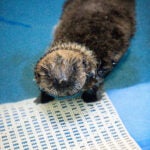
Both pups have continued to make encouraging progress. They are eating well, gaining weight, and engaging with enrichment that supports development and appropriate behaviors. Those are meaningful signs in rehabilitation, because they indicate stability, curiosity and growing strength.
The younger pup is still receiving intensive support with a frequent feeding schedule, including overnight feeds. As she continues to grow, her care plan will gradually evolve to allow more time between meals, while the team also begins introducing solid foods alongside continued nutritional support.
How you can help wild sea otters
If you ever encounter wildlife in distress, the most important thing you can do is give the animal space and contact local authorities or trained responders. Approaching, feeding, or attempting to move wildlife can be dangerous for both people and animals, and can unintentionally worsen the situation.
You can also support the organizations doing this work by following updates, sharing educational resources, and contributing to wildlife rescue and rehabilitation programs when possible.
Otter rehabilitation activities at the ASLC permitted by USFWS MA73418B-1.
Diving into Freshwater: Georgia Aquarium’s Fresh Focus on Local Rivers
By Katelyn Herman, Manager of Conservation Programs, Georgia Aquarium
When most people think of Georgia Aquarium, they picture an inland ocean with a whale shark and manta rays gliding overhead. That big, blue marine world is core to who we are, but increasingly, our focus is expanding to include freshwater. Here in the Southeast, our rivers and streams quietly support some of the richest freshwater biodiversity on Earth, especially mussels, with the region home to about 91% of U.S. mussel diversity.
The incredible role of freshwater mussels
Freshwater mussels tend to be inconspicuous, and to the unknowing eye, you may even think they are a rock. But freshwater mussels are incredibly diverse and play a significant role in maintaining river health. They act as natural water filters, food sources, and create habitats for other species. Mussels are also excellent bioindicators. When mussel communities are healthy and diverse, it is a strong sign that the broader freshwater system is in good shape. When they decline, the river is sending a warning signal.
In fact, mussels are so reliable and effective, some cities like Minneapolis, Minnesota and Warsaw, Poland use mussels as natural water quality testers to help ensure a safe drinking water supply. This type of biomonitoring can help alert authorities to contaminants in the water, such as heavy metals.
In Southwest Georgia, the lower Flint River supports an impressive variety of mussel species, including five species that are threatened or endangered. Because freshwater mussels are great indicators of river health, the mussels in the lower Flint are regularly surveyed and the data used to support federal habitat conservation planning. The habitat conservation plan aims to balance water needs for wildlife, agriculture, and communities.
The Flint starts under the Atlanta airport before flowing through SW Georgia, and what happens in metro Atlanta does not stay in metro Atlanta. The quality and quantity of water upstream are directly tied to the health of rivers and mussel populations downstream in the lower Flint. That connectivity is at the heart of our growing freshwater work.
Partnering with freshwater leaders
Georgia Aquarium is joining a community of conservation leaders that have been working in the freshwater space for a long time. In 2025, we began a collaboration with the Georgia Water Planning and Policy Center at Albany State University and The Jones Center at Ichauway – two key organizations in the Flint River Basin.
These partners bring decades of experience in water science, policy and ecology. For more than twenty years, researchers at The Jones Center have conducted mussel surveys in the lower Flint, often by snorkel, which limited access to deeper parts of the river. The Georgia Water Planning and Policy Center has been deeply involved in understanding how water use, drought and policy decisions affect both people and aquatic ecosystems.
Through collaboration, Georgia Aquarium is adding capacity where it is most useful, for example, by supporting the surveys with our dive team and helping amplify the story of freshwater conservation for a wider public audience.
How the surveys work
One of the most tangible pieces of our partnership is a series of freshwater mussel surveys in the lower Flint River. These surveys are a true team effort. A typical survey looks something like this:
- A five-meter transect line is placed parallel to the riverbank in roughly five to ten feet of water. The line is marked at every meter.
- A Georgia Aquarium diver works methodically along each side of the transect, carefully feeling through the riverbed and collecting mussels by hand into a mesh bag. The general rule of thumb is to work within the diver’s arm’s length from the transect.
- Once an area of the transect is thoroughly surveyed, the diver brings the bag to the surface, and the bag is passed to members of The Jones Center’s Mussel Conservation team, who identify each mussel species and record key data such as size and condition.
- Once the data is collected, the mussels are put back in a mesh bag and given to the diver to be returned to the exact section of the transect where they were found.
This approach gives us detailed information about the diversity of species present, their overall condition, and the size and dynamics of the population while minimizing disturbance to the animals and their habitat.
In 2025, we completed two surveys, one in July and one in October. Across those efforts, we documented nearly 3,300 individual mussels representing 13 species, including rare species such as the Winged Spike and Southern Elktoe. Those numbers help us understand where sensitive species are still persisting, how communities change over time, and where conservation actions may have the most impact.
The early success of these joint surveys is only the beginning.
How you can help
Every guest who visits Georgia Aquarium plays a role in making this work possible. Your support helps fund:
- Field surveys that generate critical data for conservation decisions
- Partnerships with experts and communities in the Flint River Basin
- Education and storytelling that connect Atlanta to the rivers beyond it
Freshwater conservation may not have been the first thing people associated with Georgia Aquarium in the past. In the years ahead, we hope that when you think of our work, you picture not only whale sharks and manta rays, but also the clear flow of a Georgia river, mussels resting in their beds, and the communities, human and wild, that depend on both.
Together, we can help protect the freshwater systems that sustain life in Georgia and beyond.
This work is also strengthened by a growing network of partners who came together for a recent freshwater workshop focused on the Flint River. Participating institutions included The Jones Center at Ichauway, the Georgia Water Planning and Policy Center, Georgia Conservancy Inc., the Georgia Department of Natural Resources, Georgia Tech, Georgia State University, the University of Georgia, Flint Riverkeeper, Chattahoochee Riverkeeper, the City of Atlanta Department of Watershed Management, American Rivers, The Nature Conservancy, Tennessee Aquarium, Georgia Gwinnett College, the Turner Foundation Inc., Atlanta Botanical Garden, Green South Foundation and Tim Richardson Consulting.
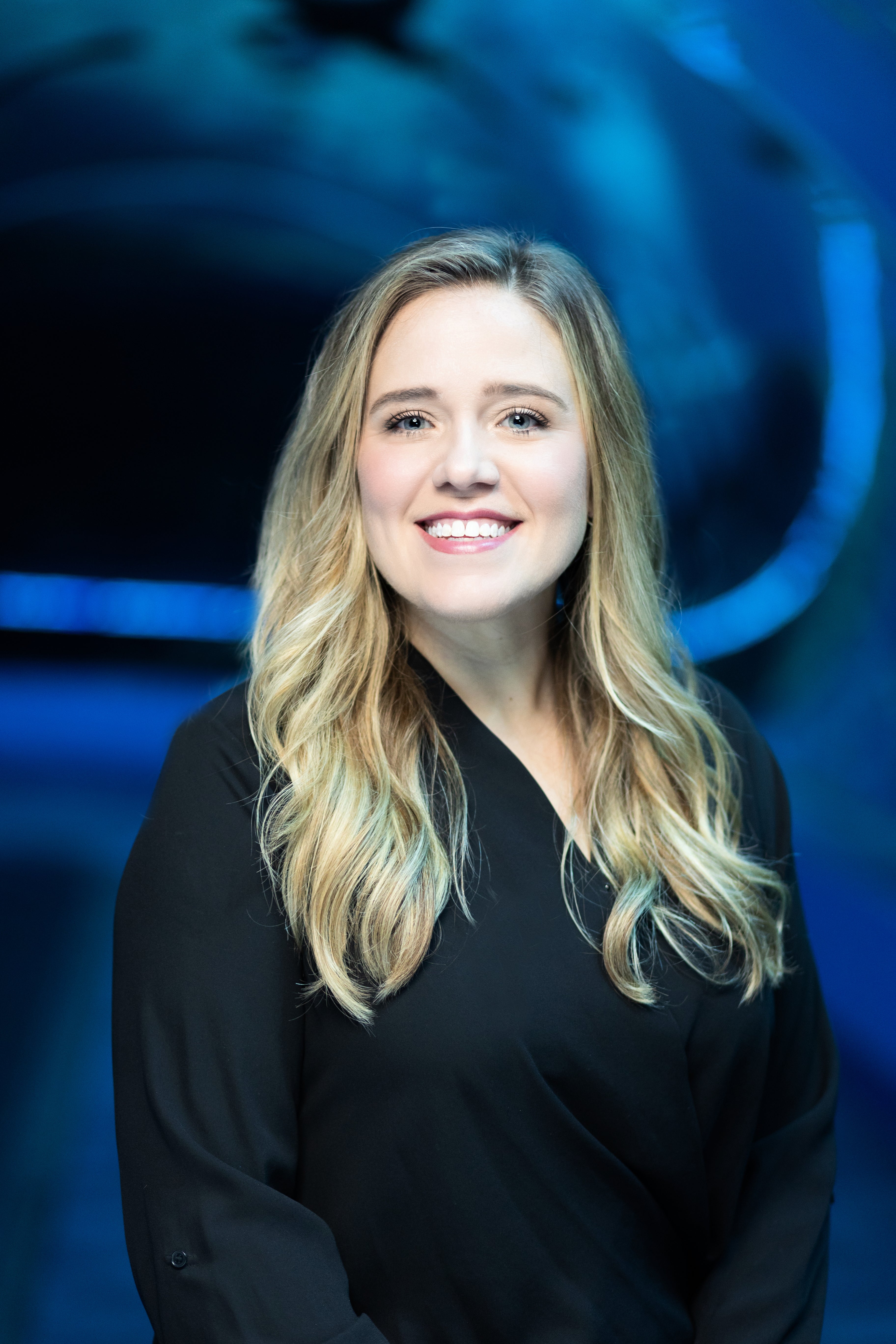
Katelyn Herman is Manager of Conservation Programs at Georgia Aquarium, where she oversees marine and freshwater conservation initiatives. A trained facilitator and Red List Officer with the IUCN, she also oversees the Aquarium’s onsite manta ray research. She holds a B.S. in Biology from the University of Georgia and an M.A. in Marine Conservation and Policy from Stony Brook University.
20/20 Vision
A Look into Georgia Aquarium’s Future, While Celebrating the Past 20 Years.
River Scout Gallery Renovations
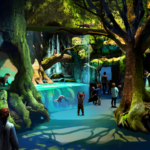
In 2023, Georgia Aquarium opened a new education classroom—marking the first milestone in a multi-phase enhancement of Peterson Preserve made possible through our partnership with Smurfit WestRock. Now, we’re moving into phase two of this transformative project, bringing significant upgrades to both guest experiences and animal habitats.
Phase Two enhancements will include:
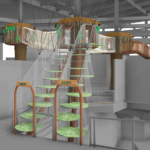
- A brand-new Canopy Walk experience
- Touch-screen animal ID stations and interactive elements throughout Peterson Preserve
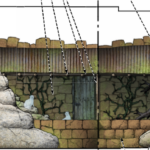
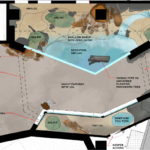
- A redesigned Asian Small-Clawed Otter habitat
- Revitalized theming and signage across the lower and upper River Scout galleries
- Updated lighting fixtures to support animal wellness and enhance guest safety
Why are we renovating?
These renovations are designed to elevate both animal care and guest engagement throughout our River Scout gallery. The expanded Asian Small-Clawed Otter habitat will offer increased space and greater environmental complexity, supporting the health and natural behaviors of our otters. Guests will also benefit from more interactive and memorable touchpoints, creating opportunities for deeper connections with the animals and ecosystems featured in the gallery.
Beyond guest enjoyment, these enhancements strengthen our educational impact—providing children, families, and school groups with richer learning experiences rooted in conservation and discovery. The improvements also highlight the meaningful support of partners like Smurfit WestRock and Southern Company, whose collaboration helps bring these upgrades to life. Together, these efforts will create a more immersive, engaging environment for visitors of all ages.
Construction is now underway, with completion anticipated in summer 2026. Portions of the River Scout gallery will undergo phased closures during this time to ensure the safety of both guests and animals.
Renderings
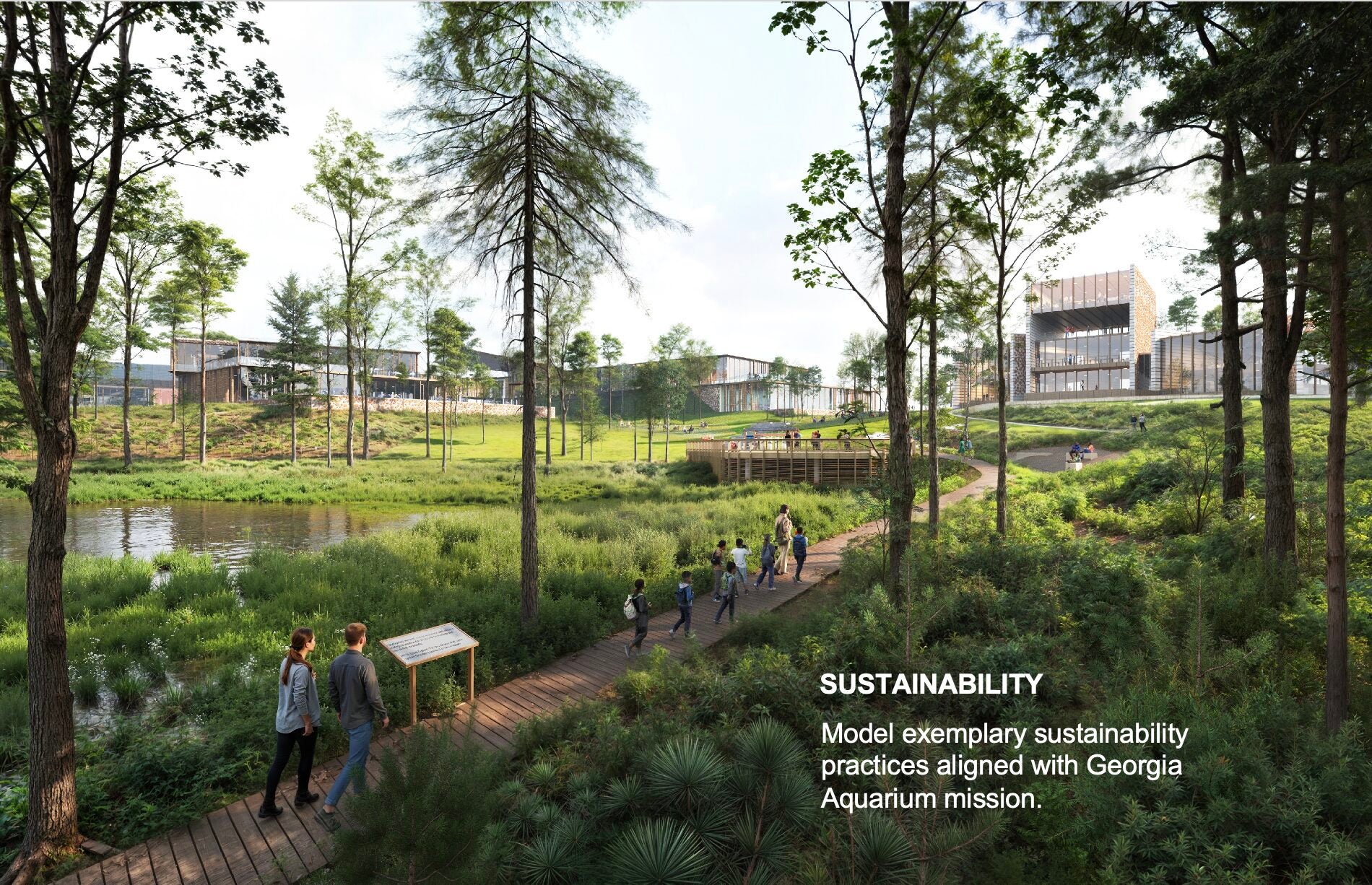
Georgia Aquarium and Foxhall Resort Make Plans for an Education and Conservation Facility in Douglas County
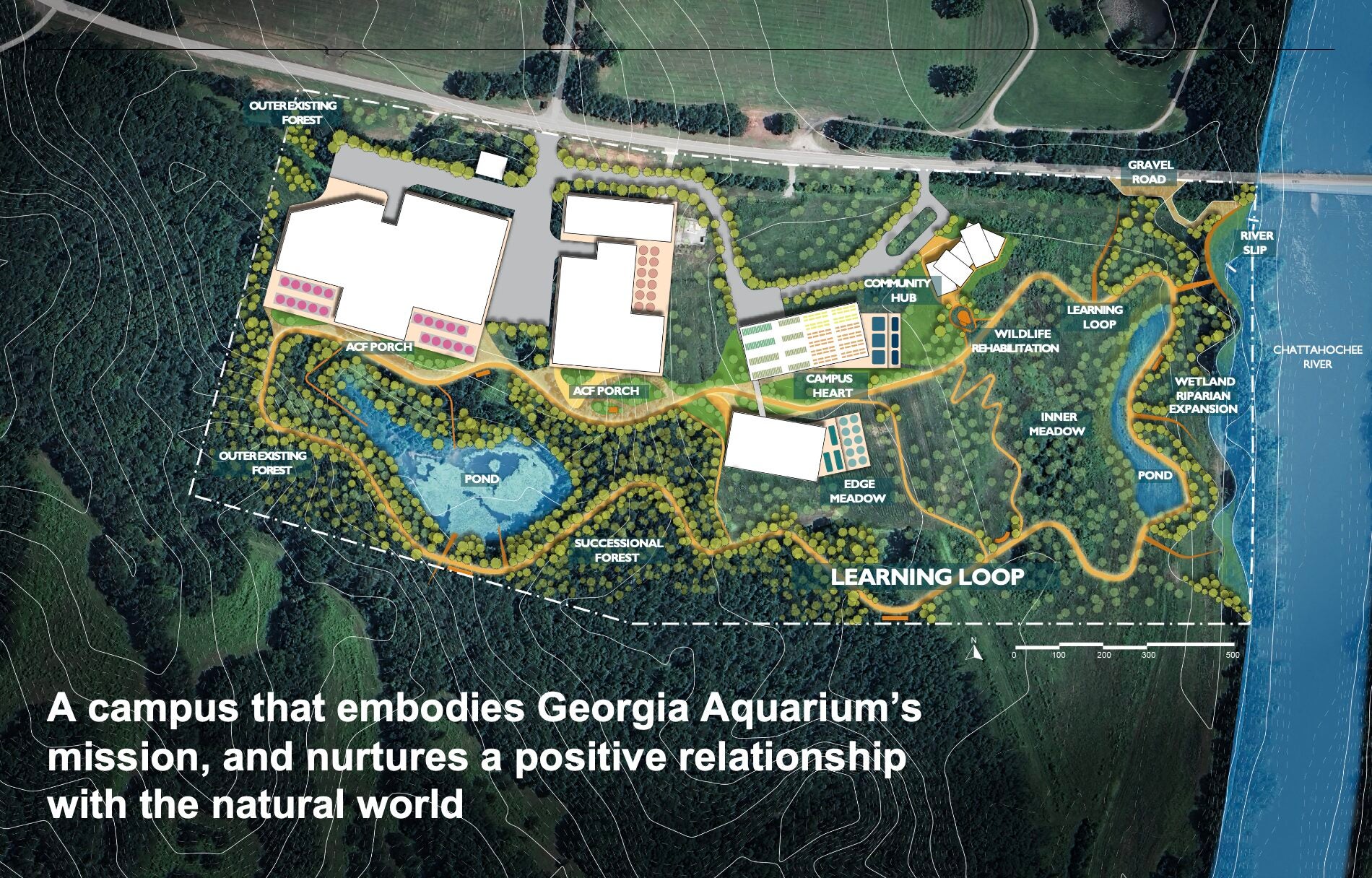
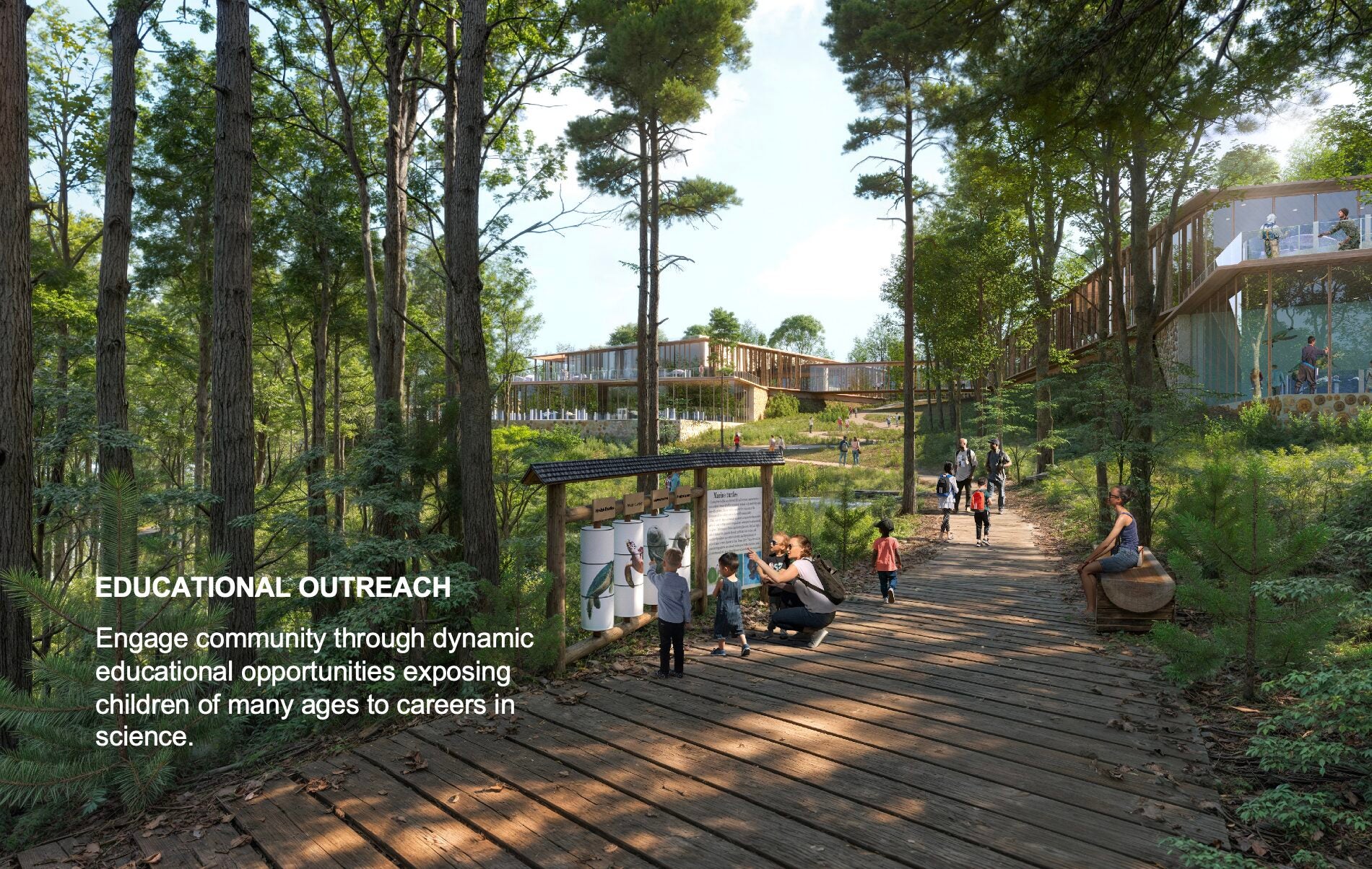
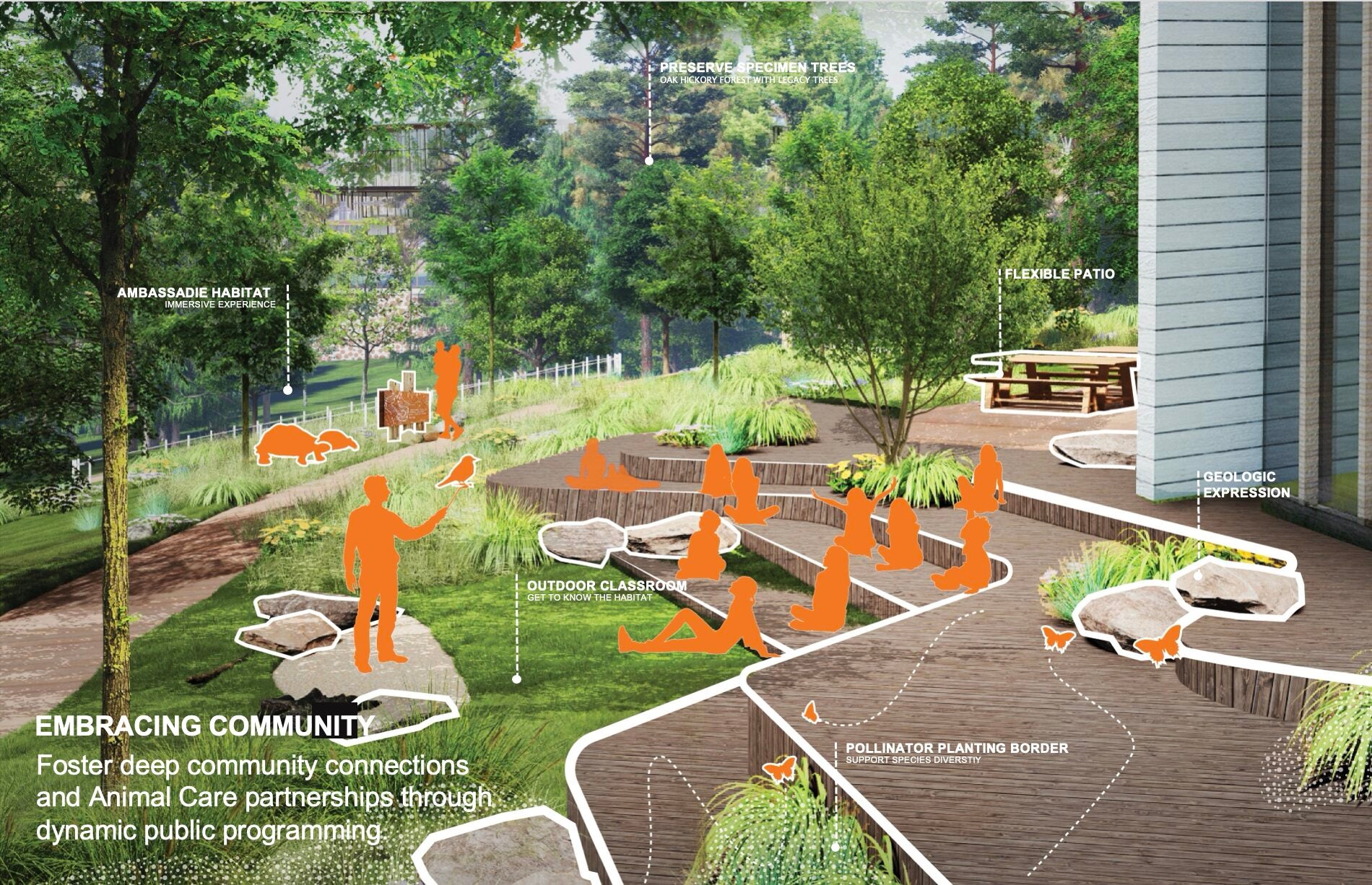
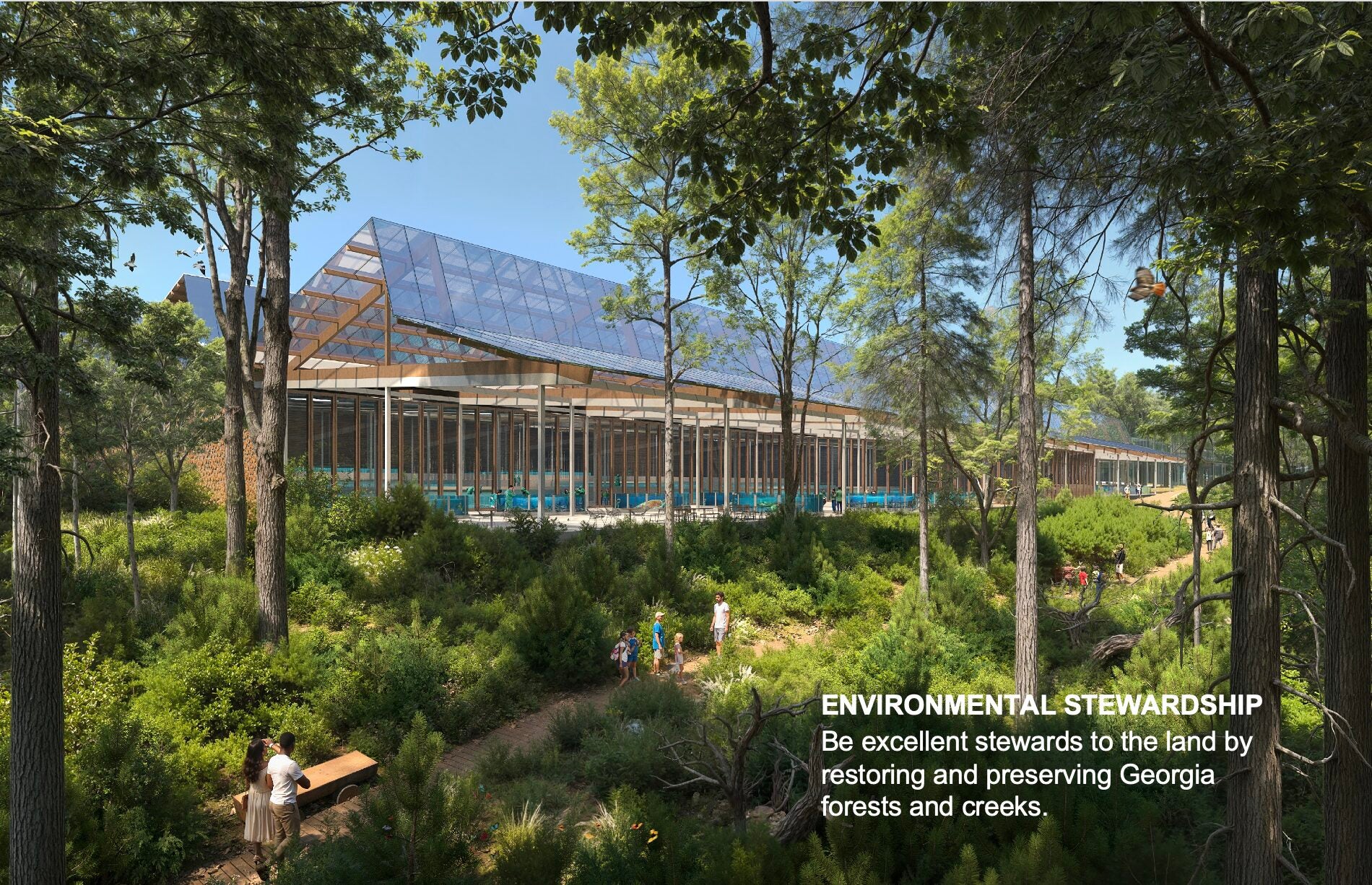
As Georgia Aquarium approaches its 20th anniversary, it’s making a bold commitment to the future of education, conservation research and animal care. The Aquarium is partnering with the Merrill Trust on the acquisition of approximately 50 acres at Foxhall Resort in Douglas County. It is the proposed site of a future education and conservation campus that would expand opportunities for students and communities outside of Atlanta.
The Aquarium is working on plans to develop a purpose-built campus that would host nature-based programming for schools and community groups, expand hands-on conservation science initiatives, such as work rescuing and protecting corals, manatees, sea turtles and other species, and leaning into opportunities to educate about and protect Georgia’s native wildlife and freshwater habitats.
“Our goal is to deepen opportunities for science learning and broaden the Aquarium’s positive impact across the state. We can think of no better place, or partner, than the Merrill family, whose more than 1,000 acres of land at Foxhall Resort includes forests and lakes, alongside the Chattahoochee River,” said Travis Burke, President and CEO of Georgia Aquarium.
“This partnership with Georgia Aquarium represents a shared vision to create a meaningful, lasting impact on education and conservation in Georgia,” said Harrison Merrill Jr., president of the Merrill Trust, “Foxhall Resort’s expansive grounds and natural resources provide the perfect backdrop for a campus that will inspire the next generation of environmental stewards while offering hands-on learning experiences in a breathtaking setting.”
Plans for the campus are currently in development. Additional details will be shared as they become available.
Renderings
Stories that recap Georgia Aquarium’s milestones over the last 20 years:
20 Years of Babies!
Celebrating Two Decades of Babies at Georgia Aquarium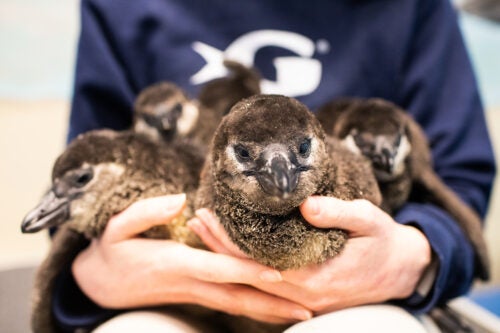
20 Years of Rescued Residents
Stories of Survival: Georgia Aquarium’s Rescued Residents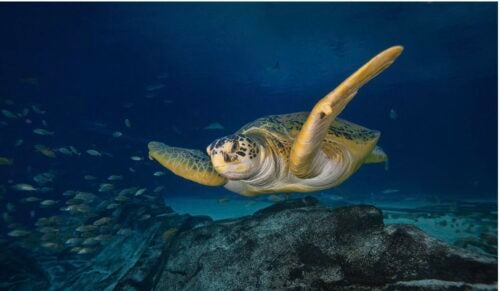
20 Years of Conservation
Celebrating Earth Day and 20 Years of Conservation: Georgia Aquarium Gives Back