
On the Front Lines for Penguins: Inside SANCCOB’s Seabird Ranger Program

Georgia Aquarium supports SANCCOB’s Seabird Rangers in South Africa, protecting African penguins and rescuing vulnerable seabirds at key colonies.
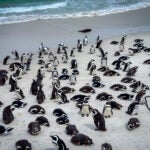
Along South Africa’s coastline, African penguins draw visitors from around the world. But behind the memorable waddle and tuxedo markings is a hard truth. The African penguin is now listed as Critically Endangered, reflecting an extremely rapid population decline.

Protecting a species in crisis takes more than awareness. It takes consistent, on the ground action at key breeding colonies, every day. That is the purpose of SANCCOB’s Seabird Ranger Program, which places trained rangers at five vital seabird colonies in South Africa.

What Seabird Rangers Do, and Why it Matters

SANCCOB, the Southern African Foundation for the Conservation of Coastal Birds, works in partnership with conservation authorities to protect African penguins and other seabirds. Through the Seabird Ranger Program, rangers are stationed at important colonies to provide practical, daily conservation support. Their work includes:

  • Monitoring nesting activity and colony health
  • Identifying injured, sick, or malnourished birds and coordinating transport for treatment
  • Supporting conservation authorities with practical, field-based protection
  • Helping reduce human disturbance and improve conditions for breeding success

This kind of daily, local protection is especially important at public sites, where penguins and seabirds are more likely to encounter human impacts.

Georgia Aquarium’s Support at Stony Point

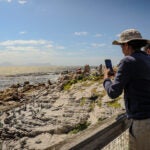
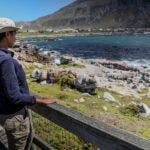
Georgia Aquarium is proud to support this work by fully funding one Seabird Ranger position at Stony Point in Betty’s Bay. That support covers salary, uniforms and essential field resources, helping ensure there is a trained conservation professional on site every day.

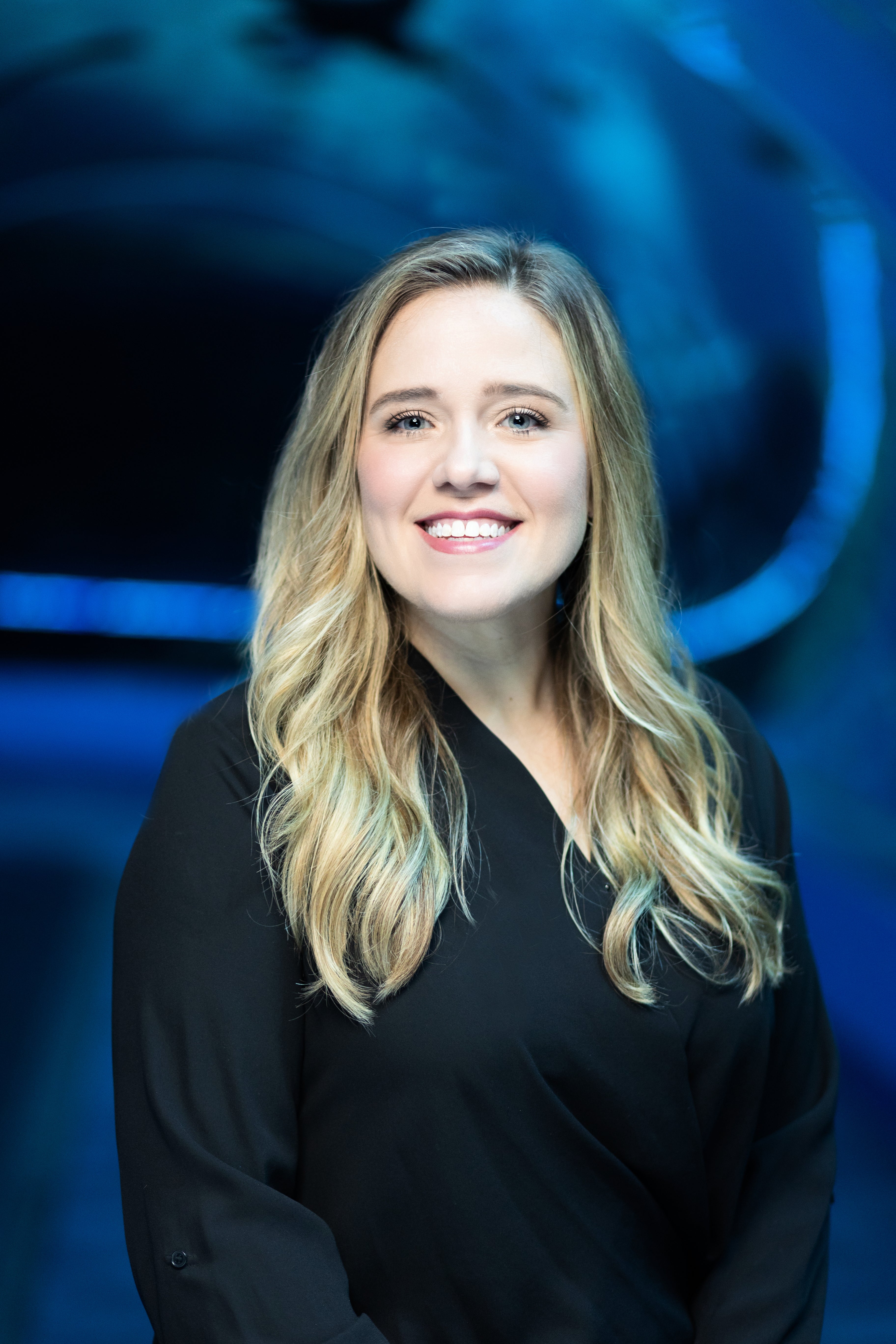
The ranger role funded by Georgia Aquarium is held by Adrienne Johnson Europa, who joined the Stony Point team in 2025 as the second ranger at the colony. In this role, Adrienne helps protect African penguins, cormorants, and other seabirds in a high visibility public setting where consistent monitoring and quick response can make a meaningful difference.

“African penguins are running out of time, and some of the most important conservation happens on the ground every single day,” said Dr. Lisa Hoopes, senior director of research and conservation at Georgia Aquarium. “By funding Adrienne’s ranger role at Stony Point, we are helping ensure there is a trained professional on site to protect the colony and respond quickly when seabirds need help.”

When Georgia Aquarium team members visited Stony Point at the end of 2025, the rangers responded to immediate needs on the ground, bringing in three injured or malnourished birds that were transported back to SANCCOB for care.


A Partnership Built on Action

Georgia Aquarium has partnered with SANCCOB since 2009, supporting the first health assessment of penguin populations found naturally on South African islands. And when SANCCOB faced an unprecedented crisis at the end of 2010, with 483 abandoned penguin chicks in need of intensive care, Georgia Aquarium responded by sending veterinary staff to provide emergency assistance. That effort supported an 80 percent or higher success rate for releasing orphaned chicks.

Today, the collaboration continues through ongoing research into the diseases and environmental conditions affecting penguin populations, all with the goal of strengthening rescue and rehabilitation responses.

Saving African penguins requires support across their lifetime, from field protection in South Africa to long-term conservation collaboration and research. By funding Adrienne’s ranger role at Stony Point, Georgia Aquarium helps ensure there is trained, daily protection at a key colony where immediate response can make a lifesaving difference.
Behind the Scenes of Sea Otter Pup Rehabilitation: A Coast-to-Coast Collaboration

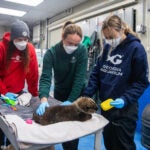
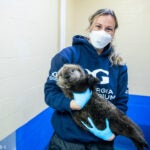
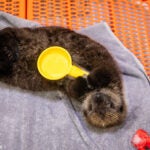
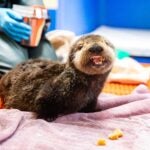
When a sea otter pup is found alone, time is critical – and so is capacity. This fall, Alaska SeaLife Center (ASLC) in Seward, Alaska, responded to two reports of orphaned northern sea otter pups within a two-week span. Both animals required urgent veterinary attention and intensive, round-the-clock support. To help meet those demands, Georgia Aquarium joined a coast-to-coast network that supported ASLC’s rehabilitative care for the pups alongside other partners, including Minnesota Zoo.

This kind of collaboration helps wildlife rehabilitation teams expand hands-on care during the most demanding phases of recovery, especially when young marine mammals need frequent feedings, constant monitoring and developmentally appropriate enrichment.

Why these pups needed help

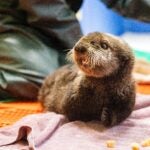
The first pup, a female estimated to be less than two months old, was found alone on the beach in severely malnourished condition. Ten days later, a male pup estimated to be 4–6 months old was reported in the same region after a fall storm moved through the area. He was also alone and in poor condition.

In both cases, reports came through ASLC’s 24-hour Stranded Marine Animal Hotline. ASLC staff and volunteers responded quickly and observed each pup closely to confirm no adult otters were caring for them. When no adults were seen, the pups were transported to Seward for urgent veterinary care.

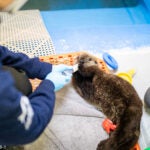
Sea otter pups depend on their mothers for warmth, nourishment and protection, especially early in life. When a pup is orphaned or separated, rehabilitation becomes complex and time-intensive. Care teams may need to provide bottle feedings every few hours — including overnight — while also monitoring hydration, weight gain, behavior and stress levels.

For one of these pups, that meant 24/7 care and feeding throughout the night. That level of attention requires experienced staff, specialized protocols, and the ability to maintain consistency over weeks and months.

Georgia Aquarium’s role in supporting ASLC

Georgia Aquarium is a longtime partner of ASLC and has supported rehabilitative care for marine mammals over the years, including a stranded beluga calf, and walrus, in addition to this recent sea otter rescue. During this rehabilitation effort, Georgia Aquarium staff helped support day-to-day care, adding capacity so ASLC’s team could maintain the intensive schedule required for young animals in recovery.

That support reflects a shared mission with ASLC: to inspire connection and care while preserving ocean health and aquatic life worldwide.

“Helping care for stranded animals reflects our commitment to ocean conservation and animal welfare. Supporting Alaska SeaLife Center’s experts with additional animal care assistance is one way we can strengthen a larger network of responders working on behalf of wildlife,” said Jason Jones, Sr. Curator of Animal Wellbeing & Zoological Compliance Curator at Georgia Aquarium.

A hopeful update on the pups’ progress

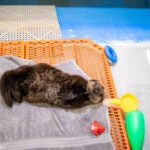
Both pups have continued to make encouraging progress. They are eating well, gaining weight, and engaging with enrichment that supports development and appropriate behaviors. Those are meaningful signs in rehabilitation, because they indicate stability, curiosity and growing strength.

The younger pup is still receiving intensive support with a frequent feeding schedule, including overnight feeds. As she continues to grow, her care plan will gradually evolve to allow more time between meals, while the team also begins introducing solid foods alongside continued nutritional support.

How you can help wild sea otters

If you ever encounter wildlife in distress, the most important thing you can do is give the animal space and contact local authorities or trained responders. Approaching, feeding, or attempting to move wildlife can be dangerous for both people and animals, and can unintentionally worsen the situation.

You can also support the organizations doing this work by following updates, sharing educational resources, and contributing to wildlife rescue and rehabilitation programs when possible.


Otter rehabilitation activities at the ASLC permitted by USFWS MA73418B-1.

Diving into Freshwater: Georgia Aquarium’s Fresh Focus on Local Rivers

By Katelyn Herman, Manager of Conservation Programs, Georgia Aquarium

When most people think of Georgia Aquarium, they picture an inland ocean with a whale shark and manta rays gliding overhead. That big, blue marine world is core to who we are, but increasingly, our focus is expanding to include freshwater. Here in the Southeast, our rivers and streams quietly support some of the richest freshwater biodiversity on Earth, especially mussels, with the region home to about 91% of U.S. mussel diversity.

The incredible role of freshwater mussels

Freshwater mussels tend to be inconspicuous, and to the unknowing eye, you may even think they are a rock. But freshwater mussels are incredibly diverse and play a significant role in maintaining river health. They act as natural water filters, food sources, and create habitats for other species. Mussels are also excellent bioindicators. When mussel communities are healthy and diverse, it is a strong sign that the broader freshwater system is in good shape. When they decline, the river is sending a warning signal.

In fact, mussels are so reliable and effective, some cities like Minneapolis, Minnesota and Warsaw, Poland use mussels as natural water quality testers to help ensure a safe drinking water supply. This type of biomonitoring can help alert authorities to contaminants in the water, such as heavy metals.

In Southwest Georgia, the lower Flint River supports an impressive variety of mussel species, including five species that are threatened or endangered. Because freshwater mussels are great indicators of river health, the mussels in the lower Flint are regularly surveyed and the data used to support federal habitat conservation planning. The habitat conservation plan aims to balance water needs for wildlife, agriculture, and communities.

The Flint starts under the Atlanta airport before flowing through SW Georgia, and what happens in metro Atlanta does not stay in metro Atlanta. The quality and quantity of water upstream are directly tied to the health of rivers and mussel populations downstream in the lower Flint. That connectivity is at the heart of our growing freshwater work.

Partnering with freshwater leaders

Georgia Aquarium is joining a community of conservation leaders that have been working in the freshwater space for a long time. In 2025, we began a collaboration with the Georgia Water Planning and Policy Center at Albany State University and The Jones Center at Ichauway – two key organizations in the Flint River Basin.

These partners bring decades of experience in water science, policy and ecology. For more than twenty years, researchers at The Jones Center have conducted mussel surveys in the lower Flint, often by snorkel, which limited access to deeper parts of the river. The Georgia Water Planning and Policy Center has been deeply involved in understanding how water use, drought and policy decisions affect both people and aquatic ecosystems.

Through collaboration, Georgia Aquarium is adding capacity where it is most useful, for example, by supporting the surveys with our dive team and helping amplify the story of freshwater conservation for a wider public audience.

How the surveys work

One of the most tangible pieces of our partnership is a series of freshwater mussel surveys in the lower Flint River. These surveys are a true team effort. A typical survey looks something like this:

  • A five-meter transect line is placed parallel to the riverbank in roughly five to ten feet of water. The line is marked at every meter.
  • A Georgia Aquarium diver works methodically along each side of the transect, carefully feeling through the riverbed and collecting mussels by hand into a mesh bag. The general rule of thumb is to work within the diver’s arm’s length from the transect.
  • Once an area of the transect is thoroughly surveyed, the diver brings the bag to the surface, and the bag is passed to members of The Jones Center’s Mussel Conservation team, who identify each mussel species and record key data such as size and condition.
  • Once the data is collected, the mussels are put back in a mesh bag and given to the diver to be returned to the exact section of the transect where they were found.

This approach gives us detailed information about the diversity of species present, their overall condition, and the size and dynamics of the population while minimizing disturbance to the animals and their habitat.

In 2025, we completed two surveys, one in July and one in October. Across those efforts, we documented nearly 3,300 individual mussels representing 13 species, including rare species such as the Winged Spike and Southern Elktoe. Those numbers help us understand where sensitive species are still persisting, how communities change over time, and where conservation actions may have the most impact.

The early success of these joint surveys is only the beginning.

How you can help

Every guest who visits Georgia Aquarium plays a role in making this work possible. Your support helps fund:

  • Field surveys that generate critical data for conservation decisions
  • Partnerships with experts and communities in the Flint River Basin
  • Education and storytelling that connect Atlanta to the rivers beyond it

Freshwater conservation may not have been the first thing people associated with Georgia Aquarium in the past. In the years ahead, we hope that when you think of our work, you picture not only whale sharks and manta rays, but also the clear flow of a Georgia river, mussels resting in their beds, and the communities, human and wild, that depend on both.

Together, we can help protect the freshwater systems that sustain life in Georgia and beyond.

This work is also strengthened by a growing network of partners who came together for a recent freshwater workshop focused on the Flint River. Participating institutions included The Jones Center at Ichauway, the Georgia Water Planning and Policy Center, Georgia Conservancy Inc., the Georgia Department of Natural Resources, Georgia Tech, Georgia State University, the University of Georgia, Flint Riverkeeper, Chattahoochee Riverkeeper, the City of Atlanta Department of Watershed Management, American Rivers, The Nature Conservancy, Tennessee Aquarium, Georgia Gwinnett College, the Turner Foundation Inc., Atlanta Botanical Garden, Green South Foundation and Tim Richardson Consulting.

Katelyn Herman is Manager of Conservation Programs at Georgia Aquarium, where she oversees marine and freshwater conservation initiatives. A trained facilitator and Red List Officer with the IUCN, she also oversees the Aquarium’s onsite manta ray research. She holds a B.S. in Biology from the University of Georgia and an M.A. in Marine Conservation and Policy from Stony Brook University.

Conservation Works When We Work Together: Turtles Prove It. Now It’s the Arctic’s Turn

Every update to the International Union for Conservation of Nature (IUCN) Red List is a snapshot of our planet’s health — where conservation is working, where it isn’t yet and where action can’t wait. The newest update delivers both good news and hard truth: green sea turtles have improved globally after decades of protection, while multiple Arctic seal species have moved closer to extinction risk as sea ice vanishes.

Conservation works: The green sea turtle rebound

The IUCN reports that the global green sea turtle population has rebounded enough to improve its Red List status. This is an achievement built on long-term safeguards like beach protection, nest monitoring, bycatch reduction and coordinated rehabilitation. It’s a reminder that when science, policy and communities pull in the same direction, wildlife can recover.

At Georgia Aquarium, we see this story up close. Our teams care for cold-stunned sea turtles, often juveniles swept into sudden cold snaps, providing the heat, space and expert veterinary support animals need to regain strength and return to the ocean. Over the past five years, we’ve taken in over 40 cold-stunned sea turtles, each one a step toward protecting a species still at risk in U.S. waters.

Green sea turtles benefit from a broad network of facilities that provide recovery and release. Loggerheads, however, remain endangered and—due to their size and specialized care needs—are supported by far fewer centers nationwide. That gap is exactly where Georgia Aquarium leans in. We’re increasing investment, we’d expanded space, and we have dedicated capacity to receive, rehabilitate, and return loggerhead turtles to the wild. Our goal is simple: accelerate recovery so that loggerheads can move off the endangered list.

Recovery takes decades and continued vigilance. Even as green turtles improve globally, local populations can face boat strikes, entanglement, habitat loss and climate-driven cold-stunning. Your support keeps the arc of recovery bending in the right direction.

A cautionary tale: Arctic seals on thinner ice

The same Red List update highlights a different trajectory in the far North. Three Arctic seal species shifted to higher risk categories due to shrinking sea ice, critical habitat for breeding, resting and feeding. Specifically, hooded seals are now Endangered, while bearded and harp seals are listed as Near Threatened, underscoring the speed at which climate change is reshaping Arctic ecosystems.

Georgia Aquarium is investing in Arctic research for precisely this reason. It’s not just sea ice we need to worry about—warmer Arctic waters can fuel harmful algal blooms that produce deadly toxins, adding new biological threats on top of habitat loss. Our research scientist Dr. Patrick Charapata and collaborators study how these warming conditions enable toxic blooms to creep north, introducing new risks into marine food webs relied upon by wildlife and Indigenous communities. Recent work examines toxin exposure pathways in species such as walruses, helping anticipate health impacts in a rapidly changing sea.

In the Arctic, climate change isn’t abstract. It is habitat loss measured in miles of missing ice and new biological threats expanding with warmer water. Science here is an early-warning system, and action anywhere that reduces carbon emissions helps protect life everywhere.

How aquariums support wildlife rescue and research

Public aquariums are uniquely positioned to turn concern into capacity: trained teams, purpose-built facilities and partnerships that move animals and knowledge where they’re needed most. At the same time, our scientists contribute to peer-reviewed research and multi-institution collaborations through IUCN’s Species Survival Commission networks and other programs.

That mix matters. Rehabilitation returns individual animals to the wild today. Research and policy partnerships help ensure those animals still have places to live tomorrow.

How you can help right now
  • Leave beaches turtle-safe. Knock down sandcastles, fill in holes and flatten ruts before you leave. These obstacles can block nesting females and trap hatchlings on their way to the ocean.
  • Keep it dark near the shore. If you live or stay near a beach, turn off (or shield) outdoor lights at night. Artificial light can disorient hatchlings, who navigate by the moon’s glow over the water.
  • Fish and play responsibly. Pack out fishing line, nets and plastic – entanglement is a serious risk for sea turtles and other wildlife.
  • Boat with wildlife in mind. In turtle and manatee zones, follow local “turtle-friendly” guidance: idle near shorelines and inlets, keep a sharp lookout and avoid disturbing resting or surfacing animals.
  • Report animals in distress. If you see a stranded, injured or entangled sea turtle, contact your local stranding network or wildlife hotline immediately.
  • Support the science. Donations and memberships fuel Georgia Aquarium’s rescue work and Arctic research, including studies that guide practical protections for seals, walruses and other ice-dependent species. Donations are tax-deductible.
  • Make climate-smart choices. From energy efficiency at home to supporting policies that lower emissions, everyday actions ladder up to safer seas for Arctic and temperate wildlife.

The new Red List is both a celebration and a call to action. Green sea turtles show that conservation works when we commit for the long haul. Arctic seals remind us that the work is urgent, and the window is now. At Georgia Aquarium, we’ll keep doing what we do best: pairing world-class animal care with rigorous science on our coast and in the Arctic so the next Red List snapshot shows more species on the road to recovery.

Ocean Acidification Crossed a Key Threshold

What That Means for Corals and How Georgia Aquarium Is Helping

When the ocean absorbs carbon dioxide (CO₂) from the air, seawater becomes slightly more acidic. Increasing amounts of CO₂ means more acidic water. That shift matters for corals and other shell-building animals that need calcium carbonate to grow and heal. Potsdam Institute for Climate Impact Research reported in their latest annual assessment that global ocean acidity has crossed a critical threshold for marine life—putting extra pressure on reefs that are already challenged by warmer waters, increasing exposure to disease and more intense storms.

“This matters because coral reefs are nurseries for fish, buffers for coasts, and a foundation for local economies,” said Kim Stone, director of fishes and invertebrates at Georgia Aquarium. “As acidity rises, corals spend more energy maintaining their skeletons and less on growth and reproduction. Over time, that weakens reefs and everything that depends on them, from reef fish to the people who rely on healthy oceans.”


Georgia Aquarium’s leadership response to the coral crisis
  • Long-term commitment: Georgia Aquarium has been actively involved in coral restoration and conservation since 2010, recognizing coral’s crucial role in healthy marine ecosystems.
  • Research and rescue that inform action: Our teams conduct coral rescue and study health and resilience in corals so partners can implement effective conservation strategies. We’ve guided and developed coral care techniques behind the scenes and supported nursery strategies on the reef. We also help care for corals confiscated from illegal trade, working with U.S. Fish and Wildlife Service when animals need immediate critical care. Georgia Aquarium has received over 1,000 confiscated aquatic animals, more than half of them corals.
  • Training more experts: We are teaching how to care for coral to expand the number of experts and partners involved in coral rescue and care worldwide. Georgia Aquarium hosts aquarists on-site for coral program training annually. It is a practical way to grow the network of people who can care for, rescue and restore threatened corals so more places have the expertise they need.
  • Partnerships and field impact: Georgia Aquarium is a leading participant in the Association of Zoos and Aquariums Florida Reef Tract Rescue Project, a multi-institution effort responding to the lethal, fast-spreading stony coral tissue loss disease in the Caribbean and Atlantic, including off Florida. This work is tracked on a dynamic dashboard following over 2,300 rescue colonies, including where the animals live, how big they are and DNA typing. We also partnered with Coral Restoration Foundation to grow coral fragments in underwater nurseries, with the goal of outplanting healthy corals back to the reef. To move nursery corals safely, Georgia Aquarium introduced the “Coral Bus”, a specialized aquarium trailer system that reduces stress and supports survival during transport.
  • Inspiring care through connection: In our Tropical Diver gallery, guests see living corals up close. Turning big-picture climate science into a personal experience is one of the most powerful ways to spark action. Our aquarists also propagate corals for our live reef wall, which supports education and conservation goals inside the Aquarium.

“Coral reefs are living infrastructure for the ocean, and more acidity makes it harder for them to build and heal,” Stone shared. “We are investing in people, partnerships and science to help reefs hold on and bounce back.”


What you can do today
  • Lower your carbon footprint where you can. Small choices add up. A few small actions include walking and biking instead of driving when possible, eating locally-sourced foods and reducing food waste. When swimming in the ocean, use reef-safe sunblock.
  • Choose sustainable seafood using trusted guides and certifications. Georgia Aquarium’s Seafood Savvy program promotes choosing sustainable seafood from sources that minimize environmental impacts, ensure fair working conditions, and support the entire supply chain.
  • Support coral programs through donations or membership.
  • Learn and share. Visit Georgia Aquarium, explore our coral resources and talk about why reefs matter.


Hope looks like skilled hands, good science, and strong partnerships. From behind the scenes to reef nurseries, Georgia Aquarium and our partners are working to protect corals when it matters most.

Georgia Aquarium Receives Recertification from American Humane Society

Georgia Aquarium was one of the first zoological facilities to be Humane Certified and has reached nearly 10 years of certification

American Humane Society, the United States’ first national humane organization and the world’s largest certifier of animal welfare practices, announced today that Georgia Aquarium has earned recertification through the American Humane Certified Zoos and Aquariums program.

American Humane Society is the United States’ first national humane organization and the world’s largest certifier of animal welfare practices. Georgia Aquarium has continuously maintained its certification since first becoming Humane Certified™ in 2016.

“We are proud to continue recognizing Georgia Aquarium as a Humane Certified facility,” said Dr. Robin Ganzert, President and CEO of American Humane Society. “Zoos, aquariums, and conservation parks around the world play an important role in the animal welfare movement, and this recertification further signifies Georgia Aquarium as a leader in aquatic care and conservation.”

Rigorous Certification Standards:

To be recognized as Humane Certified, Georgia Aquarium passed a rigorous independent assessment that reviewed the wellbeing of animals in their care and demonstrated overall excellence in their animal care and welfare practices. The unique process is guided by the latest science and best practices and is informed by respected veterinarians and experts in the fields of animal welfare, animal science, zoology, and ethics who have decades of experience in protecting animals.

The independent validation process—which goes above and beyond to help protect animals—provides visitors with confidence that the institution is meeting a high benchmark of care. The process includes submission of a pre-audit application, followed by an onsite audit that assesses animal welfare. Factors considered during the audit include, but are not limited to, housing, nutrition, water, lighting, shade, sound, activity levels, and the training of staff who are interacting with the animals. The benchmarks are species specific.

“Receiving our recertification as Humane Certified by American Humane Society is a testament to our commitment to the care and wellbeing of all our animals,” said Travis Burke, President and CEO of Georgia Aquarium. “It also recognizes the hard work and dedication that goes into training, veterinary care, nutrition, habitat support, and overall animal care to ensure these standards are constantly upheld.”
The American Humane Certified™ program is the first certification effort solely dedicated to helping verify the welfare and humane treatment of animals living in zoos, aquariums and conservation centers across the globe. The program enforces rigorous, science-based, and comprehensive criteria for animal welfare that are reviewed by an independent Scientific Advisory Committee comprised of world-renowned leaders in the fields of animal science, animal behavior and animal ethics. The audit helps to verify good practices at deserving zoos and aquariums and offers increased assurance to visitors that the institution they are visiting is worthy of their support.