Portions of Southern Company River Scout are currently closed for scheduled maintenance.


ATLANTA (March 24, 2026) –
In the ocean, sound is everything. It helps animals navigate, communicate, hunt and stay safe. But human-made noises are increasing across the ocean from shipping vessels and recreational vehicles to drilling and extractive industries, and what isn’t well understood is how that increased noise may impact wildlife health and conservation.
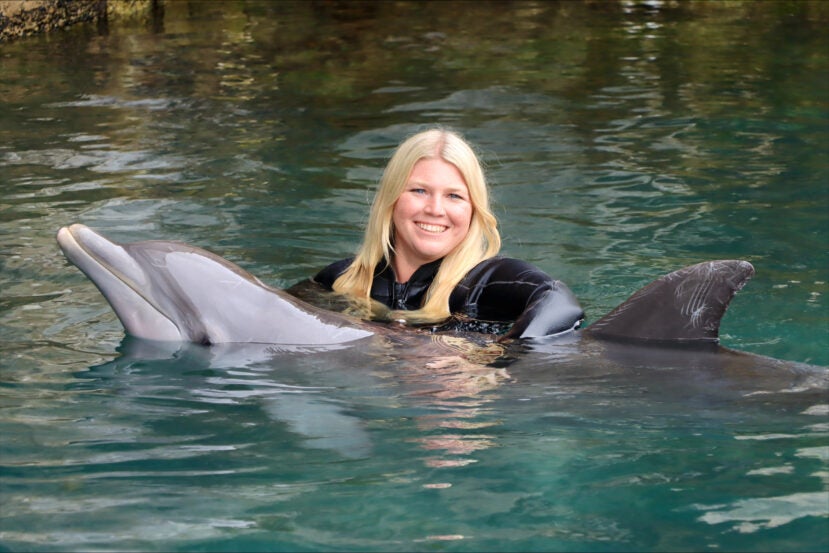
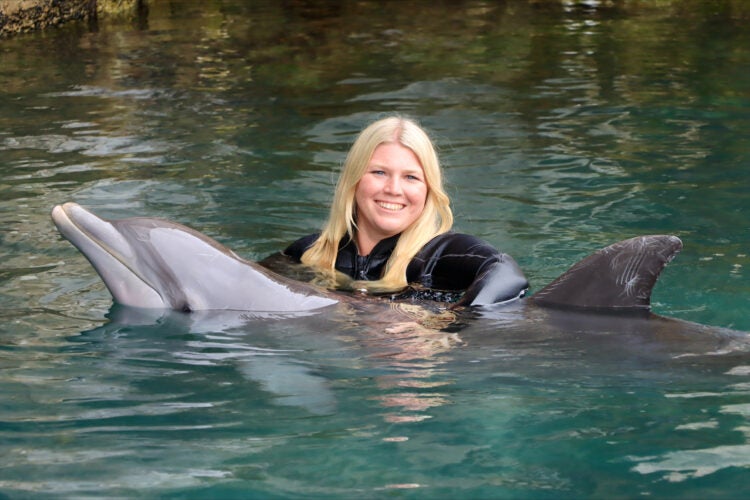
That’s where Georgia Aquarium’s newest research scientist, Dr. Paige Stevens-Sánchez, comes in. Her research focuses on how noise affects wildlife cognition and behavior. She joined Georgia Aquarium’s team to help answer questions such as: Are dolphins increasingly forced to split their attention between essential behaviors—like finding food, communicating, caring for calves and locating mates—and listening for sounds they cannot afford to ignore, such as approaching boats or other potential threats? She studies how noise influences attention and learning across species, while also helping advance tools like passive health monitoring that could support vulnerable wild populations.
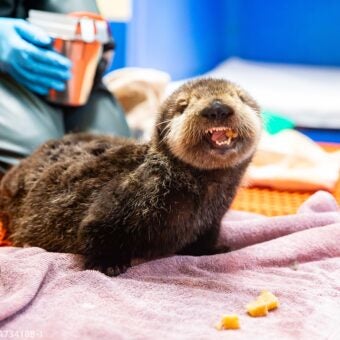
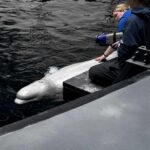
Dr. Stevens-Sánchez is leading work that examines how noise impacts animals’ ability to focus, with current studies underway with belugas, California sea lions, sea otters and dolphins. While sound research is not new, she is helping push the field forward by evaluating and measuring animals’ ability to focus, versus distractions that could be impeding their survival skills. This type of cross-species approach has rarely been explored at this scale.
At the heart of her work is a concept she calls “cognitive conservation.” It reflects the idea that when animals must devote attention to disturbance (like vessel noise), they may have less attention available for essential behaviors such as foraging, social communication and avoiding threats.
“We talk a lot about how noise changes the ocean. I’m interested in what it changes inside the animal, including their attention, their decisions, and ultimately what they’re able to do to thrive,” shared Dr. Stevens-Sánchez.
Dr. Stevens-Sánchez’s work at Georgia Aquarium spans three connected areas, all centered on a core question: how do animals experience their environment, and how can that knowledge improve their wellbeing and protection?
In addition to her studies on noise and cognition, Dr. Stevens-Sánchez is also advancing technologies for conducting passive health monitoring of dolphins and whales, including approaches designed to collect biological samples without handling an animal. One project in development uses a specially-designed fixed-wing drone to collect exhaled breath condensate (sometimes informally called “chuff”). The team is currently testing and validating the approach under controlled conditions at the Aquarium, with a longer-term goal of applying the method to study the health of dolphins living along the Georgia coast.
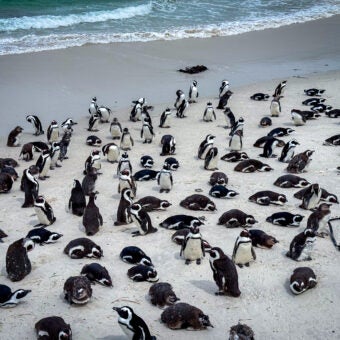
Additionally, with a goal of continually advancing wildlife wellbeing, Dr. Stevens-Sánchez is developing an African penguin study designed to evaluate swim duration using environmental enrichment methods to inform care strategies.
Georgia Aquarium is committed to advancing research that improves animal well–being, strengthens conservation outcomes and contributes to scientific knowledge. Dr. Stevens-Sánchez’s work reflects that mission. It brings together behavior, cognition, sound, and health monitoring to help answer big questions that contribute to marine wildlife health and well–being in a rapidly changing ocean.
###