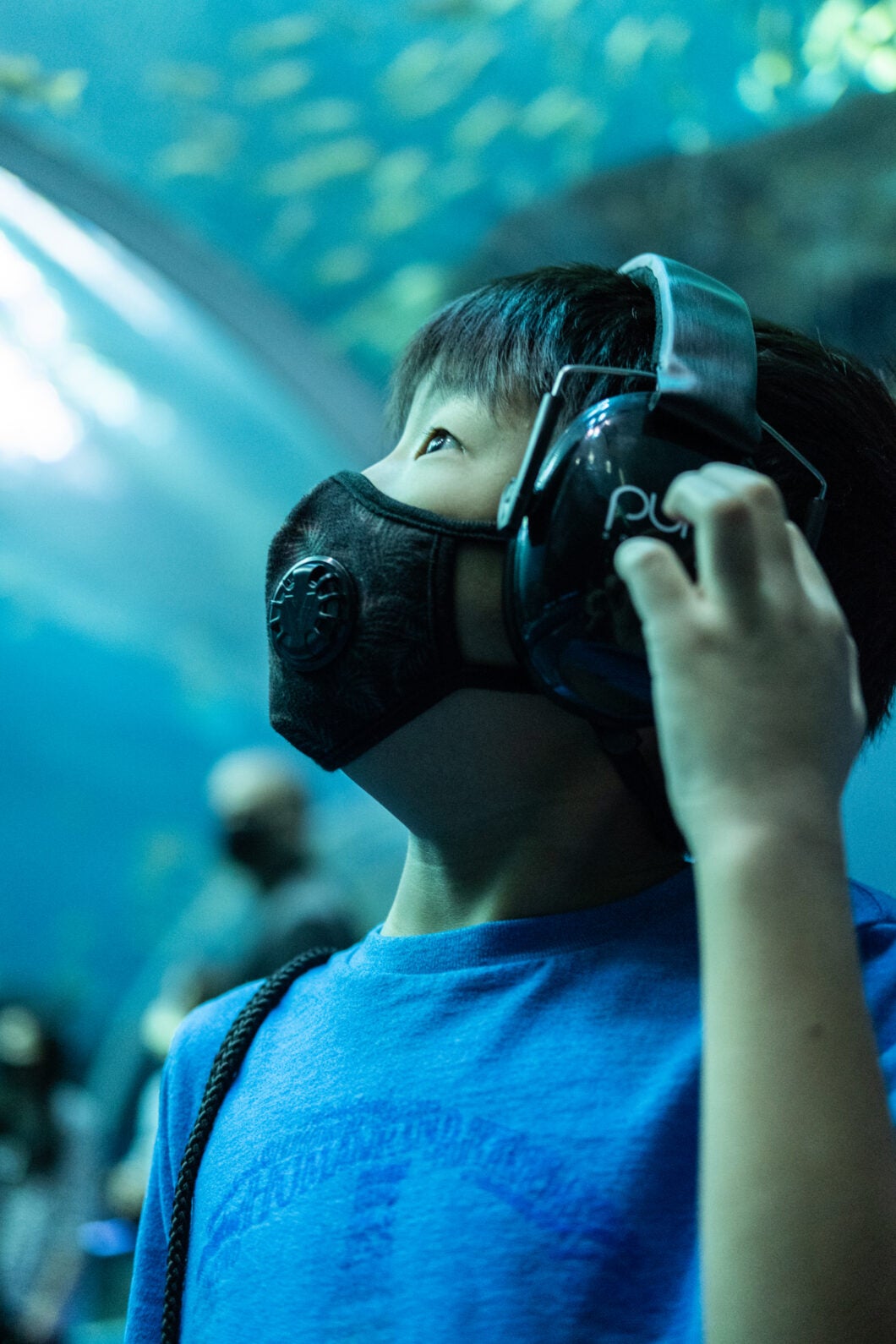
Georgia Aquarium Named KultureCity’s 2022 Sensory Inclusive Venue of the Year

Georgia Aquarium, the Western hemisphere’s largest aquarium, is KultureCity’s 2022 Sensory Inclusive Venue of the Year. KultureCity is the nation’s leading non-profit working towards sensory accessibility and acceptance for those with invisible disabilities. The award was presented at the annual KultureBall in Birmingham, AL. on August 27, 2022.

“Through our partnership with KultureCity we’ve expanded our sensory-inclusive offerings, trained more staff, and recognized what we can continuously do to offer the best experience.
- Anthony Rivera, Senior Vice President of Operations and Hospitality at Georgia Aquarium

Georgia Aquarium is certified Sensory Inclusive™ by KultureCity. Aquarium staff are trained by leading medical professionals on how to help guests with a sensory overload situation. Sensory sensitivities or challenges with sensory regulation are often experienced by individuals with autism, dementia, post-traumatic stress, and other similar conditions.

“We are honored to receive KultureCity’s Sensory Inclusive Venue Award for 2022. We are dedicated to sharing the wonders of the aquatic world with all our guests, regardless of abilities,” said Anthony Rivera, Senior Vice President of Operations and Hospitality at Georgia Aquarium. “Through our partnership with KultureCity we’ve expanded our sensory-inclusive offerings, trained more staff, and recognized what we can continuously do to offer the best experience.”

The Aquarium offers a wide range of sensory-inclusive amenities to all guests, of all abilities. In 2020, the Aquarium partnered with KultureCity to plan and debut the Wilkins Rhodes Sensory Room. The sensory room is for guests who may need a quieter, smaller, or more secure environment during their visit to the Aquarium. The space was designed by KultureCity medical professionals and is equipped with sensory tools and privacy. Guests can access the sensory room by using the passcode located next to the door. The room is available during all operating hours, every day, and is a free offering.

Georgia Aquarium Named KultureCity's 2022 Sensory Inclusive Venue of the Year

“I still remember the opening day of the Georgia Aquarium; I was a teenager and my family drove 5 hours to support the newest and largest aquarium. Since then, I have made countless visits. To know that families from across the nation and world can enjoy Georgia Aquarium is truly heart-warming! The commitment from the entire staff at the Aquarium has been amazing. We are honored to partner and award Georgia Aquarium with this and hope families will be able to enjoy the sensory inclusive experience for years to come,” said Uma Srivastava, Executive Director at KultureCity.

Including the Wilkins Rhodes sensory room, Georgia Aquarium’s additional sensory amenities include:

  • Sensory bags, equipped with noise-canceling headphones, fidget tools, verbal cue cards, and weighted lap pads. These bags are available free of charge to all guests and are available at the Aquarium’s Information Desk.
  • Designated sensory hours with low lighting, limited sounds, and further limited capacity. Check the Aquarium’s website for operating hours.
  • Quiet Zones in galleries

Prior to visiting a venue or event, families can download the free KultureCity App and view what sensory features are available and where they can access them. Also on the app is the Social Story which will provide a preview of what to expect while enjoying Georgia Aquarium.

Georgia Aquarium Partners with World’s Leading Conservation Organization to Become a Center for Species Survival

ATLANTA (July 28, 2022) – Georgia Aquarium is becoming a Center for Species Survival (CSS) through a partnership with the International Union for Conservation of Nature (IUCN) Species Survival Commission (SSC), part of the world’s largest environmental conservation organization.

The Aquarium, one of just three such Centers in the United States, was tapped for its expertise in marine species conservation. It will contribute knowledge, experience, and capacity to global plans to save wildlife. The work of the Center includes collaboration with conservation organizations, field scientists, academics, and government officials.

The Center will work in partnership with the IUCN SSC, the largest of the IUCN’s six expert commissions and made up of more than 10,000 conservationists worldwide. The CSS partnerships recognize that accredited zoos and aquariums have critical data and expert knowledge resulting from years of caring for endangered species and engaging with visitors.

“These new IUCN SSC partnerships have great potential to reverse the staggering decline in wildlife and plants around the world,” said Dr. Alistair Dove, Vice President of Science and Education at Georgia Aquarium. “After decades of caring for endangered species, accredited zoos and aquariums have a wealth of data and expertise and sharing knowledge this way is a resourceful approach that will greatly advance conservation planning. Georgia Aquarium will continue to commit our scientists and animal care experts to the SSC’s critical work to save species, from innovative strategies to effective on-the-ground action.”

Many organizations, including Georgia Aquarium, are doing extensive conservation work. These new partnerships help that work become a more structured part of the global conservation community, unifying under One Plan to assess, plan and act to reverse negative wildlife trends.

This sharing of experience and knowledge builds cooperation and reduces redundancies on projects and allows the IUCN to share conservation information with millions of people who visit zoos and aquariums each year.

As a CSS, Georgia Aquarium’s work will include:

• Conducting additional assessments for the IUCN Red List of Threatened Species, which identifies and evaluates species threatened with extinction

• Planning conservation projects and hosting workshops

• Conserving endangered species living at the Aquarium

• Training other zoos and aquariums on effective species conservation work

Georgia Aquarium has volunteered critical resources to the IUCN SSC for years. One of its researchers, Katelyn B. Herman, is a trained Red List Officer, helping lead extinction risk assessments. As part of the IUCN’s Shark Specialist Group, Herman worked on The Global Shark Trends Project, which recently concluded a multi-year assessment that found shark, ray, and chimaera populations have declined 71 percent in the past 50 years.

“Georgia Aquarium has been at the forefront of aquatic science for years, making important breakthroughs for marquee marine species. These Centers will be vital to coordinating conservation knowledge and developing plans to save species threatened with extinction. Our commitment to protecting our ocean is unwavering.
- Dr. Brian Davis, President and CEO of Georgia Aquarium

Georgia Aquarium conducts conservation work both at its facility and in the field around the world. One current project involves the reintroduction of endangered zebra sharks to their home range in Raja Ampat, West Papua, Indonesia. Other projects have included conservation and rescue work for whale sharks, African penguins, Atlantic bottlenose dolphins, manta rays, beluga whales, spotted eagle rays, sea lions, and corals.

“The IUCN SSC believes strongly in the unique role that accredited zoos and aquariums must play in saving species, spanning breeding, husbandry, veterinary care, public engagement, fundraising, research and much more,” said Dr. Kira Mileham, IUCN SSC Strategic Partnership Director. “We are working hard to establish these new partnerships between individual zoos and aquariums, SSC specialist groups, taxon advisory groups, and species conservation programs around the world, so that together we can ensure a more optimistic shared future for people and wildlife”.

Other Centers within the United States include the Global Center for Species Survival (GCSS), based at the Indianapolis Zoo in Indiana, and the Center for Species Survival: New Mexico at the Albuquerque Biopark, New Mexico. The GCSS, created in October 2019, works closely with all the SSC’s global Species Specialist Groups and employs experts that focus on freshwater, marine, plants, fungi, invertebrates, mammals, amphibians and reptiles, and birds.

While Georgia Aquarium is a hub for marine species, the CSS: New Mexico, focuses on medicinal plants, freshwater fishes, and pollinating insects. Seven other hubs have been established around the world with more on the way. The current Centers for Species Survival include Paradise Wildlife Park, United Kingdom; Oceanário de Lisboa, Portugal; Parque Das Aves, Brazil; Temaiken Fundacion, Argentina; Mandai Nature, Singapore; Zoos and Aquarium Association Australasia, Australia; and Loro Parque, Canary Islands.

Georgia Aquarium Obtains Class R Research License

The U.S.’s largest aquarium is now licensed as a Class R research facility under the Animal Welfare Act. This license is the highest standard of establishing an ethical review of animals involved in research for advanced scientific understanding.

This license gives the Aquarium the ability to consider research with the animals within its collection beyond routine animal care procedures. All Georgia Aquarium animal research, whether inside the Aquarium or in the field, must follow the Institutional Animal Care and Use Committee (IACUC) process to evaluate the project and its ethics. The IACUC process is regulated by the Animal Welfare Act under the United States Department of Agriculture (USDA). Institutions with this distinction are closely monitored and have extensive compliance obligations to keep the license.

“The achievement of becoming a Class R Research facility makes Georgia Aquarium a more capable and adaptive institution where animal care and research can be even more aligned. Although, with this new license we will continue our track record of performing minimally invasive research, It also allows us to be more involved in research with other Class R partners. This opens up more collaboration possibilities, better integrating us into the scientific community. – Dr. Alistair Dove, Vice President of Science and Education

IACUC considers several factors when reviewing research projects from Class R facilities: the training and qualifications of the team working on the project and all aspects of animal welfare. That includes social implications, impacts on animals, and well-being management. The committee consists of veterinarians, scientists from other facilities, and lay members from outside the Aquarium to ensure objective review and preserve the public’s interest in ethical animal research

“The achievement of becoming a Class R Research facility makes Georgia Aquarium a more capable and adaptive institution where animal care and research can be even more aligned. Although, with this new license we will continue our track record of performing minimally invasive research,” said Dr. Alistair Dove, vice president of science and education. “It also allows us to be more involved in research with other Class R partners. This opens up more collaboration possibilities, better integrating us into the scientific community.”

Many Class R facilities are universities and focus on mammals and birds for their IACUC-reviewed research. Georgia Aquarium will be applying the IACUC review process to all animals involved in research including coral, jellies, and other invertebrates, in addition to dolphins and whales. The Aquarium is one of five aquariums to hold the Class R license.

To learn more about Georgia Aquarium’s ongoing research and conservation efforts click here.


Taylor Weary – Winner of Inaugural Dr. Gregory D. Bossart Memorial One Health Scholarship

The Dr. Gregory Bossart Memorial One Health Scholarship was launched earlier this year by the One Health Commission and Georgia Aquarium for one student, from anywhere in the world, who is leading a graduate or clinical research project focused on the interconnection between animals, people, plants, and their shared environment.

The inaugural $5,000 USD scholarship award will go to:

Taylor Weary for her One Health Project titled, ‘Healthy Children, Healthy Chimps: Reducing respiratory disease transmission from humans to chimpanzees in Uganda’. Taylor is a DVM/Ph.D. student at the University of Wisconsin-Madison School of Veterinary Medicine in Madison, Wisconsin, USA.

See the winning project narrative:
‘Common cold’ pediatric human pathogens have been identified as the causative agents of reverse zoonotic respiratory disease in wild chimpanzees of Kibale National Park, Uganda with outbreak mortality rates of up to 10%. It is hypothesized that these pathogens circulate in children living near chimpanzee habitats, and that adults in those villages become asymptomatically infected and carry the pathogens into the forest potentially infecting chimpanzees. The objectives of this project are to characterize respiratory pathogens in local children, forest workers, and chimpanzees using comprehensive molecular diagnostics and metagenomic DNA sequencing, and to examine the reverse zoonotic transmission risk that varies with pathogen type, season, environment, and the individual characteristics of humans and chimpanzees. Reverse zoonotic respiratory disease is a major threat to all wild apes, and SARS-CoV-2 has been a “game changer” in this regard. This study establishes prospective matched cohorts to identify where, when and how respiratory pathogens move from people to chimpanzees. The data will lead to evidence-based actions to reduce transmission to the approximately 1,500 chimpanzees of Kibale National Park and, by extension, to apes across Sub-Saharan Africa.

Dr. Gregory Bossart, VMD, Ph.D. was a highly respected veterinarian, pathologist, and conservationist committed to advancing the understanding of marine mammals as sentinels of ocean and human health. With a career spanning 30 years and over 200 publications, Dr. Bossart identified resurgent and emerging diseases in dolphins, manatees, birds, and whales. His research and innovative techniques helped characterize the first viral diseases in manatees and he was responsible for developing the first immunohistochemical technique for diagnosing brevetoxicosis (red tide poisoning) in both marine mammals and birds.

Dr. Bossart was also a dedicated proponent of the One Health concept and approach which was a prominent theme in his long-running Atlantic bottlenose dolphin Health and Environmental Risk Assessment (HERA) project. Started in 2003, HERA was developed to monitor how dolphin health in coastal habitats is impacted by environmental stressors and how those stressors potentially also impact human health. His contributions to the study of marine mammal health are far-reaching, and through this scholarship, Georgia Aquarium and the One Health Commission are committed to honoring Dr. Bossart’s One Health legacy. For more information on the Dr. Gregory Bossart Memorial One Health Scholarship, click here

This article was published on: November 30, 2021

Georgia Aquarium Partners with Georgia Natural Gas ® to Launch a New Interactive Element in Its Southern Sea Otter Exhibit

Georgia Aquarium has partnered with Georgia Natural Gas (GNG) to add a new interactive element in its southern sea otter exhibit. This innovative feature will include two interactive games that teach visitors the important role southern sea otters play in reducing carbon emissions while also learning how guests can help protect the environment by making their natural gas usage carbon neutral with the Greener Life® program from GNG.

Through these two interactive games, Georgia Aquarium guests can learn about this important ecological connection in a fun and engaging way. Guests can challenge themselves or go head-to-head with another player as they attempt to earn as many carbon offsets as possible by collecting sea urchins or knocking out carbon emissions within a time limit to save the kelp.

Kelp is a seaweed that thrives in cool coastal waters worldwide, often in groups called kelp forests. Kelp use photosynthesis to turn carbon dioxide (CO₂) into biomass and can naturally reduce a substantial amount of carbon emissions. Kelp is anchored to the seafloor by a root-like structure called a holdfast. A large population of sea urchins can decimate a kelp forest by eating the holdfasts. By hunting sea urchins, sea otters keep the population in check – and in turn the kelp forests can thrive and continue to reduce carbon emissions through photosynthesis. Sea otters are considered a keystone species because of their role in keeping this underwater ecosystem in balance.

“We are always looking for innovative ways to reduce our environmental impact and to share that message with our guests,” said Michael Lewis, vice president of exhibits and projects at Georgia Aquarium. “This new interactive feature gives us the opportunity to educate guests on the importance of reducing carbon emissions in an engaging way. Working with Georgia Natural Gas to create this exhibit for our guests was a simple choice for us since we already partner with them to reduce our own emissions footprint using GNG’s Greener Life for Business program. Combining our message of promoting the conservation of wildlife species with the protection of our planet has given our guests a fun, hands-on addition to our popular sea otter exhibit.”

“We are always looking for innovative ways to reduce our environmental impact and to share that message with our guests,” said Michael Lewis, vice president of exhibits and projects at Georgia Aquarium. “This new interactive feature gives us the opportunity to educate guests on the importance of reducing carbon emissions in an engaging way. Working with Georgia Natural Gas to create this exhibit for our guests was a simple choice for us since we already partner with them to reduce our own emissions footprint using GNG’s Greener Life for Business program. Combining our message of promoting the conservation of wildlife species with the protection of our planet has given our guests a fun, hands-on addition to our popular sea otter exhibit.”

“Georgia Natural Gas is keenly focused on helping our customers reduce their carbon footprint, which is why we make it simple for them to offset emissions from their natural gas use with Greener Life,” said John Jamieson, vice president of retail operations at GNG. “Educating the public about the important role sea otters also play in reducing emissions by sponsoring this new exhibit at Georgia Aquarium is a natural extension of our work. We hope visitors will enjoy the exhibit and join us in the important work of protecting our environment.”

The Greener Life program is an optional product from GNG that helps its consumers do their part for the environment and reduce their carbon emissions footprint. For all those participating, GNG uses Environmental Protection Agency standards to calculate the amount of greenhouse gases released into the atmosphere from customers’ use of natural gas. GNG then purchases and retires carbon offsets to balance the impact of those customers’ emissions. The greenhouse gas emissions being offset by the Greener Life program are those associated with the combustion of natural gas at the point of consumption only, and do not include lifecycle emission that occur during extraction, production, or delivery.

Visit Georgia Aquarium to check out this new interactive installation in their southern sea otter exhibit and to learn more about the importance of reducing carbon emissions and protecting this crucial species. Residential consumers looking to lessen their environmental impact can visit gng.com/greenerlife.

###

About Georgia Natural Gas

Georgia Natural Gas is the leading natural gas provider in Georgia and part of SouthStar Energy Services. SouthStar is owned by Southern Company Gas, a wholly owned subsidiary of Southern Company (NYSE: SO). SouthStar also operates as Ohio Natural Gas, Florida Natural Gas, Maryland Energy, Pennsylvania Energy, Grand Rapids Energy (in Michigan), and in other parts of the Southeast as SouthStar Energy Services. SouthStar’s subsidiaries in Illinois operate as Illinois Energy and Illinois Energy Solutions. For more information, visit www.southstarenergy.com

About Southern Company Gas

Southern Company Gas is a wholly owned subsidiary of Atlanta-based Southern Company (NYSE:SO), America’s premier energy company. Southern Company Gas serves approximately 4.3 million natural gas customers through its regulated distribution companies in four states with approximately 666,000 retail customers through its companies that market natural gas. Other businesses include investments in interstate pipelines and ownership and operation of natural gas storage facilities. For more information, visit www.southerncompanygas.com

This article was published on: November 15, 2021

Georgia Aquarium Improves Security and Transforms Guest Experience with Evolv Technology

Georgia Aquarium has partnered with Evolv Technology (NASDAQ: EVLV), a leader in weapons detection screening, to improve weapons detection and the overall guest experience by using Evolv Express®, Evolv’s award-winning screening solution, at the largest aquarium in the United States. As a result of the partnership, the Aquarium has seen a 15% increase in guest experience scores, while shrinking the security system lobby footprint by 50% and reallocating half of security staff to areas other than the entrance.

“The health and safety of our guests and employees has always been our top priority and using Evolv Express® at our entrances has allowed us to significantly enhance the overall guest experience at the Aquarium without compromising on or sacrificing security,” said Anthony Rivera, senior vice president of hospitality and operations at Georgia Aquarium.

Evolv Express® leverages Evolv Cortex AITM, its best-in-class artificial intelligence (AI) weapons detection algorithms to instantly detect and identify a person carrying a weapon without slowing the flow of visitors carrying their personal items, improving security at the speed and scale required to stay ahead of today’s threats. This reduces unsafe crowding, lowers the risk for human error, and removes the tradeoff between keeping a venue safe and providing a good experience for visitors.

Evolv’s systems have been used to screen more than 100 million people in the U.S., second only to the Department of Homeland Security’s Transportation Security Administration (TSA). Evolv Express® is 10 times faster than traditional metal detectors, resulting in screening an unparalleled 3,600 people per hour, per system. The world’s most iconic venues and companies place their trust in Evolv to protect their employees and visitors, including Uber, Lincoln Center, L.L. Bean, Six Flags, and hundreds of others.

“As venues like Georgia Aquarium begin to welcome their visitors back, it’s critical that the guest experience also adapts to the touchless, frictionless systems we have come to expect during the pandemic,” said Peter George, CEO at Evolv. “We are delighted to be partnering with Georgia Aquarium as part of our mission to transform security to enhance everyone’s life.”

The screening system is currently in place at each guest entrance of the Aquarium. Guests will not have to stop, empty their pockets, or have their bags checked unless directed by security.

For more information about the Georgia Aquarium’s use of Evolv Express, or to see a demo, visit our website.

About Georgia Aquarium

Georgia Aquarium is a leading 501(c)(3) non-profit organization located in Atlanta, Ga. that is Certified Humane by the American Humane Association and accredited by the Alliance of Marine Mammal Parks and Aquariums and the Association of Zoos and Aquariums. Georgia Aquarium is committed to working on behalf of all marine life through education, preservation, exceptional animal care, and research across the globe. Georgia Aquarium continues its mission each day to inspire, educate, and entertain its millions of guests about the aquatic biodiversity throughout the world through its hundreds of exhibits and tens of thousands of animals across its seven major galleries. For more information, visit www.georgiaaquarium.org.

About Evolv Technology

Evolv Technology (NASDAQ: EVLV) is a leader in weapons detection for security screening, securing the world’s most iconic venues and companies. Its mission is enabling a better experience and better security for venues, creating a safer world to work, learn, and play by transforming physical security to make everywhere safer. It gives sports fans, theme park visitors, concertgoers, shoppers, employees, students, and others peace of mind so that they can gather without fear of violence. Its security screening has scanned more than 100 million people, second only to the Department of Homeland Security’s Transportation Security Administration (TSA) in the United States, and its technology combines powerful, advanced sensors with proven artificial intelligence (AI), security ecosystem integrations, and comprehensive venue analytics to reliably detect threats 10 times faster than traditional metal detectors.

Evolv Technology, Evolv Express®, Evolv Insights™, and Evolv Cortex AI™ are registered trademarks or trademarks of Evolv Technologies, Inc. in the United States and other jurisdictions.

For more information, visit our website.

Forward-looking Statements

Certain statements in this press release may constitute “forward-looking” statements and information, within the meaning of Section 27A of the Securities Act of 1933, Section 21E of the Securities Exchange Act of 1934, and the safe harbor provisions of the U.S. Private Securities Litigation Reform Act of 1995 that relate to our current expectations and views of future events. All statements other than statements of historical facts contained in this press release, including statements regarding the potential of the Evolv Express® security system are forward-looking statements. These statements involve known and unknown risks, uncertainties and other important factors that may cause our actual results, performance, or achievements to be materially different from any future results, performance or achievements expressed or implied by the forward-looking statements. In some cases, these forward-looking statements can be identified by words or phrases such as “may,” “will,” “expect,” “should,” “could,” “anticipate,” “aim,” “estimate,” “intend,” “plan,” “believe,” “potential,” “continue,” “is/are likely to” or the negative of these terms or other similar expressions.

These forward-looking statements are subject to risks, uncertainties, and assumptions, some of which are beyond our control. In addition, these forward-looking statements reflect our current views with respect to future events or our Company’s performance and are not a guarantee of future performance. Actual outcomes may differ materially from the information contained in the forward-looking statements as a result of a number of factors, including, without limitation the risk factors set forth under the caption “Risk Factors” in our proxy statement/prospectus, filed with the Securities and Exchange Commission (the “SEC”) on June 28, 2021, as updated by the risk factors disclosed in the section titled “Risk Factors” in our Form 8-K, filed with the SEC on July 22, 2021, and in our other documents filed with or furnished to the SEC.

These statements reflect management’s current expectations regarding future events and operating performance and speak only as of the date of this press release. You should not put undue reliance on any forward-looking statements. Although we believe that the expectations reflected in the forward-looking statements are reasonable, we cannot guarantee that future results, levels of activity, performance and events and circumstances reflected in the forward-looking statements will be achieved or will occur. Except as required by law, we undertake no obligation to update or revise publicly any forward-looking statements, whether as a result of new information, future events or otherwise, after the date on which the statements are made or to reflect the occurrence of unanticipated events.

This article was published on: October 7, 2021