

ATLANTA (September 21, 2026) –
By Dr. Paige Stevens-Sanchez, Research Scientist, Georgia Aquarium
One of the most exciting parts of my work is helping develop new ways to learn about dolphin health while minimizing disruption to the animals themselves.
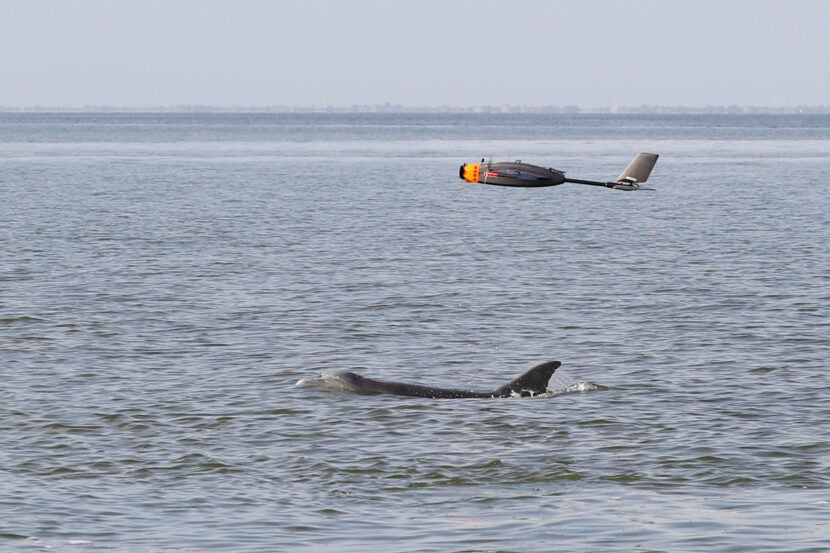
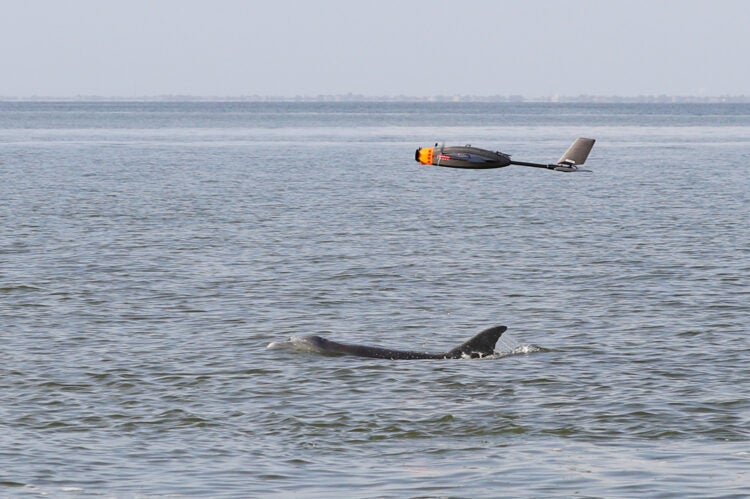
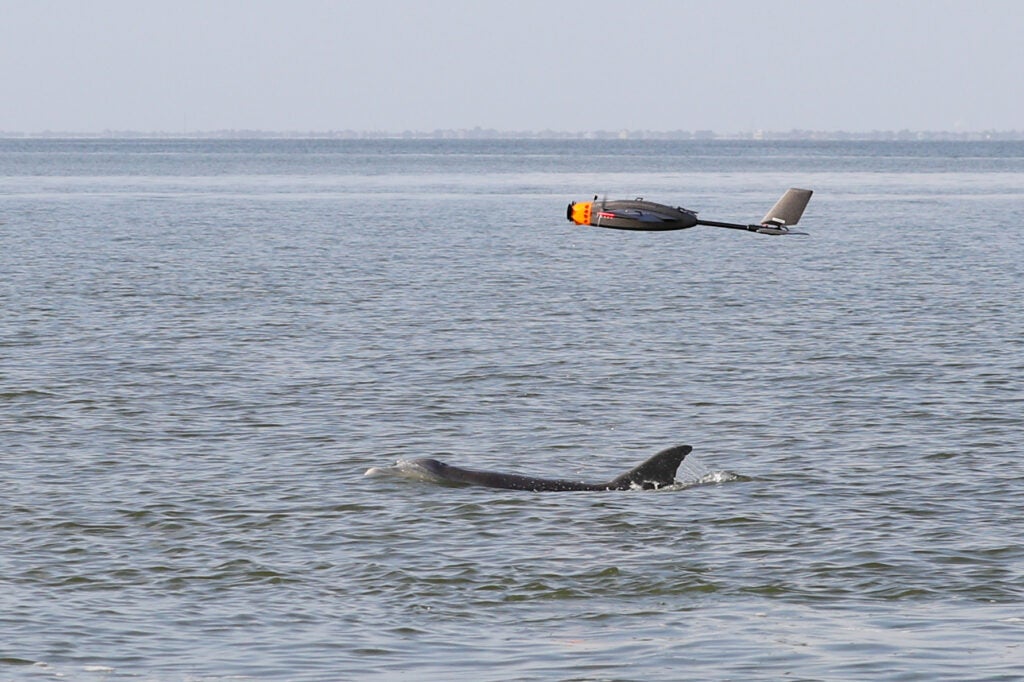
A recently published study I co-authored in Aquatic Mammals takes an important step in that direction. The research tested a custom fixed-wing uncrewed aircraft system called PHASM, or Passive Health Assessment of Sea Mammals. PHASM was designed to fly over dolphins and collect respiratory vapor, or “blow,” using a specialized siphon system.
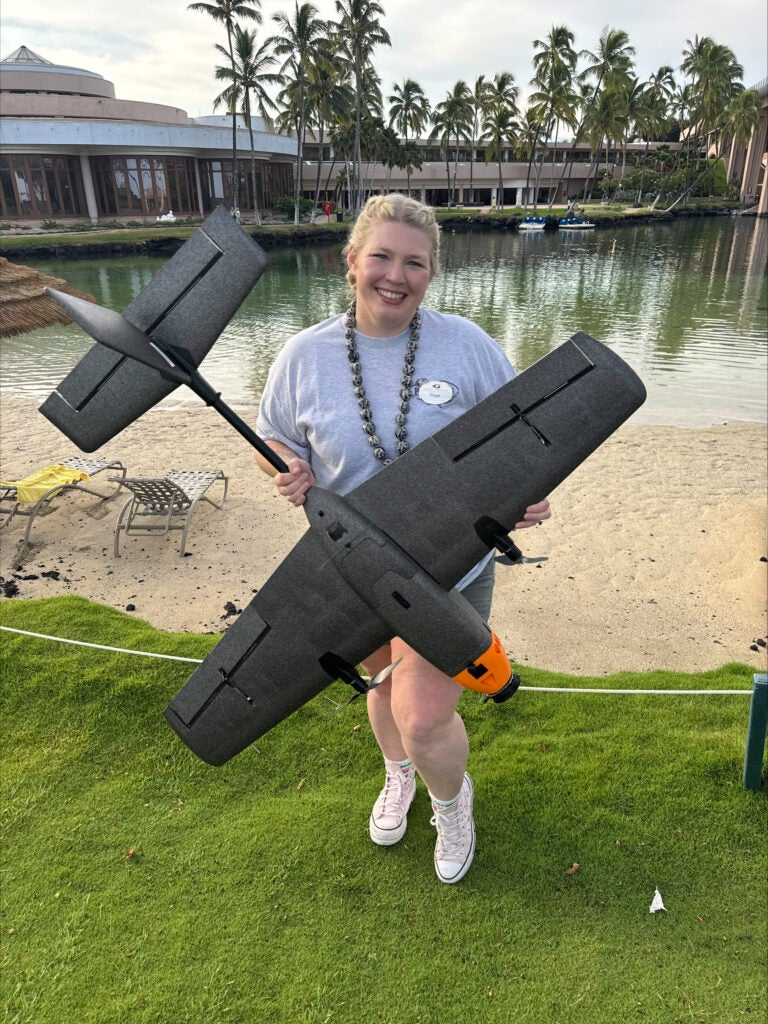
The study took place at Dolphin Quest Hawaii, which also funded the research, and I’m incredibly grateful for their partnership in helping make this work possible.
Collecting respiratory samples from dolphins presents a unique challenge as dolphins release only a small plume when they exhale, and the downward airflow created by rotary drones can interfere with the sample. PHASM was developed specifically to help address those challenges. Its fixed-wing design reduces that downward airflow, while a specialized siphon collects respiratory vapor as the dolphin surfaces and exhales.
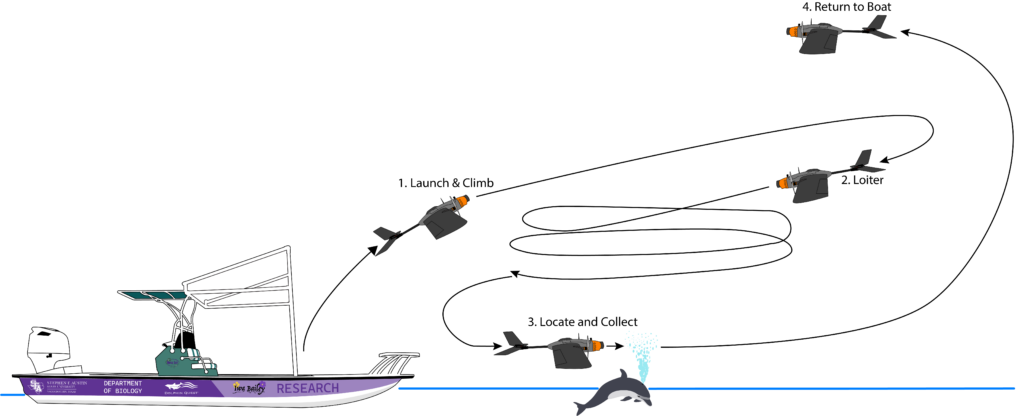
During the study, we evaluated how six bottlenose dolphins responded as PHASM flew overhead across 10 trial days. We looked at behaviors such as whether the dolphins looked toward the aircraft or changed their swimming paths. We found no significant difference in the dolphins’ look responses during PHASM flyovers compared with control trials. The dolphins did show a slight increase in swim-path deviation after the aircraft approached, but we were also able to successfully collect respiratory vapor during the final three days of flight trials.
This marked the first successful collection of dolphin respiratory vapor using a fixed-wing uncrewed aircraft system without a significant behavioral response.
For me, that is what makes this research especially exciting. It shows the potential for technology like PHASM to eventually help us collect meaningful information from free-ranging dolphins while limiting disruption to their normal behavior.
At Georgia Aquarium, we are continuing to develop the siphon technology with the longer-term goal of applying PHASM to dolphins living off the Georgia coast. Respiratory samples could eventually help us study genetics, hormones, pathogens and microbiological contaminants, giving us another tool to better understand dolphin health.
That work is part of a broader effort to learn more about Georgia’s coastal dolphin populations. One piece of that effort is a growing collaboration with Dr. Tara Cox’s lab at Savannah State University.
This fall, I’ll be working alongside the Savannah State team to fly rotary drones over dolphins along the Georgia coast. The work will help us build the spotting and targeting skills needed to eventually position PHASM close enough to collect a respiratory sample.
The drone work will also give us valuable information about the dolphins themselves. We plan to use imagery to estimate population abundance and examine the ratio of calves to adults, helping us better understand whether the population appears to be growing, shrinking or remaining stable.
We are also beginning year-round acoustic monitoring in two coastal areas with different levels of human activity. By listening for dolphins and measuring the surrounding soundscape, we can learn more about where dolphins are spending time and how their habitat use may intersect with human-generated noise.
The drone work, acoustic monitoring and continued development of PHASM are all helping us look at Georgia’s coastal dolphins from different angles. Together, they can give us a more complete picture of the animals, the environments they use and the questions we still need to answer.
The PHASM study is an important technological milestone, but it is also one piece of a much larger effort to better understand the health and population dynamics of dolphins living along Georgia’s coast.
Dr. Paige Stevens-Sanchez is a Research Scientist with Georgia Aquarium’s Research and Conservation team. Her work focuses on cetacean research, including the use of emerging technologies, acoustics, and field-based methods to better understand dolphin health, behavior, and population ecology.
###
Georgia Aquarium is one of the largest aquariums in the world with more than 11 million gallons of water and tens of thousands of animals. Located in Atlanta, Ga., it is a premier animal care and research facility that is accredited by the Association of Zoos and Aquarium, the Alliance of Marine Mammal Parks and Attractions, Humane Certified by American Humane, and a Class R research institution certified by the USDA. By providing guests with unparalleled opportunities to learn about marine life, Georgia Aquarium is dedicated to unlocking the ocean’s wonder for all, providing transformative experiences that inspire a shared responsibility for conserving our aquatic ecosystems.