

NIAGARA FALLS, Ont. (July 21, 2026) –
Several AZA-accredited aquariums collaborate on unprecedented international rescues.
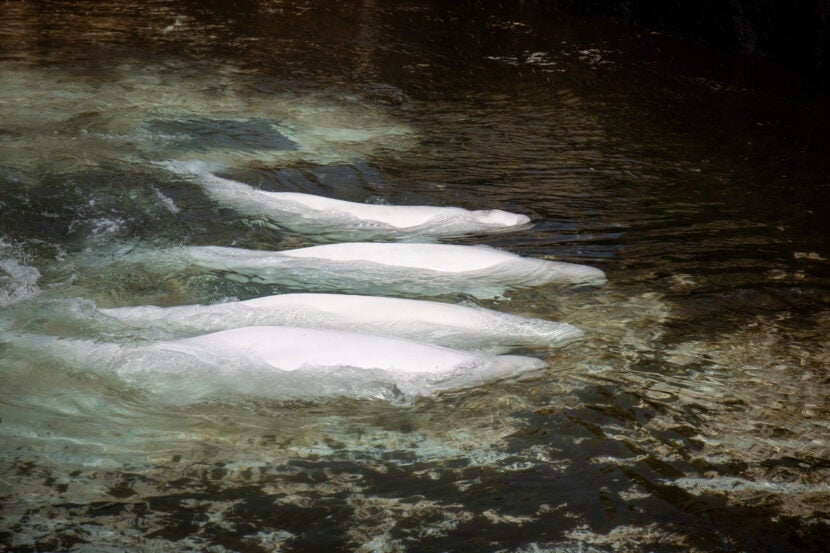
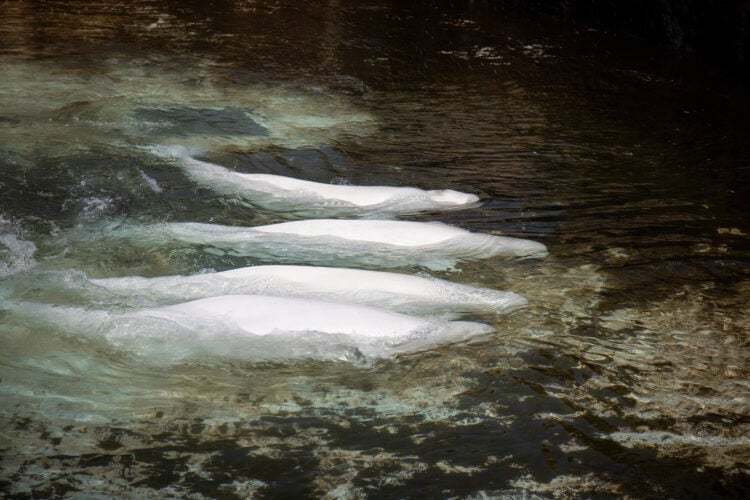
Six beluga whales from Canada have safely arrived in the United States – the first in a coordinated, international rescue effort. The whales are part of a large pod of 30 belugas living at Marineland of Canada, a closed marine park that can no longer support their ongoing care. Several aquariums, all accredited by the Association of Zoos and Aquariums (AZA), were invited to explore a rescue solution for the whales earlier this year. The aquariums were sought out because of their deep knowledge of the species, expert animal care and previous rescue experience.
In specialized, cold-water containers, the belugas were transported both by truck and plane to aquariums in Chicago and San Antonio, Texas. Veterinarians specializing in marine mammal medicine and animal care specialists accompanied the whales on the trip – constantly alongside the belugas to look after them.
Receiving facilities Shedd Aquarium and SeaWorld San Antonio are currently working around the clock to look after the rescued whales, provide immediate care and acclimate them to their new homes. While the whales have arrived safely, transports of this magnitude are difficult, and experts are guarded but hopeful as observations continue.
“This moment marks the next chapter for these rescued belugas,” said Dr. Karisa Tang, lead veterinarian and vice president of animal health at Shedd Aquarium. “Now that they are here, the full attention of our care and veterinary teams is on getting to know these whales and providing whatever supplemental support, treatment and care we can to help them acclimate to their new home.”
Additional aquariums taking in rescued whales from the park include Georgia Aquarium, SeaWorld San Diego, and Oceanografic Valencia in Spain, pending their government authorizations. Mystic Aquarium, though not taking in any belugas, has been supporting this rescue by providing additional capacity and expertise.

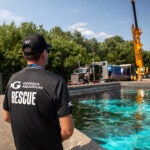
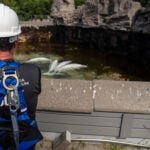
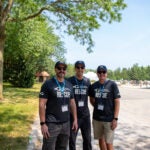
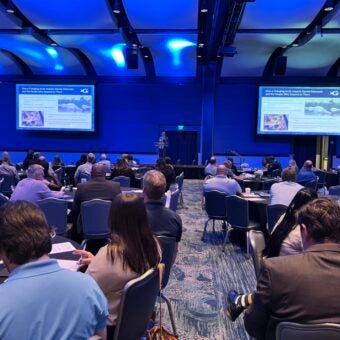
Before the rescue began, experts from all the participating aquariums arrived in Ontario to prepare with the Marineland teams and with one another. This also provided the team with another opportunity to observe the whales, with a specific focus on the first group of rescues. Canadian veterinarians assessed all the animals to confirm their fitness for travel before therescues began. The whales were then transported to the airport and safely loaded onto a 777 aircraft to take-off to their final destinations.
“The rescue started with the needs of the belugas,” said Dr. Chris Dold, chief zoological officer at SeaWorld. “The plan was built, as much as possible, on understanding their overall health, social bonds and multiple other factors. Our plans naturally evolved as we learned more about the whales, and we will remain adaptive and responsive to the whales’ needs as we work to complete this unprecedented rescue.”
The first rescued belugas were chosen to move in sub-pods – formed around preexisting relationships between the animals and allowing bonded belugas to make the move together. As a highly social species, dynamics between the animals are important in providing comfort during transport and as the animals get settled in their new homes.
“Seeing these first beluga whales arrive safely to their new homes is an important milestone, but it’s not the finish line,” said Steve Aibel, SeaWorld San Antonio’s vice president, animals and conservation, who accompanied the first transport. “Our team is laser focused on supporting each whale through this transition with individualized care, patience and observation to ensure their welfare. We’re optimistic about what’s ahead, while recognizing that every animal will adapt on its own timeline.”
While the belugas were cleared for travel by Canadian veterinarians, several knowledge gaps still remain about the whales’ overall condition. The aquariums expect to learn a lot more about the health and condition of the belugas in the coming days and weeks. For now, caretakers are moving at the whales’ pace.
“We will be looking for behaviors like foraging, exploring, eating and socializing – all indicators that the rescued belugas are doing well,” said Dr. Tang. “Our teams will be standing by to jump in at a moment’s notice, should we believe any of the belugas need more urgent attention.”
Both facilities are already home to multigenerational pods of belugas. As the rescued belugas begin to explore their new homes, the aquariums will slowly begin to make introductions between the whales.
At the request of Marineland of Canada—and endorsed by Fisheries and Oceans Canada (DFO)—a collective of AZA-accredited aquariums spent the early part of this year exploring a rescue solution for the whales. This included beluga care and veterinary experts visiting the park to personally evaluate the belugas, talk to the staff caring for them and pour over health records to learn as much as possible about the whales.
On a compressed timeline, experts used this information to explore the feasibility of several rescue scenarios that prioritized safety and the physical and social needs of the individualanimals. The aquariums then delivered a plan to both DFO, Marineland and the National Oceanic and Atmospheric Administration (NOAA) for review and to issue the necessary authorizations required to rescue.
“Helping animals in need is what we do – it’s in our nature,” said Dan Ashe, president and CEO of AZA. “Time and time again, accredited zoos and aquariums step up to provide critical expertise, funding and sanctuary for animals in need. We could not be prouder of how our accredited member aquariums have risen to meet this moment and to welcome these rescued belugas into their care for a lifetime.”
As the rescued belugas continue to acclimate, the broader aquarium group will continue to coordinate on future rescue efforts for the animals that remain at Marineland. The group will take learnings from the first transport and apply them to future moves.
As with the first rescue, details and timelines for additional rescues are expected to shift based on the needs of the animals and will not be shared in advance with the public for the safety and security of all involved.
Visuals: https://personal.filesanywhere.com/guest/fs?v=8e7166885a6372aea16e&C=50
Shedd Aquarium: media@sheddaquarium.org
SeaWorld: mediarelations@unitedparks.com
Georgia Aquarium: media@georgiaaquarium.org
Mystic Aquarium: media@mysticaquarium.org</p
###
Georgia Aquarium is one of the largest aquariums in the world with more than 11 million gallons of water and tens of thousands of animals. Located in Atlanta, Ga., it is a premier animal care and research facility that is accredited by the Association of Zoos and Aquarium, the Alliance of Marine Mammal Parks and Attractions, Humane Certified by American Humane, and a Class R research institution certified by the USDA. By providing guests with unparalleled opportunities to learn about marine life, Georgia Aquarium is dedicated to unlocking the ocean’s wonder for all, providing transformative experiences that inspire a shared responsibility for conserving our aquatic ecosystems.
Shedd Aquarium is a recognized leader in animal care, education, conservation and science
whose mission is to spark compassion, curiosity and conservation for the aquatic animal world.
Every year, Shedd serves as a portal for millions of guests a year, bringing them eye-to-eye with
belugas and bluegills, stingrays, sturgeons and countless other aquatic species. Shedd is an
accredited member of the Association of Zoos & Aquariums (AZA) and a nonprofit organization,
supported by the Chicago Park District, philanthropic leaders and guests from all around the
world. www.sheddaquarium.org
SeaWorld is a leading marine life theme park and accredited zoo and aquarium that provides
experiences that matter while educating and inspiring guests of all ages to care about marine
life. Welcoming millions of guests every year, the parks offer fun and enriching experiences from
up-close animal encounters and year-round educational programs to award-winning
marine-life-themed rides and attractions, special events, and exciting entertainment. For more
than 60 years SeaWorld has advanced the conservation of marine life in and outside its parks
through science, education, and exceptional animal care that is Humane Certified by American
Humane and accredited by the Alliance of Marine Mammal Parks and Aquariums and the
Association of Zoos and Aquariums. SeaWorld is one of the largest marine animal rescue
organizations in the world, helping more than 43,000 animals to date. The SeaWorld
Conservation Fund, a non-profit foundation established in 2003, has provided more than $20
million to nearly 1,400 organizations to advance critical research on every continent. A portion
of park proceeds goes toward supporting these longstanding conservation commitments.
Mystic Aquarium, a nonprofit 501(c)(3) organization, is one of the world's leading aquariums,
offering exemplary care to a variety of species while also serving as the Northeast's premier
marine animal rescue and rehabilitation center. Robust conservation and education
programming and unparalleled visitor experiences strengthen personal connections to the
animals and their environments. Mystic Aquarium's mission is to protect aquatic life and
empower communities to save our oceans, and introduces approximately 800,000 visitors
annually to thousands of animals through structured interpretation, especially curated exhibits,
and hands-on interactions. As a leading research organization, Mystic Aquarium employs a full
staff of scientists engaged in projects focused on our ocean planet's conservation and
sustainability.