

Exploring the Mysteries of Whale Sharks: A Groundbreaking Expedition to Wreck Bay
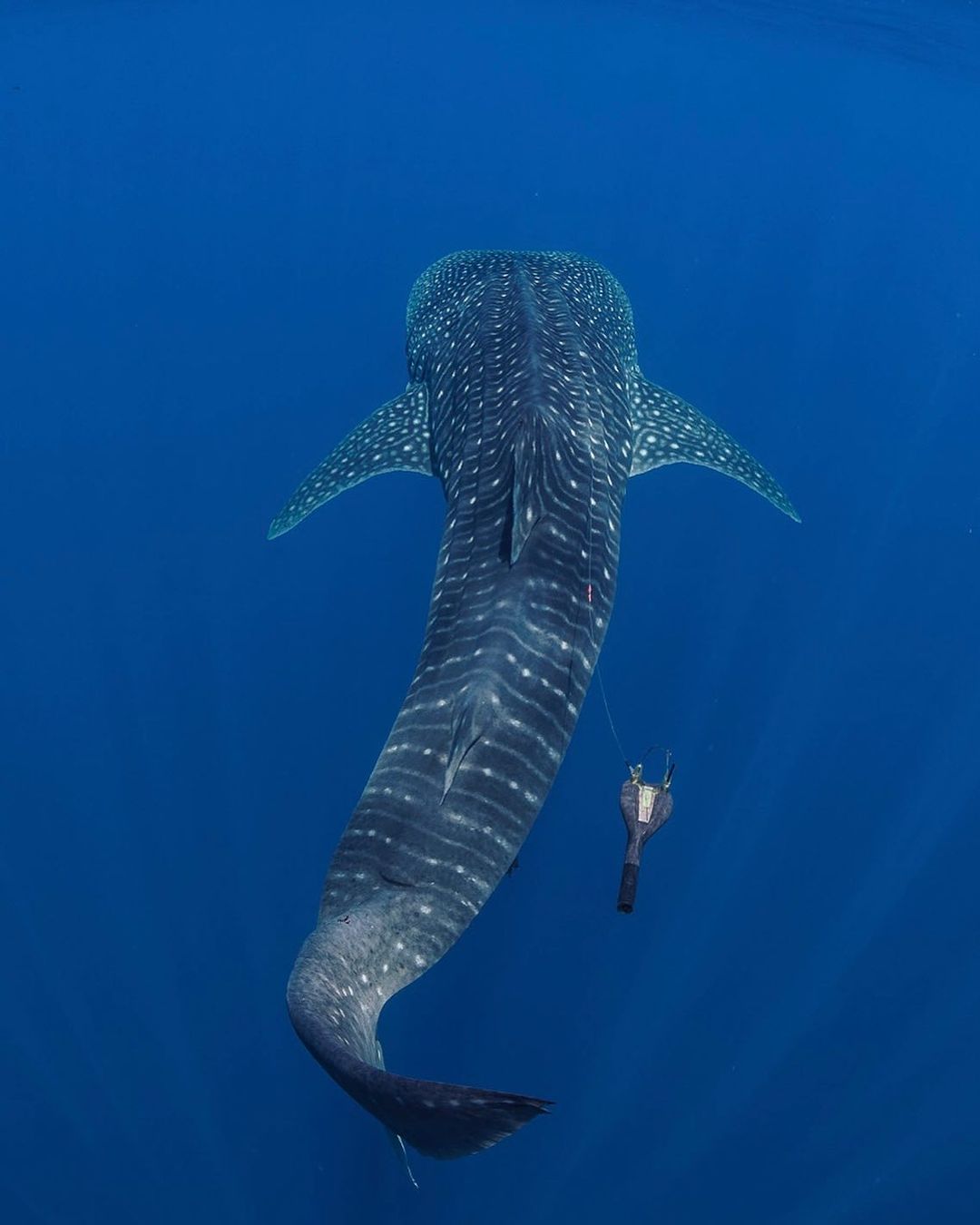
In the remote northern reaches of the Great Barrier Reef lies a previously unknown whale shark aggregation in an area called Wreck Bay. Recently, Dr. Cameron Perry, a research scientist from Georgia Aquarium’s conservation team, embarked on a 10-day expedition to this secluded region. The goal? To deepen our understanding of whale sharks and their elusive behaviors, while also furthering conservation efforts.
A Needle in a Vast Ocean
The story of discovering whale sharks in Wreck Bay is nothing short of remarkable. Finding whale sharks within a large ocean basin is literally equivalent to finding a needle in a haystack. While Ningaloo Reef in Western Australia has long been a hub for whale shark research, the lack of whale shark sightings along the eastern coast represented a large data gap for whale shark populations in the southwest Pacific.
However, researchers from Biopixel Ocean Foundation, Georgia Aquarium’s partner on this project, suspected suitable habitats existed along the eastern coast of Australia. Using environmental modeling—analyzing sea surface temperature, bathymetry, and marine productivity—they were able to identify a potential whale shark habitat. Thus, the first expeditions to Wreck Bay began.
Uncovering the Mysteries at Wreck Bay: Expedition Highlights
Over seven days in Wreck Bay, the research team encountered 45 whale sharks, identifying over 25 unique individuals and nearly doubling previous photo-ID records. But numbers tell only part of the story.
Groundbreaking Research Techniques
We deployed 15 tags on 14 individuals, using a mix of tracking technologies:
- Location tracking tags (SPOT)
- Advanced movement and environmental data tags (SPLASH10)
- Five special deep-dive tags capable of withstanding pressures at 2,500 meters depth
“This trip was incredibly successful,” said Dr. Perry. “Not only did we identify new individuals, but we also deployed 15 cutting-edge tags to track their vertical and horizontal movements, as well as environmental data.”
Particularly noteworthy is the potential to document the deepest whale shark dive to date, surpassing the current record of 1,928 meters.
Why This Matters
Wreck Bay’s story is one of persistence and discovery. For years, researchers believed that whale sharks were confined to Western Australia. Identifying Wreck Bay as an aggregation site has sparked numerous expeditions, providing valuable insights and data on whale shark movement patterns.
“Studying this population is crucial because it fills a critical data gap for whale sharks in the Southwest Pacific,” Dr. Perry explained. “While there are still significant data gaps in our understanding of whale shark populations. This expedition helps us build a more comprehensive picture of their movements, behaviors, and potential threats.”
The team also conducted pioneering research during this expedition, including:
- The first camera tag deployment on whale sharks along Eastern Australia
- Capturing microplastic samples to assess potential threats
- Collection of 17 biopsy samples – which will be used to study the genetics and feeding ecology of whale sharks within Wreck Bay
A Collaborative Effort
Field research on this scale requires a village. Georgia Aquarium, in partnership with organizations like Conservation International, Marine Megafauna Foundation, and Biopixel Ocean Foundation, pooled resources to make this expedition possible.
“This expedition exemplifies the power of collaborative research,” said Dr. Perry. “By combining resources from other organizations, we maximize our potential for discovery.”
The team’s efforts also extended beyond whale sharks. They tagged tiger sharks in southern reefs, collected genetic samples, and tracked sightings of other marine megafauna, such as oceanic manta rays and the rare Omura’s whale.
Looking Ahead
Georgia Aquarium’s work in Wreck Bay is just the beginning. The next steps include analyzing data from the tags, expanding habitat suitability models, and engaging with local communities to deepen understanding of whale shark movements. Plans are already underway to explore new regions further south, with the help of Marlin fishermen who report occasional sightings of these gentle giants.
For Dr. Perry, the mystery of whale sharks is what keeps him passionate about this work. “They’re the largest fish in the sea, yet we know so little about them.”
This expedition underscores Georgia Aquarium’s commitment to advancing marine conservation on a global scale. By bridging gaps in knowledge and fostering collaborations, these efforts help protect not only whale sharks but the ecosystems they call home.
Curious to see where these gentle giants roam? Follow along with BioPixel’s BioTracker to explore the journeys of whale sharks and other sharks across the globe!
For more updates and behind-the-scenes insights into Georgia Aquarium’s conservation work, visit our Newsroom.
Alongside Georgia Aquarium, thank you to the additional funders of this expedition: the Queensland Government’s Threatened Species Research (round 1) program, The Sapphire Project, Blancpain, Conservation International, SeaWorld Foundation, and the Slattery family trust.
Published on Dec 11, 2024.
Tracking Sharks and Rays: A Collaborative Dive into Marine Research with Chi-Ju Yu (Debbie)
In the vast mysteries surrounding ocean life, few creatures captivate the imagination like sharks and rays. But beyond fascination lies the crucial work of research and conservation—a mission that Chi-Ju Yu (Debbie), a postdoctoral researcher from Dr. Shoou-Jeng Joung’s lab at National Taiwan Ocean University, knows well. Her journey in marine research began 13 years ago and has taken her across continents, most recently bringing her to Georgia Aquarium for a collaborative project aimed at improving the understanding and management of these species.
A Passion Born in the Classroom
Debbie’s love for sharks was ignited during a Fisheries Dynamic and Chondrichthyes class taught by Dr. Joung. “Through the course, I realized Taiwan needs more researchers focusing on sustainable fisheries management,” she explains. This realization propelled her to join Dr. Joung’s team and dedicate herself to shark and ray research.
Her postdoctoral work currently involves using acoustic telemetry, a technique that tracks animal movements by attaching tags that communicate with underwater receivers. Supported by the Georgia Aquarium, this project aims to monitor large species, such as whale sharks and Taiwanese wedgefish, within Taiwan’s waters.
Collaborative Research Across Oceans
Debbie’s research goes beyond tracking sharks. She’s working with the Fisheries Research Institute (FRI) and Georgia Aquarium to deploy acoustic receivers around Taiwan. These tools help detect tagged marine animals and gather data on their movements and behaviors. “I’ve also participated in satellite tagging programs for whale sharks and studies on the scalloped hammerhead shark in Western Taiwan,” she adds.
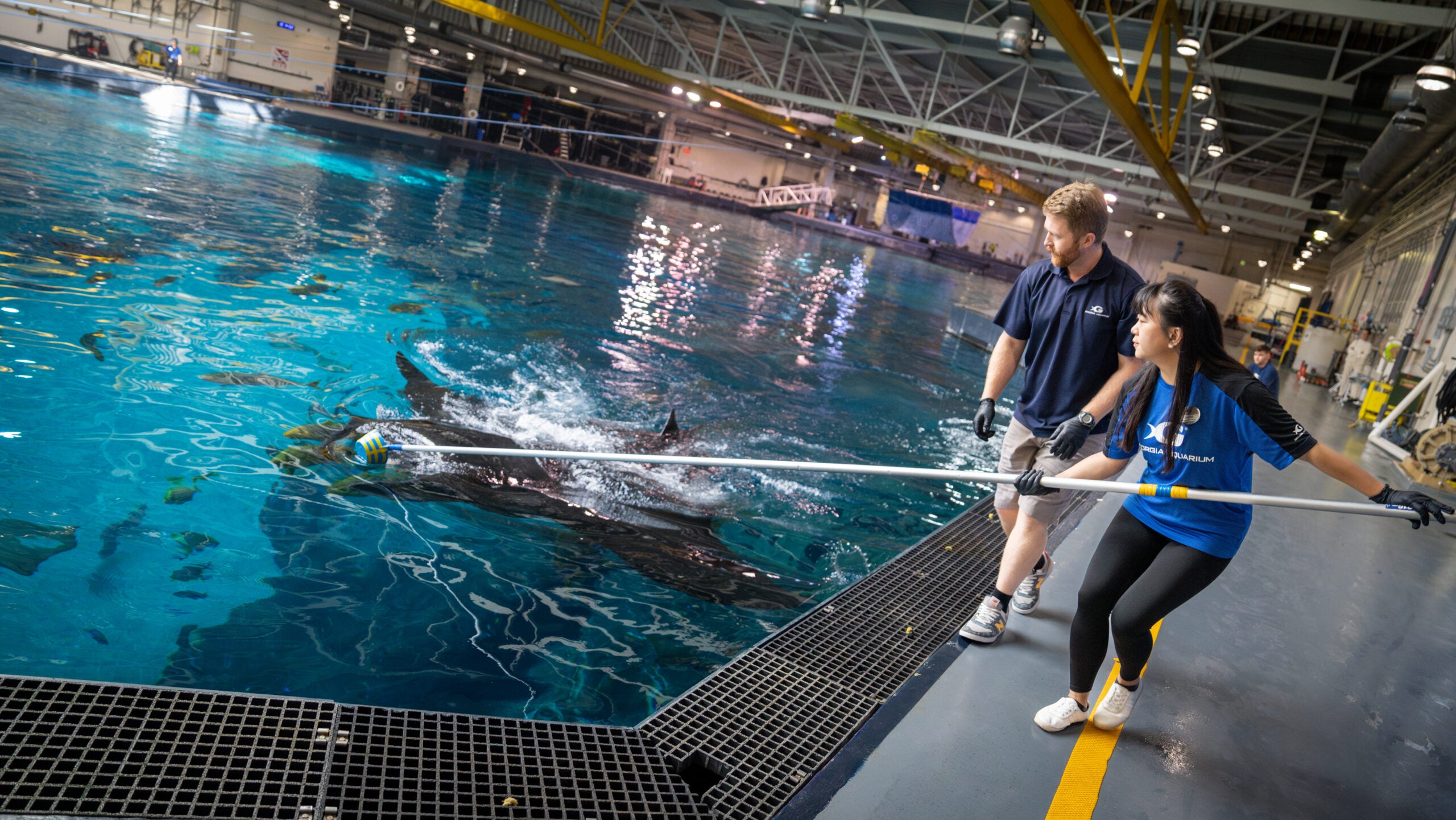
Her visit to Georgia Aquarium offered invaluable insights. “I wanted to observe the Aquarium’s animal monitoring, handling techniques, and fieldwork,” Debbie shares. It also provided an opportunity to explore future collaborative projects. “Research challenges differ between regions, and Taiwan’s work is often limited by funding, staff, and techniques. Collaborating with Georgia Aquarium helps us address these gaps and fosters a mutual exchange.”
Learning from the Experts
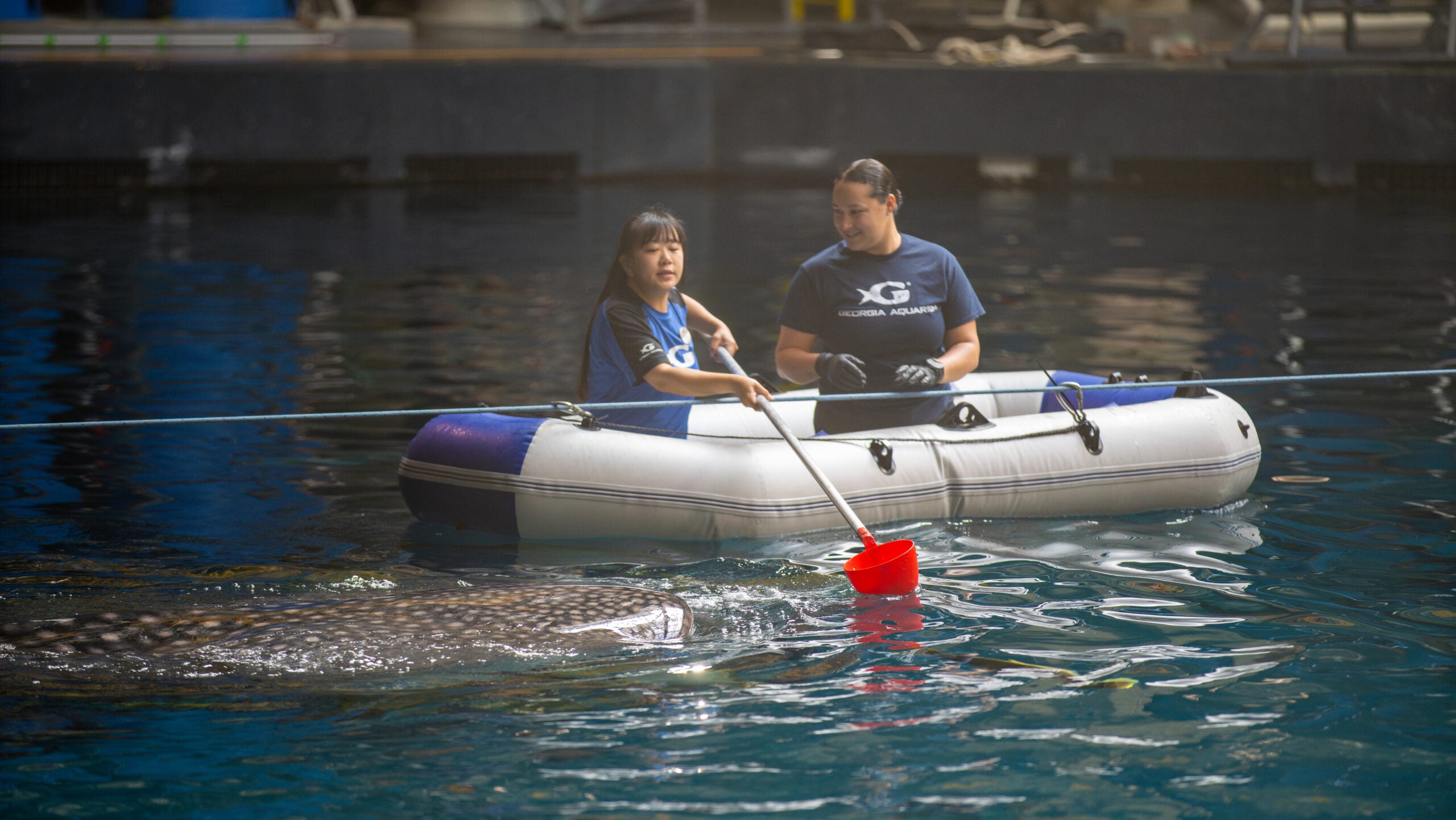
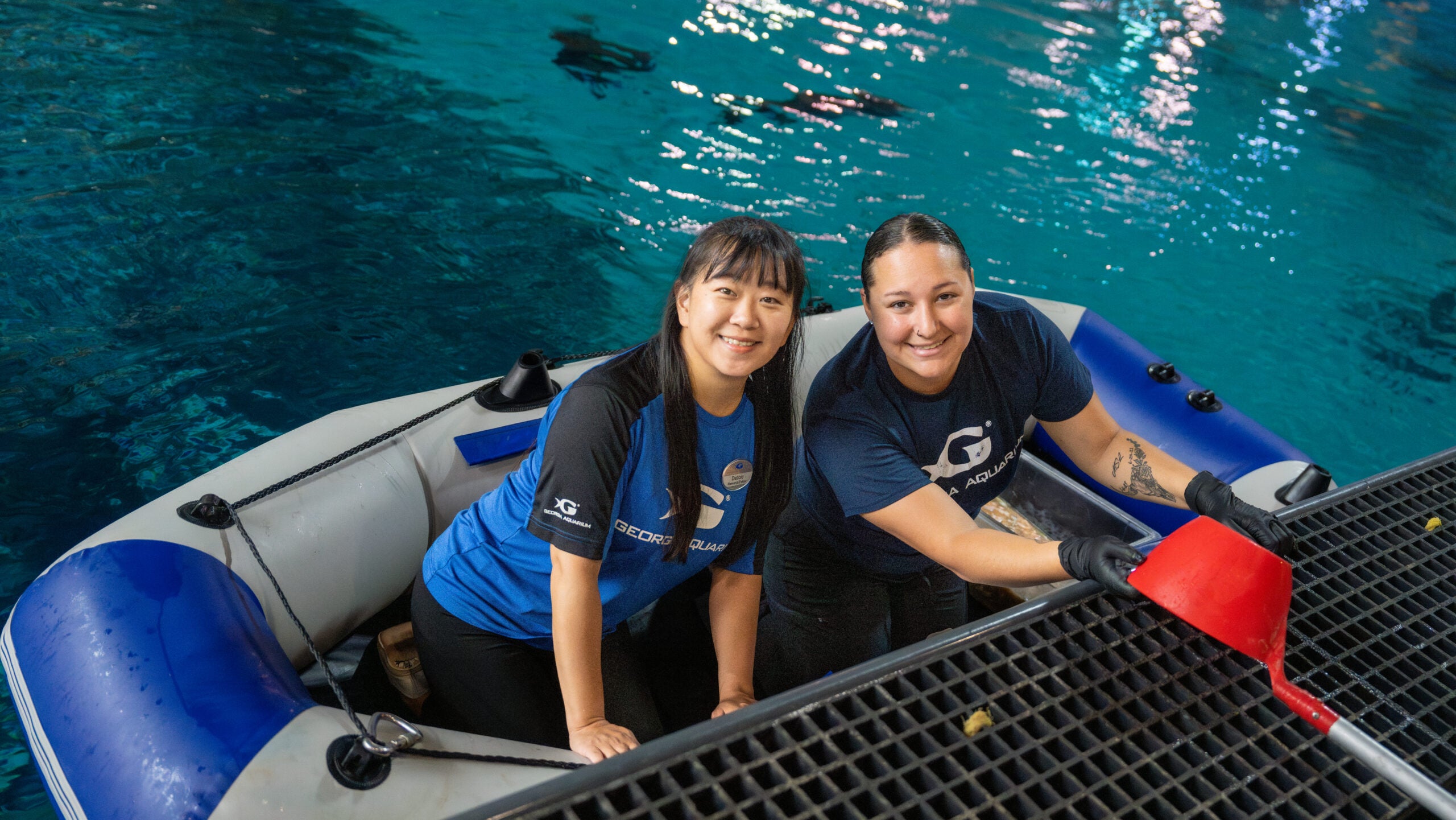
While at Georgia Aquarium, Debbie immersed herself in various activities, from feeding animals in the Ocean Voyager exhibit to assisting with assessments in the field. “I even got to take my first blood sample from a shark and implant an acoustic transmitter with Dr. Lisa Hoopes and Dr. Kady Lyons,” she recalls fondly.
Her time with the Aquarium’s teams reinforced the importance of different monitoring techniques—ultrasound examinations, behavior tracking, and data analysis—all essential tools for understanding marine life. “Although I couldn’t observe everything the Aquarium’s team does, every moment spent here was priceless.”
Facing Challenges in Shark Research
Field research presents unique hurdles, from safety risks to the unpredictability of wildlife encounters. “The biggest challenge is that you can’t always get the sample or data you need,” Debbie reflects. In Taiwan, habitat destruction and fishing practices also pose significant threats to sharks. However, the country has adopted sustainable management strategies, including whole-fish utilization and bycatch monitoring under international guidelines. Despite these efforts, Debbie notes that traditional surveys remain insufficient, underlining the need for continued research and international collaboration.
A Global Vision for Shark Conservation
Debbie’s work highlights how acoustic tracking programs foster global conservation efforts. “Our receivers might detect species tagged by other research teams, and our tagged sharks could be tracked in other regions,” she explains. Connecting nations like Taiwan, Australia, the Philippines, and Japan could yield crucial insights into the movement patterns, population structures, and life stages of marine animals. “These collaborative efforts will help us develop sustainable resource management strategies.”
Priceless Memories and a Hopeful Future
For Debbie, her time with Georgia Aquarium wasn’t just about research—it was also about meaningful experiences. “I saw how the Ocean Voyager team creates unique feeding plans for the whale sharks and conducts regular health checks. I even got to dive with the team and assist in training activities.”
Her gratitude for the experience is evident. “This opportunity to learn and explore means so much to me. I hope to meet everyone again soon, and they’re always welcome to visit me in Taiwan.”
Debbie’s work is a testament to the power of collaboration in advancing marine conservation. With every tag deployed and every data point collected, she moves one step closer to ensuring the future of these majestic creatures—both in Taiwan’s waters and across the globe.
Published on Nov 19, 2024.
Honoring Bernie Marcus’s Legacy
Georgia Aquarium honors the life and legacy of our founder, Bernie Marcus. His vision and generosity made Georgia Aquarium a reality, transforming it from a dream to a world-class destination that has welcomed over 40 million visitors. We are thankful for his support and vision and look back in gratitude on his incredible achievements.
Bernie Marcus dedicated his life to philanthropic causes and is the reason Georgia Aquarium exists today. What began as a vision to build an aquarium in downtown Atlanta, as a gift back to the city that gave him so much, became an endeavor that changed not only the city but the aquarium industry as a whole.
Through his imagination and tenacity, he conceptualized and created Georgia Aquarium. His commitment to excellence drew together world-class experts in animal care, research, and aquarium design, creating a place where guests from around the world could experience the wonders of the ocean firsthand. His vision for a transformative institution helped revitalize downtown Atlanta, turning it into a lively center for tourism, education, and community engagement. Through his leadership, the Aquarium became a beacon of discovery and conservation, inspiring millions and igniting a spirit of stewardship for aquatic life.
Bernie envisioned Georgia Aquarium as a place for all, a space where everyone could experience the magic of the ocean, regardless of background. He especially valued access for young minds, creating opportunities for school children to visit, learn, and be inspired. Since opening, Georgia Aquarium has welcomed nearly 1.7 million students on field trips. Through outreach programs, the Aquarium has connected with over 25,000 students, taking marine science beyond our walls and into the community. This dedication to education was at the heart of Bernie’s mission, ensuring that future generations grow up with a passion for our oceans and a drive to protect them.
We are forever grateful for his vision, his generosity, and his determination. We extend our heartfelt condolences to his wife, Billi, his family, and all who cherished him. Bernie’s impact will forever be felt here at Georgia Aquarium.
Published on Nov 12, 2024.
Is Georgia Aquarium’s Aqua Pass Right for You?

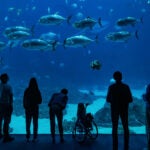
Experience Georgia Aquarium all year long for the price of a single-day ticket! With Aqua Pass, you can return again and again throughout the year to enjoy new animals, exhibits, presentations, and seasonal events like Glow Nights, Haunted Seas, and Holidays at Georgia Aquarium. Explore our underwater world—from walking through the 100-foot Ocean Voyager tunnel to cheering on sea lions and dolphins. Don’t miss a moment of wonder. Passes are valid through December 31, 2026. Blackout dates apply.* Not valid with other discounts or special offers. Admission to select special events, parking, food, and merchandise not included.
The Benefits of the Aqua Pass
Value Beyond Compare
Explore nine immersive galleries with thousands of animals to discover, celebrate the magical transformation of seasonal events, and enjoy unforgettable experiences again and again. With only a few blackout dates, this pass offers limitless opportunities to experience all that Georgia Aquarium has to offer, making it an exceptional value for aquatic enthusiasts and families alike.
A year of endless wonder—all in one pass! Our Aqua Pass offers you unlimited* visits to the Aquarium for an entire year, all for the price of a single-day ticket. You’ll enjoy access to all nine of our unique and immersive galleries, daily sea lion and dolphin presentations, plus our seasonal events—all for one great value. *Blackout dates apply. Reservations are required for each visit.
Endless Adventures
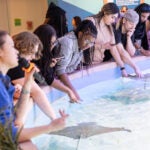
Did we mention the nine galleries, featuring thousands of animals and hundreds of exhibits? That’s endless photo opportunities to capture the awe and amazement of seeing your favorite aquatic animals. Witness captivating animal presentations that showcase the intelligence, agility, and grace of our resident dolphins and sea lions. Become stewards of the ocean as you learn about our thousands of unique animal species and how each contributes to the health and vibrancy of our world’s ecosystem.

“Georgia Aquarium is truly one of my happy places, and I can’t wait to take my daughter here for the first time, hopefully soon! 🥹💗 I hope she loves it as much as I do!!”
From the popular Ocean Voyager tunnel to coral walls, penguins, otters, and more, the Aqua Pass unlocks access to a world-class experience. With so much to explore, it’ll keep you coming back again and again.
Supporting a Noble Cause
Did you know Georgia Aquarium is a 501(c)(3) nonprofit organization? By choosing the Aqua Pass, you’re directly supporting our mission of aquatic education, conservation, and research worldwide. Every purchase helps directly fund our daily operations and programs dedicated to preserving our oceans and marine species. Through your Aqua Pass purchase, you become an essential part of our commitment to a sustainable future for our planet’s aquatic ecosystems.
↦ Learn more about our ongoing research and conservation efforts.
So grab your Aqua Pass today and join us for a year-long journey of discovery, learning, and wonder! With the Aqua Pass, you’re not just visiting a world-class attraction—you’re becoming part of our mission to protect, inspire, and celebrate marine life. Dive in today, and let your next visit be the first of many!

Important Details
Reservations are required for each visit.
Blackout dates apply—check our website for the full list.
Pass covers general admission to galleries and presentations; it does not include select special events, parking, food, or merchandise.
The pass is available to everyone (not just Georgia residents).
Want More Flexibility and Even Better Savings? Consider Membership
We updated our membership tiers and inclusions to ensure everyone has an option that fits their needs and budget. Our Family Premium and Family Plus Premium memberships now include flexible guest memberships, allowing you to bring family and friends along anytime.
At Georgia Aquarium, membership opens the door to additional experiences, discounts, and special event access, providing an even more immersive and enriching experience. With three unique membership tiers, there is a perfect fit for every family and individual.
Aqua Pass holders can upgrade to a membership at any time!
Georgia Aquarium Lends a Helping Hand in Walrus Rehabilitation Efforts
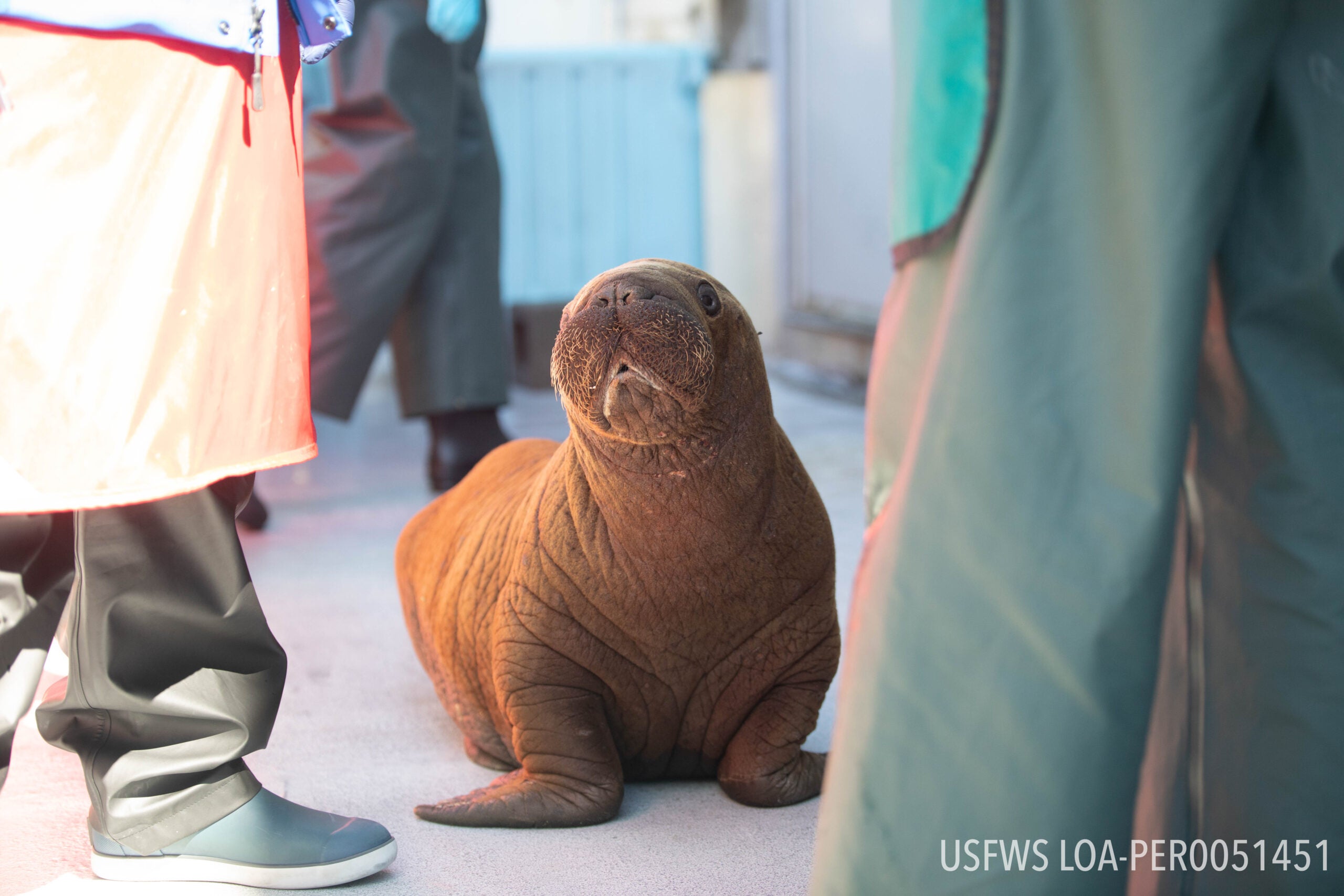
At Georgia Aquarium, conservation and rehabilitation efforts extend far beyond the walls of our exhibits. This commitment was recently put into action when we partnered with the Alaska SeaLife Center to help care for an abandoned walrus calf that needed immediate, specialized attention.
 A Calf in Need
Earlier this summer, the Alaska SeaLife Center (ASLC) was alerted to a walrus calf in distress, stranded without its mother, and in need of urgent care. The calf, estimated to be just a few weeks old, was dehydrated and underweight, requiring round-the-clock attention from the ASLC team. Walrus calves, who typically remain with their mothers for up to five years, are particularly vulnerable when orphaned. Their survival depends on specialized 24/7 care.
Pacific walruses are a highly social species, often found in tightly huddled herds, lying in direct contact with one another. Because of this social need, the rehabilitation team must offer 24/7 companionship and contact while also providing intensive health support. This kind of care and need for close contact with humans means that any orphaned walrus calf admitted to rehabilitation will not be a candidate for release. However, they will continue to receive incredible care and serve as an important ambassador for their species, raising awareness about the challenges faced by Pacific walruses and the ecosystems they live in.
Recognizing the need for additional hands-on expertise, ASLC contacted its network of partners, including Georgia Aquarium.
Georgia Aquarium’s Role
As a key partner in wildlife rehabilitation efforts, Georgia Aquarium was eager to assist. Our team has worked closely with the ASLC in the past, and this case was no different. We provided resources and expertise, ensuring that the calf received the best possible care. The partnership between Georgia Aquarium and the ASLC is based on a shared commitment to protect marine species, particularly those in dire situations like this young walrus.
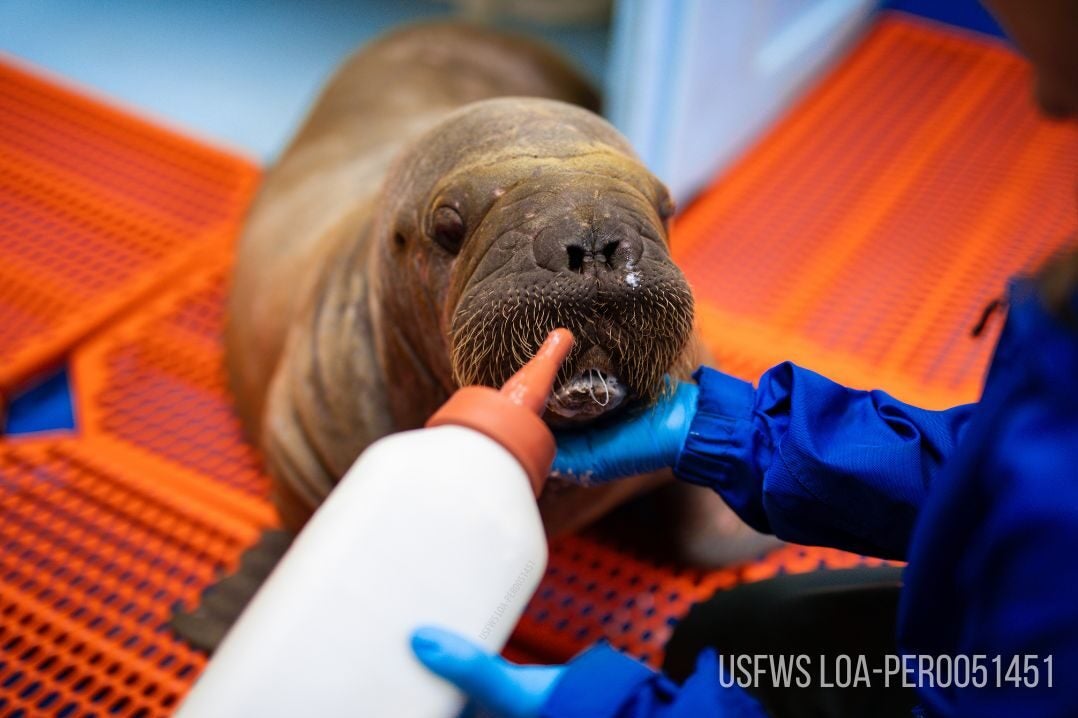
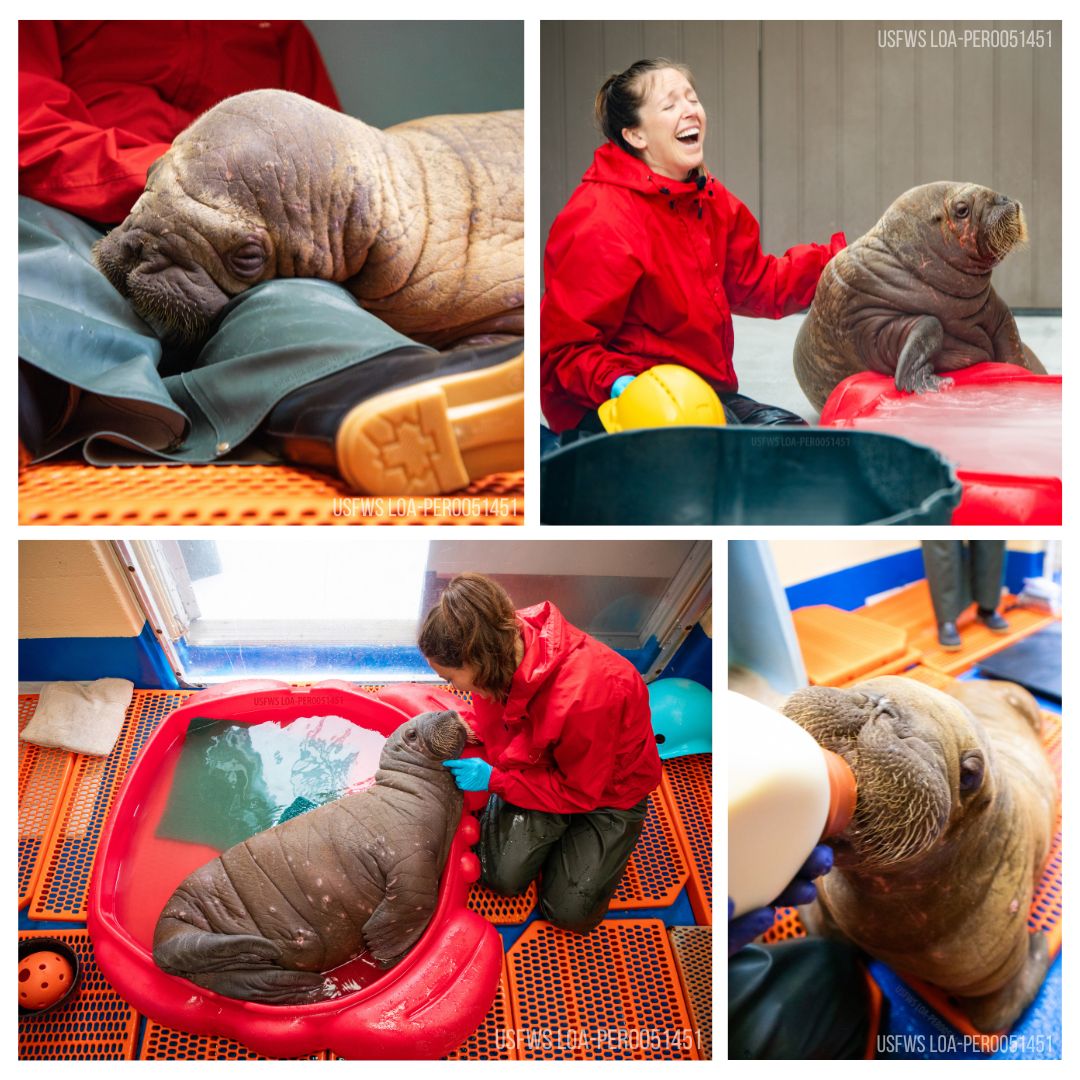
Over the past few months, several of our animal care staff made the trip from Georgia to Alaska to help care for the walrus calf around the clock. Our team helped to create and follow a personalized care plan, which included bottle feedings of a formula mimicking walrus milk, enrichment activities to stimulate her development, and regular health check-ups.
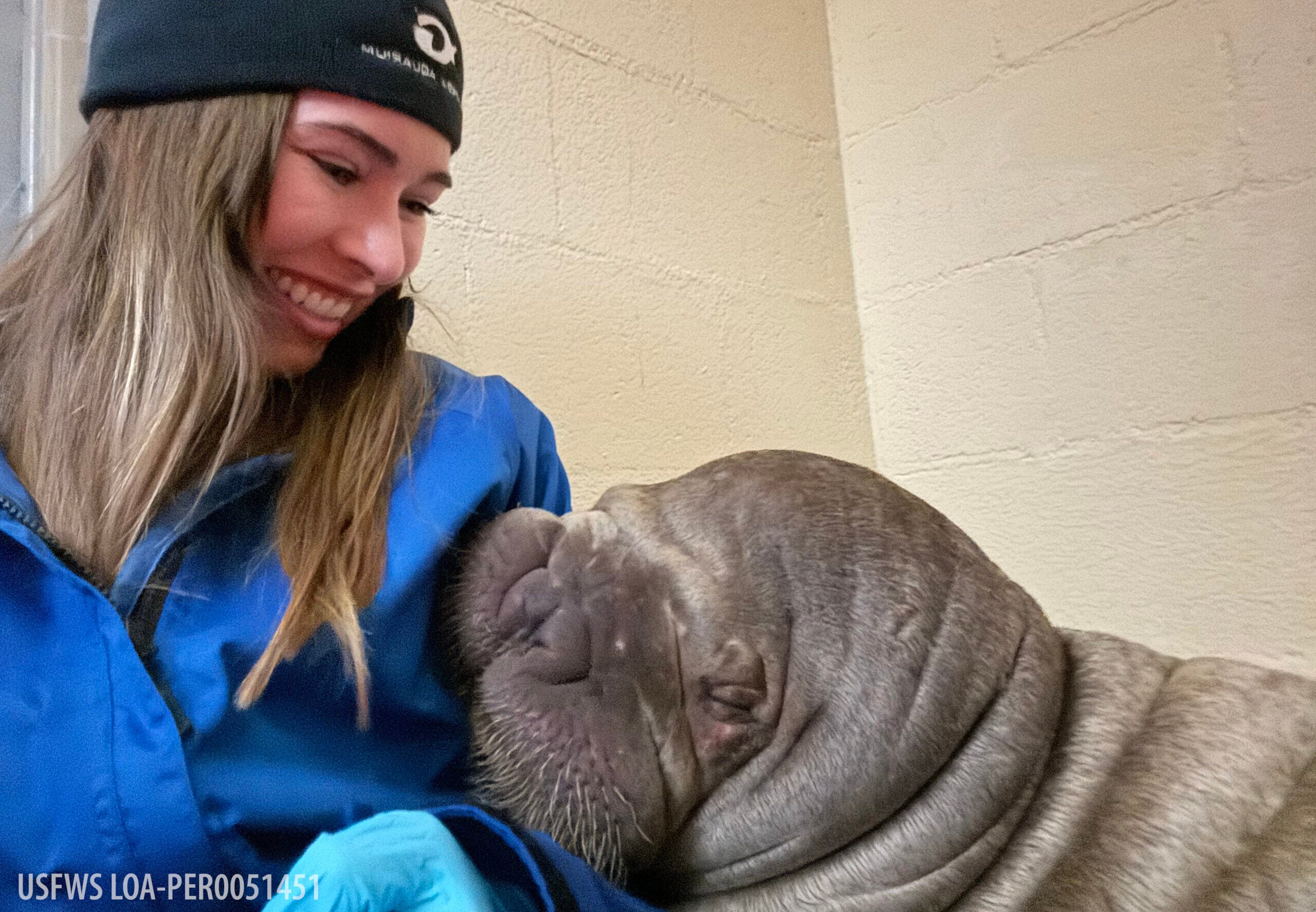
“Uki is such an incredible walrus and serves as an important ambassador for her counterparts,” said Jaclyn Andrews, assistant trainer at Georgia Aquarium. “My favorite part about helping with Uki’s intensive, round-the-clock rehabilitation would be acting as her surrogate, preparing and feeding her bottles, and building a relationship with her. Seeing her seek me out for physical comfort (walrus snuggles) was a rewarding experience. I am forever grateful to be a part of her amazing story.”
This type of collaboration is critical in the world of wildlife rehabilitation. Sharing knowledge and support can have a huge impact on animal welfare in current and future rehabilitation.
 What’s Next for the Walrus Calf?
After weeks of intensive care, the walrus calf showed remarkable signs of improvement.
A nationwide group of walrus and marine mammal experts from AZA’s Marine Mammal Taxon Advisory Group (TAG) determined that SeaWorld Orlando was the best setting for the calf, officially named Ukiaq -“Uki” (pronounced oo-kee) for short. Her name, “Ukiaq,” translates to “autumn” in the language of the Iñupiaq people who live in the area of northern Alaska where she was first found. This consensus decision prioritized her social needs, ensuring she joins a diverse social group of walruses, including an adult female walrus who has experience with walrus calves and could be a potential surrogate mother for Uki.
She recently moved to her permanent home at SeaWorld Orlando, where she will continue to receive support as needed and ensure every opportunity to grow and recover.
ASLC Animal Care Specialist Halley and a veterinarian were with Uki for her entire journey to Orlando and stayed with her for a few days to make the transition as smooth as possible. Halley reported that Uki is settling in well and already loves her new pool and enrichment toys.
We are excited to see Uki continue to be an incredible ambassador for her species. The ASLC will continue to be involved with Uki’s journey and care, but the majority of her updates will come from her new caretakers at SeaWorld Orlando.
A Shared Commitment to Conservation
The efforts surrounding Uki underscore the importance of partnerships between marine conservation organizations. With each successful rescue and rehabilitation, institutions like Georgia Aquarium and the Alaska SeaLife Center move one step closer to securing a better future for marine wildlife.
Check out Georgia Aquarium’s ongoing efforts to protect marine wildlife on our Newsroom.
For the latest updates on Uki, follow SeaWorld Orlando on social.
Published on Oct 17, 2024.