

St Helena Island Recognized as Mission Blue Hope Spot

In the middle of the South Atlantic Ocean between Angola and Brazil lies a remote volcanic
island of a mighty 47 square miles (121.7 square kilometers). Discovered uninhabited in 1502 by
the Portuguese, St Helena Island became a British Overseas Territory in 1659 and is now home
to 4,439 residents (2021 Census). Due to its remote geographic location and small population,
the island has not suffered the environmental degradation commonly seen in other blue places
around the world. Recognizing this, the St Helena National Trust, and local and UK governments
are working in tandem to maintain a vibrant and healthy future for both the island’s wildlife and
human inhabitants.

International marine conservation non-profit Mission Blue has named St Helena Island a Hope
Spot in honor of the island’s ongoing initiatives to manage and monitor its marine environment
as well as to grow a sustainable economy.

Dr. Sylvia Earle, founder of Mission Blue, says, “This marine protected area and new Hope Spot
of nearly half a million square miles now faces pressures largely outside its control from rapidly
changing climate, invasive species and pollution. By becoming a Hope Spot, St Helena can act as
a beacon to the rest of the world. Although geographically isolated, it is deeply ecologically
connected to many distant realms, and indeed, other Hope Spots.”

Helena Bennett, Director of the St Helena National Trust and Dr. Dayne Buddo, Director of
Global Policy of Georgia Aquarium are recognized as the Hope Spot Champions, as these
organizations have been working together with the St Helena Government for 10 years to
implement marine science and monitoring programs for the island.

“The remote island of St Helena is a very special area of marine biodiversity and represents true
hope for ocean resilience,” said Dr. Dayne Buddo, Director of Global Ocean Policy at Georgia
Aquarium in Atlanta. “With steadfast resource conservation, this area should withstand the
many issues that our ocean faces and demonstrate to the world the immense value of islands.”
“The Ocean has a way of enchanting us, capturing our imagination and intriguing us with
mysteries of the unexplored,” said Helena Bennett, Director of the St Helena National Trust.
“Our island and its surrounding waters are steeped in our culture, and traditions and have
played a massive role in our history’s timeline since our island’s discovery in 1502, evolving our
way with a sense of nostalgia and a feeling of belonging and home”.

In September 2016, the island of St Helena legally designated its entire exclusive economic zone
(EEZ), nearly 450,000 km2, as a marine protected area (MPA), safeguarding species like whale
sharks (Rhincodon typus) and green sea turtles (Chelonia mydas).

Dr. Buddo says, “This Hope Spot can provide a window to the rest of the world to see how
sustainable use of fishable resources (food security) can be accomplished.” He continues, “I
hope these stories will resonate throughout all levels of society of how local fishers, NGOs and
heads of governments can collectively work together towards achieving the ‘ocean we want’ –
an ocean that is healthy, balanced and thriving for generations to come.”

“St Helena has an extraordinary combination of endemic species, natural beauty and the only
known whale shark breeding location in the world. The Mission Blue Hope Spot designation,
combined with the dedication of the local community to marine conservation, shows how we
can save the ocean when we work together,” said Dr. Alistair Dove, Vice President of Science
and Education at Georgia Aquarium.

St Helena’s remoteness and age have resulted in the development of a unique assemblage of
marine species, creating an oasis in what would otherwise be a vast open ocean. The island’s
narrow inshore area and offshore seamounts provide a unique habitat for a wide variety of
marine species. More than 800 have been identified, 18 of which are endemic, and scientists
believe there could be many more yet to be described. Offshore seamounts provide feeding
opportunities for pelagic species and seasonally migrating megafauna including whale sharks
and humpback whales (Megaptera novaeangliae).

The St Helena Island Government has taken the lead on evidence-based scientific research,
policy, and legislation, and has just published a new Marine Management Plan (MMP) for 2023
to 2027, supported by the UK Government’s Blue Belt Programme.

The Hope Spot Champions’ and local government’s goals for the island are ambitious. Delivering
the objectives and actions of the Marine Management Plan will facilitate continuous community
engagement and capacity building to foster ocean stewardship, local ownership, and sustained
environmental consciousness across the island. According to the MMP, a key value of the
marine protected area is “Economic benefits and opportunities derived from the natural
environment [are to be] underpinned by robust evidence and strong environmental
consciousness.”

Limited human pressure on the waters around this island means this oasis of biodiversity is in
excellent condition, and the community of St Helena is rightly proud to keep watch over such a
beacon of hope to others, and one that has been attracting the attention of eco-minded
tourists. The island’s narrow continental shelf allows for whale sharks to come close to the
shore, and snorkeling to see them has become both a popular ecotourism activity and an
important economic opportunity.

While local marine tour operators have been voluntarily complying with an accreditation
scheme since 2016, new marine regulations were introduced earlier this year. Now, with the
formal licensing of all operators, and full support from local marine tour operators the island
can look forward to growing its marine tourism sector responsibly, championing the best of the
Hope Spot and inspiring visitors in the process.

The UK Foreign, Commonwealth and Development Office’s Minister for the Americas and the
Caribbean, David Rutley MP says “St Helena is home to a range of unique marine species and
habitats creating breath-taking coastal scenery and underwater environments. I’m proud to see
St Helena’s MPA designated as a ‘Hope Spot’. This speaks to the fantastic working collaborations
St Helena has with its local community, Government and NGOs in creating ocean conservation
consciousness through sustainable use”.

Craig Yon, owner of Dive St Helena says “I’m delighted that there is a structured approach to
ensure we, the tour operators, are able to showcase our marine environment in a safe and
friendly manner. Being accredited as a marine tour operator by the St Helena Government,
emphasizes the healthy working relationship earned over the years between the tour operators
and the local authorities to protect the environment for future sustainable use”.
Georgia Aquarium Receives First Gold Certification from WheelChariot

WheelChariot is a platform focused on improving accessibility for people with disabilities.

Georgia Aquarium has achieved a remarkable milestone by becoming the first Gold Certified organization recognized by WheelChariot, a pioneering platform dedicated to promoting accessibility for people with disabilities. This distinctive certification underscores the Aquarium’s unwavering commitment to inclusivity, making it a leading accessible destination in the Atlanta metro area.


WheelChariot is a local Georgia-based organization, founded by graduates from the Georgia Institute of Technology, whose focus is forming a more inclusive society where everyone has equal access to goods and services. WheelChariot’s platform provides businesses with the tools and insights needed to enhance accessibility and foster an environment of inclusion. By providing a unique opportunity for businesses to receive first-hand feedback, engage with and learn from a vibrant community dedicated to improving accessibility; WheelChariot helps businesses, like Georgia Aquarium, improve their accommodations based on real user experiences.


“We at WheelChariot are deeply grateful and immensely proud of Georgia Aquarium’s commitment to accessibility and inclusivity,” said Gabriel Jones, CEO of WheelChariot. “Their decision to trust in a homegrown initiative spearheaded by Georgia entrepreneurs speaks volumes of their dedication not only to superior guest experiences but also to fostering a supportive local community. As passionate advocates for Atlanta, we dream of seeing our beloved city become a leading hub for accessible tourism. Georgia Aquarium’s trailblazing achievement in receiving the first WheelChariot Gold Certification not only marks a significant milestone in their journey towards inclusivity but also sets an exemplary model for others. We fervently hope that their leadership and commitment inspire many more establishments to join us in this vital endeavor. Together, we can make Atlanta a beacon for accessibility and inclusivity, ensuring that every visitor, regardless of ability, enjoys the rich, diverse experiences our city has to offer.”


Through the WheelChariot for Business initiative, establishments like Georgia Aquarium not only have the opportunity to highlight their commendable efforts, but also gain public-facing certification. This certification allows businesses to proudly promote their commitment to inclusivity, assuring visitors of their dedication to providing accessible experiences for all.


In 2018, Georgia Aquarium became the first aquarium designated as a Certified Autism Center.

Last fall, it was named KultureCity’s Sensory Inclusive Venue of the Year for training more than 80% of staff and volunteers on compassionately and effectively working with guests on the autism spectrum and providing sensory features for those who need or want them. Georgia Aquarium is also honored to have hosted more than 2,900 military personnel and guests who have been physically, emotionally, or mentally wounded through their Veterans Immersion Program, offering swims or dives 365 days a year. Now, being recognized as the first WheelChariot Gold Certified organization the Aquarium’s hopes to continue expanding efforts to make their facility accessible to all by setting the example of best practices. This Gold Certification recognizes Georgia Aquarium’s exceptional efforts to make their facility accessible to all through the wide range of accessibility measures, including but not limited to: providing wheelchairs, golf carts, tactile and specialized exhibit information, and a sensory room. The Aquarium’s encounter programs are also all designed with accessibility in mind, ensuring every guest the opportunity to participate in these experiences.


“We are honored to be the first organization to receive Gold Certification from WheelChariot,” said Sam Herman, director of guest programs at Georgia Aquarium. “Every year, we see millions of guests come through our doors. Our commitment to accessibility extends beyond the basics, demonstrating our passion for providing a memorable and enriching experience for every visitor. Georgia Aquarium’s mission is to inspire awareness and preservation of our aquatic world, and we believe that every individual, regardless of their abilities, should have the opportunity to be a part of this mission.”


Georgia Aquarium’s journey toward achieving WheelChariot Gold Certification reflects on their incredible dedication to creating a more accessible and inclusive environment for guests with disabilities. With this new achievement, Georgia Aquarium aims to set a new standard for accessibility in the metro Atlanta community.


Together, WheelChariot and Georgia Aquarium are taking a significant step forward in setting a higher standard for accessibility in Atlanta, and hope this certification serves as an inspiration for other businesses looking to promote accessibility and inclusivity.


To learn more about Georgia Aquarium’s accessibility offerings, please visit georgiaaquarium.org.


For more information about WheelChariot, please visit wheelchariot.io.


For photos and videos, please see below:

Photos

Video


For further information or media inquiries, please contact:

Gabriel Jones

CEO, WheelChariot

(678) 730-4778

gabriel@wheelchariot.io


Hannah Hardwick

Public Relations Specialist, Georgia Aquarium

hhardwick@georgiaaquarium.org

Marine Mammal Longevity Study Reveals Remarkable Advances in Animal Welfare

Marine mammals in modern zoos and aquariums are living two to three times longer than wild counterparts, according to a new study.

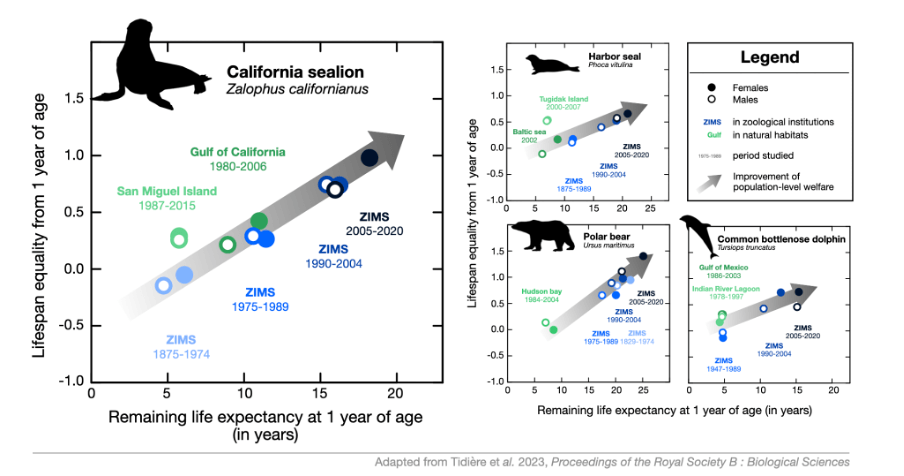
A new study provides compelling evidence that animal care and management practices at zoos and aquariums have significantly improved over time. The study, led by Species360 and University of Southern Denmark Research Scientist Dr. Morgane Tidière in collaboration with 41 co-authors from academic, governmental, and zoological institutions around the world, including Georgia Aquarium, is the first to examine life expectancy and lifespan equality together as a proxy of population welfare in marine mammal species.


The study also found that marine mammal species live longer in zoological institutions than in the wild as a result of advances in animal care practices centred on animal welfare. The results have been published in Proceedings of the Royal Society B: Biological Sciences.


Study authors used the same statistical methods used to assess improvements in human population welfare to analyse data from the world’s largest database of information on wildlife in human care – the Species360 Zoological Information Management System (ZIMS).


The study examined 200 years worth of data from ZIMS, dating as far back as the early 1800s up until 2020, to look at whether four marine mammal species – the harbour seal, California sea lion, polar bear, and common bottlenose dolphin – have seen improved conditions of life in human care, and whether that can be observed through a progressive concentration of individuals reaching old age.


Applying the same methodology using additional data sources for wild populations, the authors examine whether these four marine mammal species are living longer lives in zoos and aquariums, compared to their counterparts in the wild.


The study authors found that the life expectancy of the four marine mammal species has increased by over three times, and that the rate of deaths in the first year of life has declined by up to 31% over the last century in zoos and aquariums included in the study. Additionally, the life expectancy of these species in zoos and aquariums is currently two to three times longer than their counterparts in the wild.


“The advances in care provided to marine mammals is remarkable, and it’s gratifying to look data from numerous institutions over many years and validate that marine mammals living in aquariums and zoos are living long, healthy lives,” said Eric Gaglione, Vice President of Zoological Operations at Georgia Aquarium and a co-author on the study.

In addition to looking at how long these four species are living, researchers looked at how many of them are living well by examining lifespan equality which can show if a population is consistently living longer lives and avoiding less predictable, earlier causes of death. Researchers found conclusively that the four species have a progressively increasing lifespan equality across time in zoological institutions. They also highlight that current populations of the four species living in zoological institutions included in the study have a higher lifespan equality than their counterparts in the wild.

The researchers found a significant improvement in longevity and lifespan equality for the four species from the 1990s onwards, which is believed to be a result of advancements in zoological practices, such as implementing advanced veterinary, environmental, nutritional and enrichment measures, as well as the voluntary cooperation of animals in routine examinations through positive reinforcement training.


These improvements in how progressive zoos and aquariums care for animals is a result of the establishment of regional and national zoo associations, accreditation standards, coordinated breeding programs, shared databases and professional networks which foster knowledge sharing – thereby collectively improving animal welfare.


Lead study author, Dr. Morgane Tidière, Species360, commented on the significance of the study, saying; “Our findings indicate that significant progress has been made in enhancing the welfare of marine mammals in zoological institutions, as a result of improvements in management practices in progressive zoos and aquariums. Professional zoos and aquariums of today cannot be compared to zoos 30 years ago.” Dr. Tidière continues: “This kind of research is possible as a result of the standardised data collected and shared by Species360 member zoos and aquariums around the world.”


The study authors note that these results reflect the average welfare of marine mammals in Species360 member facilities, rather than demonstrating a global minimum standard achieved by all zoos and aquariums worldwide. Nonetheless, these findings serve as evidence of positive progress in the management and care of animals within professional  zoological facilities. The researchers hope the findings inspire other institutions, which are not part of professional zoo and aquarium bodies, to invest time and resources into enhancing their animal management practices.


The results of this study contribute to the ongoing dialogue surrounding the wellbeing of animals in zoos and aquariums and may help inform future policy decisions. It demonstrates the importance of scientific research in understanding and improving the lives of animals in zoological institutions. The preliminary results have already informed legislative decisions in France and Spain, guiding evidence-based choices regarding the care of marine mammals in these settings.

The full study can be read here: https://royalsocietypublishing.org/doi/10.1098/rspb.2023.1895.


Marine Mammal Longevity Study Reveals Remarkable Advances in Animal Welfare


Additional Notes:

  • The four species in the study, harbour seal, California sea lion, polar bear, and common bottlenose dolphin were chosen to study as these species have the largest sample sizes and represent 63.4% of all marine mammals recorded in the global Species360 Zoological Information Management System (ZIMS).
  • The study examined data on 8,864 individuals of four marine mammal species.
  • More than 1,200 zoological institutions in over 100 countries worldwide record animal data in the Species360 Zoological Information Management System (ZIMS).


For further information or media inquiries, please contact:

Gavrielle Kirk-Cohen, Species360
communications@species360.org

Paige Hale, Georgia Aquarium
phale@georgiaaquarium.org

World’s Leading Conservation Organization Advocates Critical Role of Aquariums, Zoos and Botanic Gardens for Species Survival

Center for Species Survival at Georgia Aquarium is one of just five in the United States


As sharks, rays and other wildlife populations plummet worldwide and biodiversity is lost at catastrophic rates, the world’s largest conservation organization, the International Union for Conservation of Nature’s Species Survival Commission (IUCN SSC), released a clear message globally on October 11: Aquariums, zoos and botanic gardens are critical conservation partners, and their role should not be under-valued, under-recognized, or misunderstood.


During a press conference in San Diego, IUCN SSC released a new position statement about the critical role of zoological facilities, while also announcing the most recent Center for Species Survival focused on biodiversity biobanking.


Georgia Aquarium is one of a handful of Centers for Species Survival (CSS) in the United States. Through the partnership, the Aquarium contributes extensive expertise in marine sciences to evaluate and assess marine species at greatest risk of extinction, while contributing to conservation solutions.


“Georgia Aquarium has been at the forefront of aquatic science for years. Through the CSS partnership, we contribute and collaborate globally with a goal of reversing the staggering decline in wildlife and plant diversity,” said Dr. Alistair Dove, Vice President of Science and Education at Georgia Aquarium. “IUCN’s new position statement makes clear the critical role of aquariums and zoos in global conservation and is a call to action for greater collaboration to save species from decline.”


Georgia Aquarium recently participated in the Global Shark Trends Project, a multi-year assessment of extinction risk for 1,250 species of sharks, rays and chimaeras. The startling conclusion is that these species have declined 71 percent in the last 50 years. With the current rate of extinction estimated at three species every hour, global collaboration for species survival is more urgent than ever.


“For too long species conservation efforts have been siloed and focused at the project level, often with expertise and activities segregated between wild populations and those in human care. This position statement highlights that many botanic gardens, aquariums and zoos around the world are critical partners in species survival and in connecting with communities to inspire further action,” said Kira Mileham, director of strategic partnerships, IUCN Species Survival Commission. “It is past time that we recognize the roles that leading botanic gardens, aquariums and zoos play in saving species, that we encourage those who are not yet fulfilling these roles to do so and that we work as one united species conservation community. Only then will we succeed in halting extinctions and recovering populations of plants, animals and fungi around the world to ensure a shared future for us all.”


Georgia Aquarium conducts conservation work worldwide. One current project involves the reintroduction of endangered zebra sharks to their home range in Raja Ampat, West Papua, Indonesia. Other conservation science efforts include whale shark research, coral rescue and recovery, manatee rehabilitation and more.


While Georgia Aquarium is a hub for marine ecosystems, other Centers within the United States include the Global Center for Species Survival (GCSS), based at the Indianapolis Zoo in Indiana, the CSS: New Mexico at ABQ Biopark focused on freshwater fish, pollinators and medicinal plants, CSS: Freshwater based at Shedd Aquarium in Chicago, CSS: Trees based at The Morton Arboretum near Chicago, and the newest CSS: Biodiversity Biobanking based at San Diego Zoo Wildlife Alliance. Twelve other Centers have been established around the world with more on the way.


To learn more about the Center for Species Survival at Georgia Aquarium,  visit https://www.georgiaaquarium.org/international-union-for-the-conservation-of-nature-iucn/


To review IUCN’s new position statement on zoos, aquariums and botanic gardens, click here.

Georgia Aquarium Provides Safe Home to Rare Bowmouth Guitarfish Pups

Georgia Aquarium is now home to three young critically endangered bowmouth guitarfish, born at a fish farm in Taiwan last summer.

Two male and one female pup came to Atlanta and are thriving in the Aquarium’s off-site aquatic facility while they grow. Each is just over three feet long and weighs about 42 pounds.

“This is an extremely rare species, and thanks to our conservation partners in Taiwan we were able to bring them to Atlanta and contribute not only to their individual protection, but open up future conservation possibilities for reproduction of these endangered animals,” said Chris Coco, senior director of aquatic sustainability at Georgia Aquarium. “These young guitarfish wouldn’t be here without many people working together to protect them.”

The pregnant female guitarfish was inadvertently caught in Taiwan in a fishing set net, which is anchored to the seabed to catch fish.

While listed as critically endangered by the International Union for Conservation of Nature (IUCN), the trade and consumption of this species are still legal. Online sales of bowmouth guitarfish “thorns,” or bony head growths, for jewelry also is threatening the species. Single thorns are crafted into rings, while strips of the thorns are used for bracelets. Both are readily available on Facebook Marketplace and other online sites, according to a study published recently in Conservation Science and Practice.

Bowmouth guitarfish are visually striking animals and are sought after in the fish market trade. To protect these pups from being caught in the future, it was determined they should go to facilities that have experience caring for them and that could contribute to scientific understanding to help their dwindling population numbers through research.

Georgia Aquarium recently entered a 10-year research partnership with National Taiwan Ocean University and the Taiwan Fisheries Research Institute and offered to take in some of the rescued pups and provide them with safe homes. Three other accredited aquatic facilities in North America also are caring for some of the pups.

Three adult guitarfish currently live in Georgia Aquarium’s massive Ocean Voyager habitat. For now, the pups will remain at the off-site care facility until they are large enough to move into Ocean Voyager. The species is rare in both the ocean and in aquariums, with fewer than 20 living in accredited zoological facilities in the United States.

Bowmouth guitarfish, also known as shark rays or mud skates, are a unique sight. They resemble a ray and a shark, with a flat rounded head and multiple large fins that protrude from their bodies. Spiny ridges along their back and other areas sport sharp thorns. Their mouths are curved like a bow, and their body shape resembles the guitars for which they’re named.

They’re found in Indo-West Pacific (including the Red Sea) and around East Africa, Papua New Guinea, Japan, and Australia. In 2019, the IUCN listed the species as critically endangered, victims of habitat loss, pollution, and accidental bycatch of shrimp fishers. They’re also killed frequently by dynamite fishing aimed at other species.

Georgia Aquarium Brings the Magic of Marine Life to Guests with Disabilities Year-Round

Looking for a once-in-a-lifetime connection that brings you to the wonders of the ocean? Georgia Aquarium does just that, and for all guests, with its year-round commitment to accessible programs and experiences for those living with disabilities.

“At Georgia Aquarium, we offer immersive programs for guests of all abilities,” said Sam Herman, director of guest programs at Georgia Aquarium. “We have made it our mission to train our staff, design experiences, and build spaces so people of all physical and cognitive abilities can connect with our magnificent marine life.”

July is Disability Pride Month, celebrating and honoring the dignity of the one in four Americans living with a disability. But all year at the Aquarium, guests with physical or cognitive disabilities can explore and discover the wonders of the ocean up close with swim and diving experiences. Journey with the Gentle Giants in the Aquarium’s 6.3 million-gallon Ocean Voyager habitat, built by The Home Depot,  is the only opportunity in the world where you are guaranteed to swim or dive with whale sharks, manta rays, and thousands of other fish.

The Aquarium’s dive team is comprised of Dive Masters and Instructors with certifications and training to assist guests of all abilities. Each member of the Dive Team is trained to lead disabled divers and swimmers on their journey, ensuring the care and safety of these esteemed guests. Locker rooms and dive platforms are ADA-compliant.

“Our commitment to accessible experiences doesn’t stop with physical challenges,” said Herman. “We’re honored to accommodate other individual needs, as well.”

In 2018, Georgia Aquarium became the first aquarium designated as a Certified Autism Center. Last fall, it was named KultureCity’s Sensory Inclusive Venue of the Year for training more than 80% of staff and volunteers on compassionately and effectively working with guests on the autism spectrum and providing sensory features for those who need or want them. They also have assets and services to support those with vision and/or hearing loss as well.

Georgia Aquarium is also honored to have hosted more than 2,900 military personnel and guests who have been physically, emotionally, or mentally wounded through their Veterans Immersion Program, offering swims or dives 365 days a year.

To learn more about how to visit the aquarium and the accessible experiences offered, please visit. To arrange accessible swim or dives programs, guests may email dive@georgiaaquarium.org. For all other accessible animal encounters, please call 404-581-4000 or email hospitality@georgiaaquarium.org.